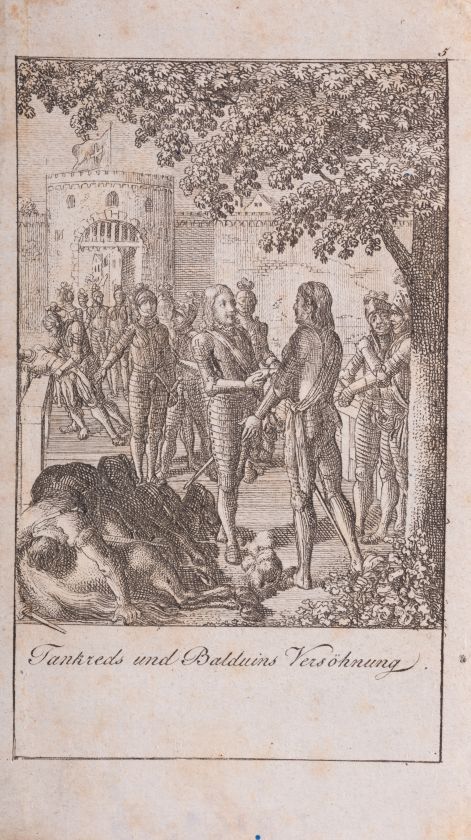
Triptych with Scenes from German History
Daniel Chodowiecki
Basic information
- ID
- Г-IV-2843
- Author
- Daniel Chodowiecki
- Name
- Triptych with Scenes from German History
- Country
- Germany
- Technique
- etching
- Material
- paper
- Dimensions
- 9.1 x 5.2 cm (height x width)
Additionally
- Type
- graphic art
- Genre
- history painting
- Provenance
- Purchased from O. Bushel, 1977
Information about author
Object description
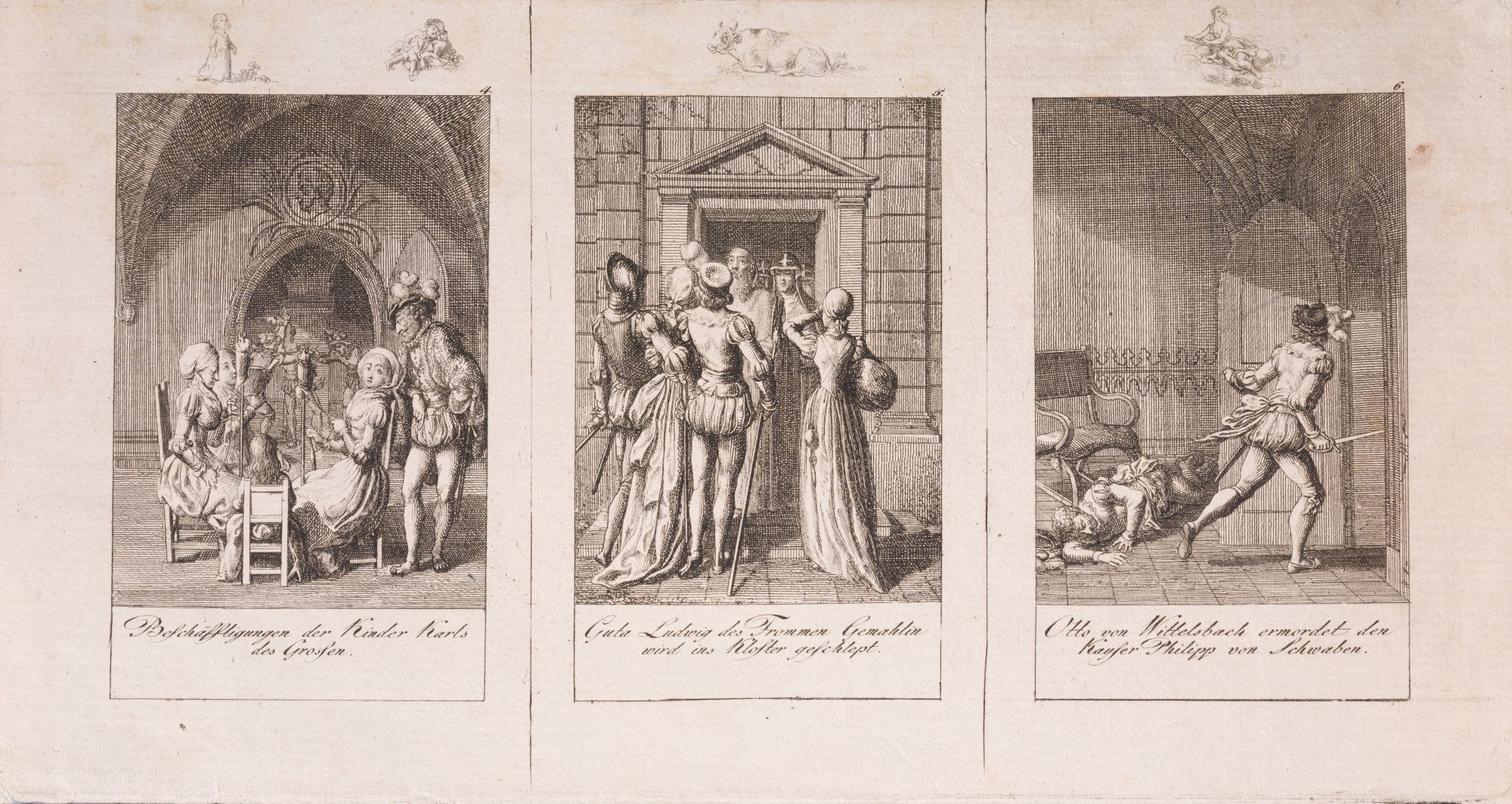
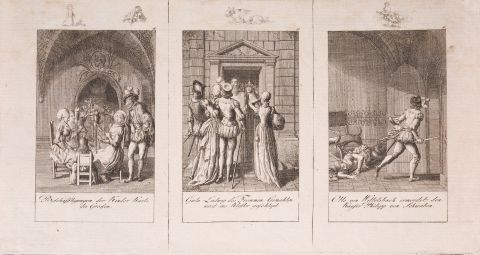
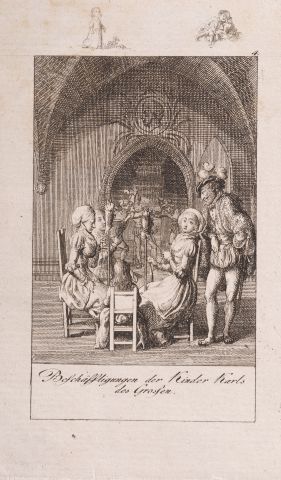
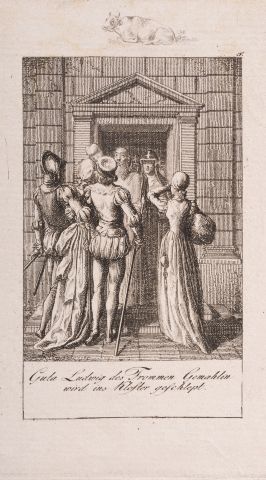
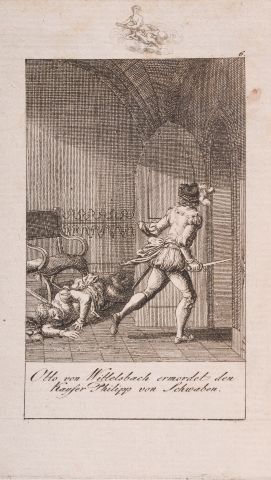
Created in different years, the historical engravings (each measuring 9.1 x 5.2 cm) were combined by the artist in 1796 on a single sheet for publication in the pocket calendar "Göttinger Taschenkalender" for the year 1797.
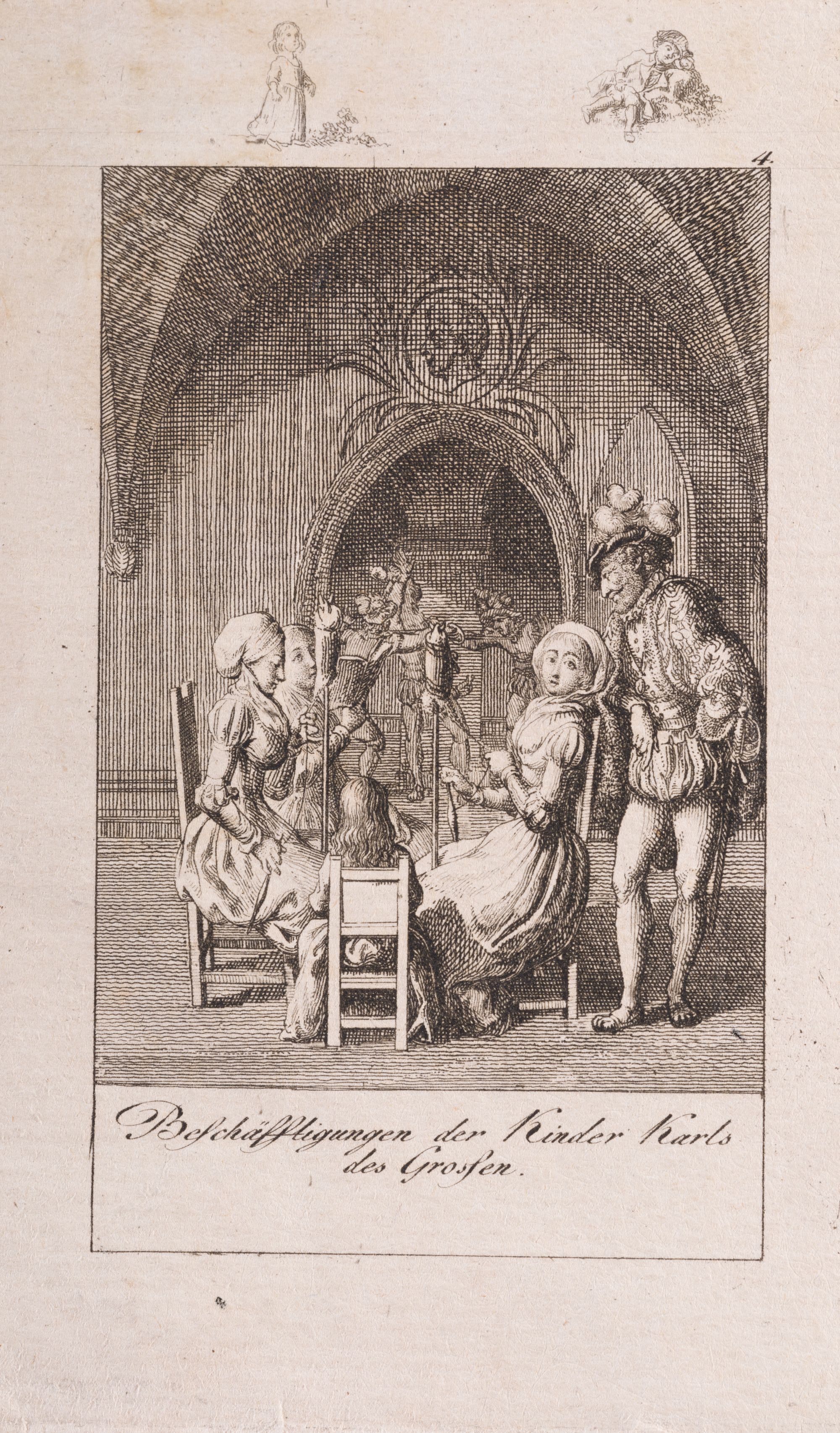
The engraving on the left, entitled "The Occupations of the Children of Charlemagne" ("Beschäftigungen der Kinder Karls des Großen"), is dedicated to events of the early 9th century. Charlemagne (768–814), King of the Franks and Emperor of the West, paid great attention to the education of his children. His four daughters, depicted in the centre of the engraving, are engaged in weaving, while the boys in the background under the archway are fencing. The artist was unconcerned that the characters' clothing corresponds more to the 16th–17th centuries than to the 8th–9th centuries. In this scene, the King, dressed in accordance with Renaissance fashion, has approached one of his daughters who is seated at a spinning wheel and, smiling, is saying something pleasant to her. At the top, above the archway, the monarch's head is depicted in profile on an oval shield. The artist created the plate for this etching in 1784.
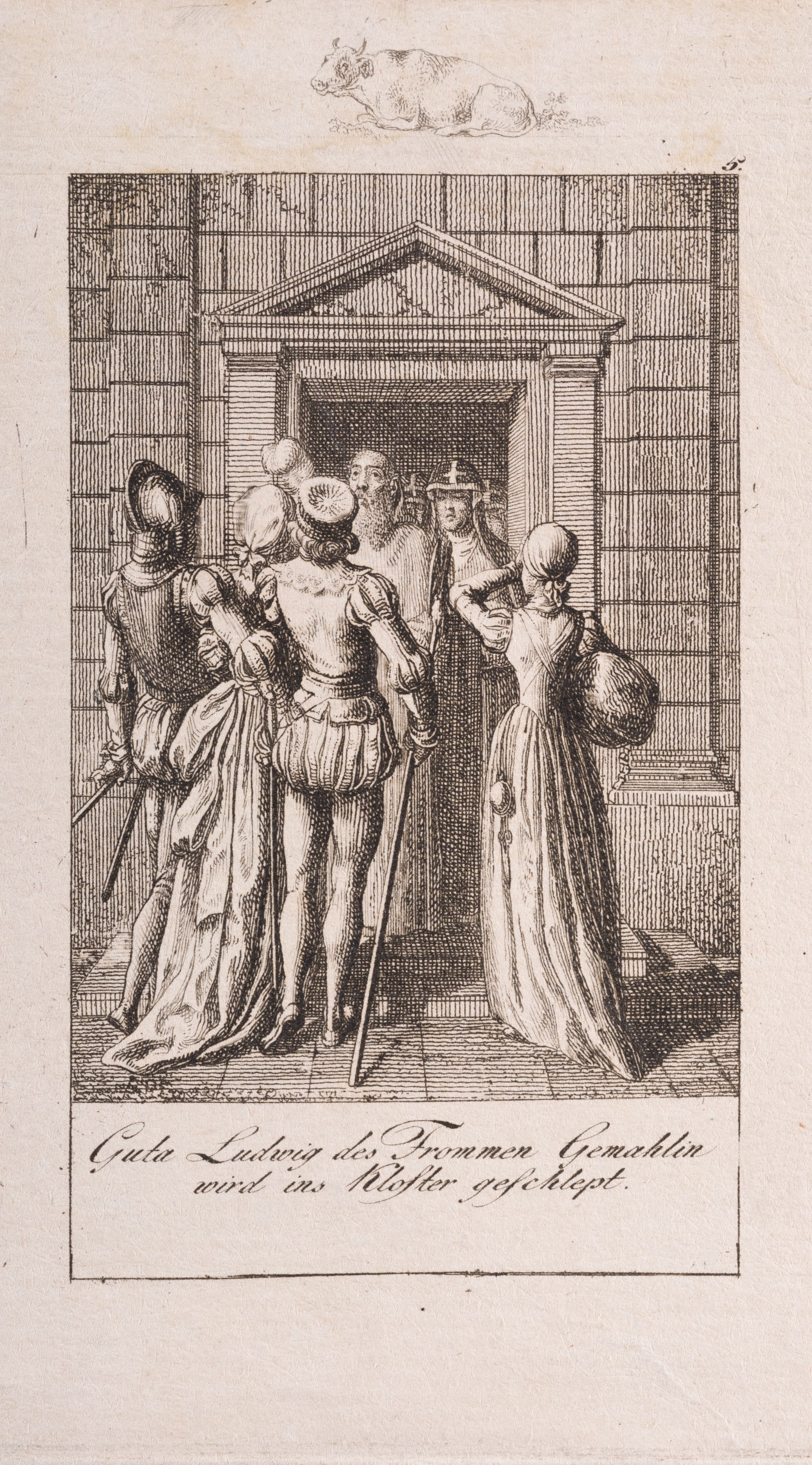
The engraving in the centre, entitled "Guta, the Wife of Louis the Pious, Is Forcibly Taken to a Convent" ("Guta Ludwig des Frommen Gemahlin wird ins Kloster geschlept"), refers to events in the Frankish Kingdom in the year 830. The sons of Louis the Pious (814–840, with interruptions), King and Emperor of the West, rebelled against their father. They forcibly sent their stepmother, the King's second wife Judith (Guta) of Bavaria, to the Convent of the Holy Cross of the Benedictine Sisters in Poitiers. The composition depicts young knights shown from behind (the man on the left is in armour and a helmet) leading a woman in a long draped dress by the arms toward the convent portal. There, they are met by an abbot and austere nuns. On the right, also shown from behind, is a young girl who has also come to the convent. This etching was created in 1795.
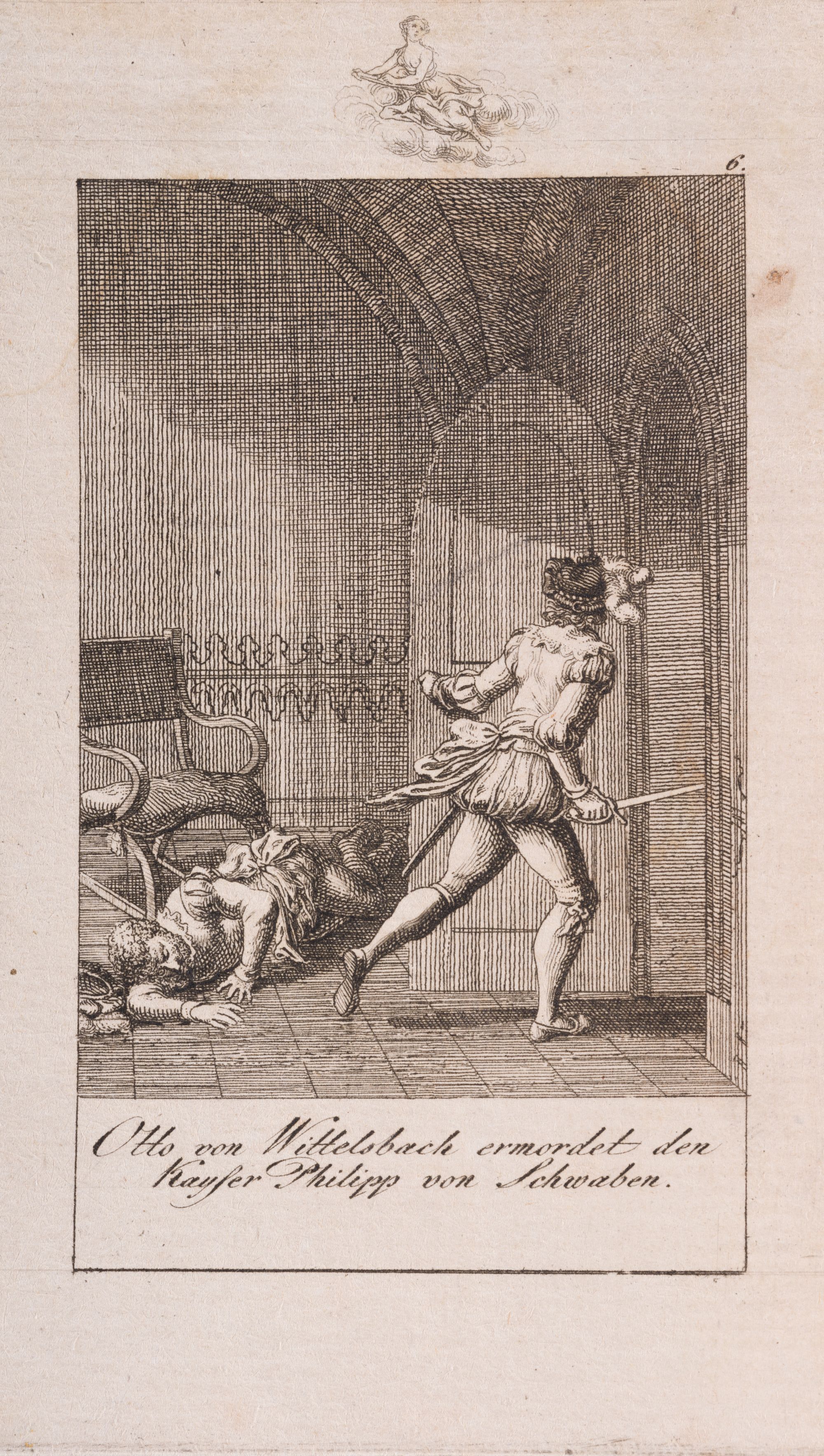
The third composition under No. 6, located on the right, entitled "Otto von Wittelsbach Murders Emperor Philip of Swabia" ("Otto von Wittelsbach ermordet den Kaiser Philipp von Schwaben"), concerns a tragic event of 1208. Otto VIII of Wittelsbach, Count Palatine of Bavaria, murdered King Philip of Germany, whom Daniel Chodowiecki refers to as the Kaiser (Emperor). The crime was committed by the well-known count because the King had refused him marriage to his daughter, seeking to find a more worthy candidate for her. The scene takes place in the interior of a castle with a Gothic vaulted ceiling. The murderer with a sword is depicted in the foreground on the right – he is fleeing the crime scene. The victim lies on the left, near an armchair. An allegorical figure in the clouds, resembling Venus and depicted at the top above the print, indirectly points to the motive for the crime. The engraving was created in 1796.
Inscriptions
At the top, above the left engraving, are two prints depicting a girl and a boy; above the central engraving is an image of a cow; above the engraving on the right is an allegorical figure of a woman in the clouds – Venus. Above the frame of the first image on the right is the number "4", above the frame of the second – "5", and the third – "6".
Legal regulation
Borys Voznytskyi Lviv National Art Gallery