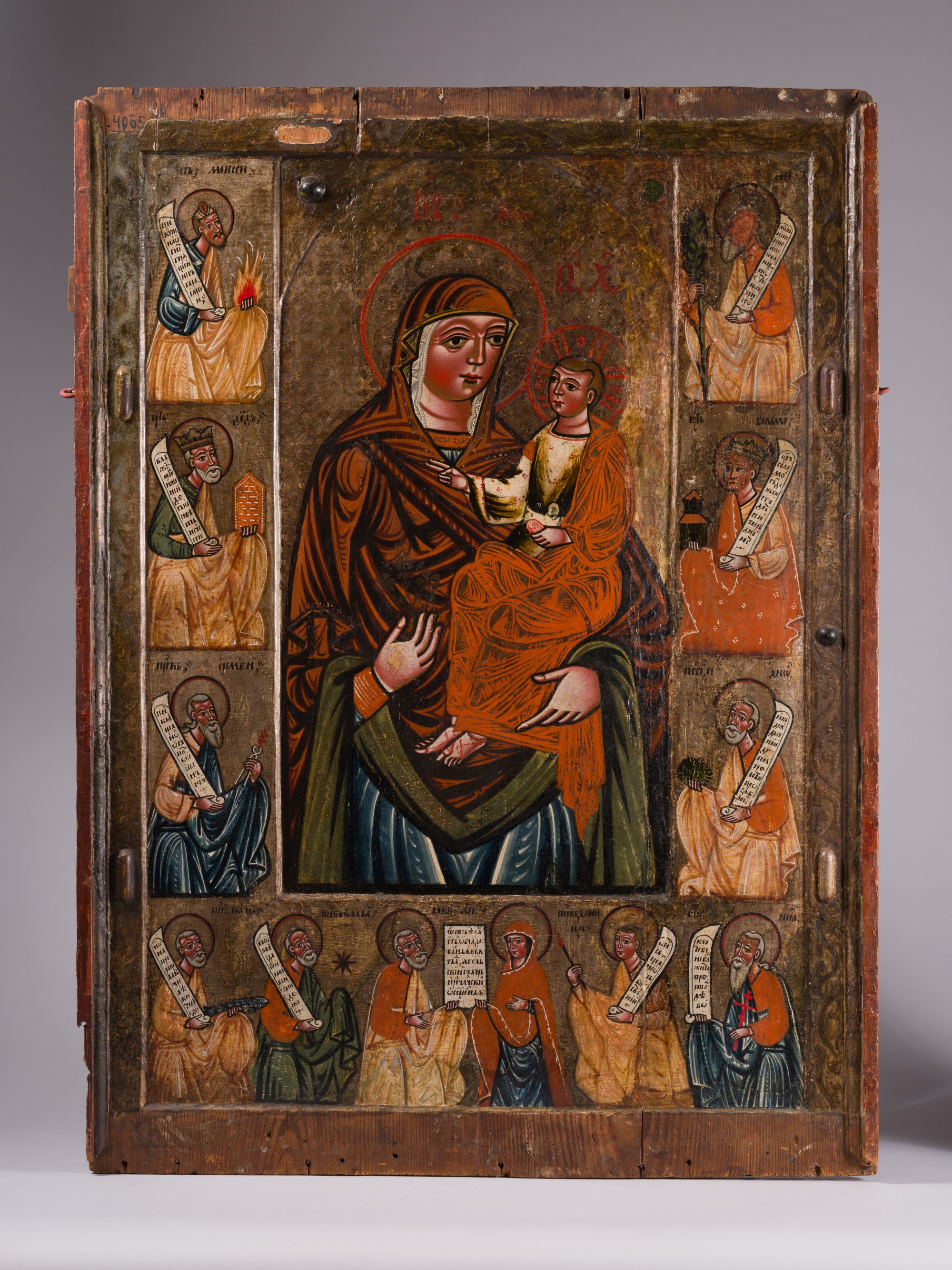
Our Lady of the Unfading Bloom with Praise
unknown
Basic information
- ID
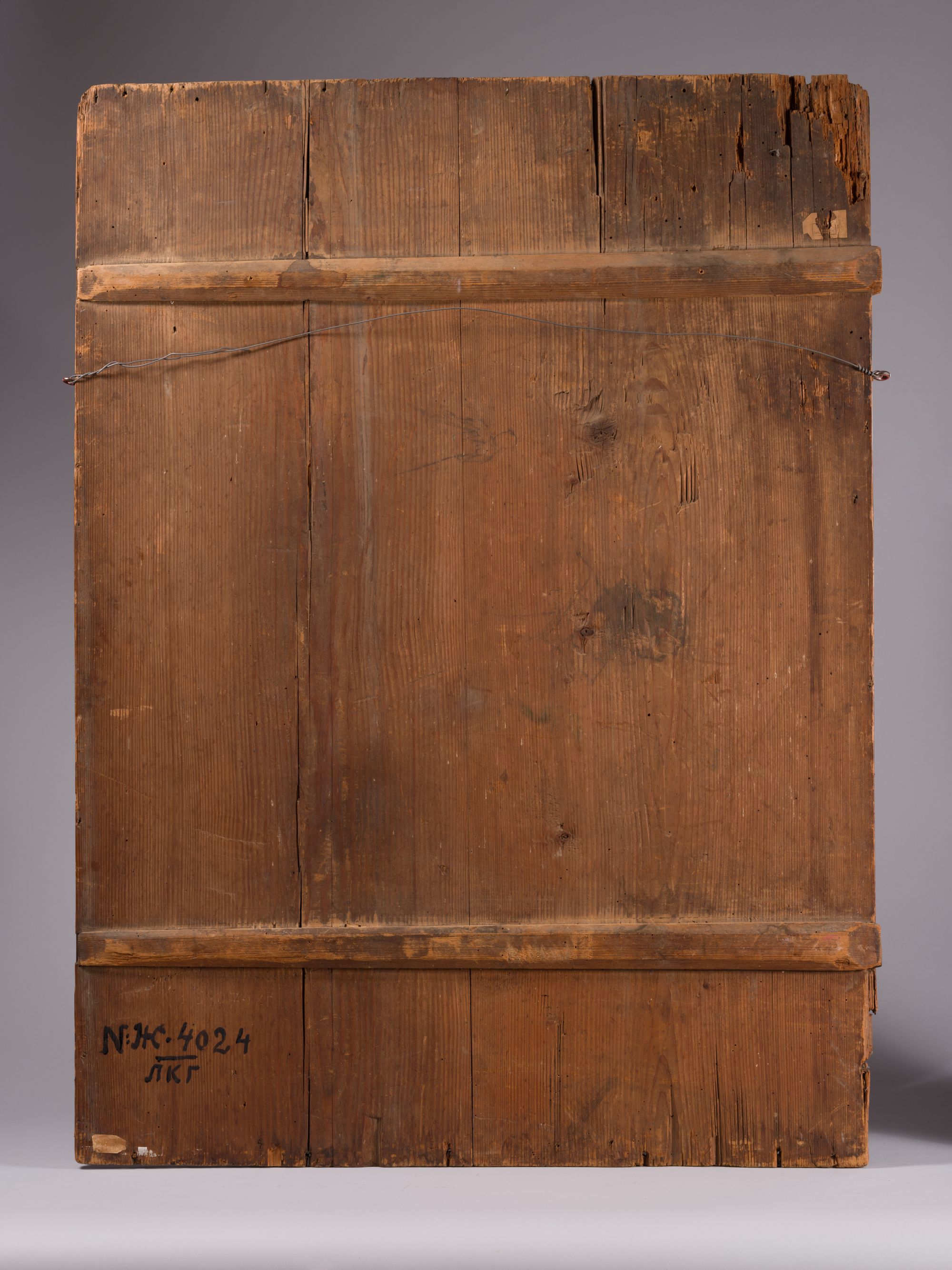
- Ж-4024
- Author
- unknown
- Name
- Our Lady of the Unfading Bloom with Praise
- Date of creation
- 16th c.
- Country
- Ukraine
- Technique
- tempera painting
- Material
- wood tempera
- Dimensions
- 113 x 82.5 cm (height x width)
Additionally
- Type
- painting
- Genre
- religious
- Plot
- Our Lady of the Unfading Bloom
- Provenance
- Boiko region
- Exposition
- Olesko Castle
Information about author
Object description
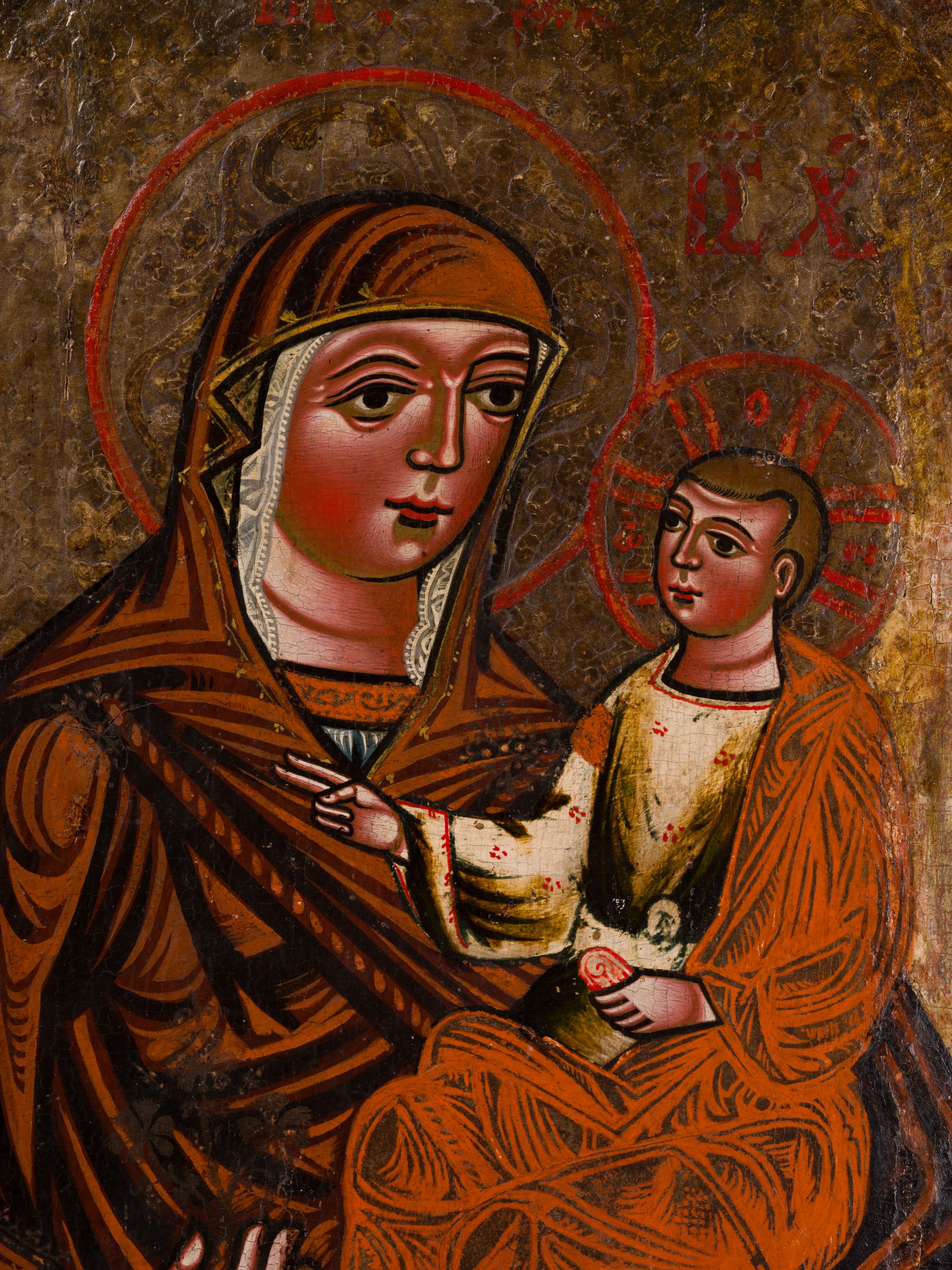
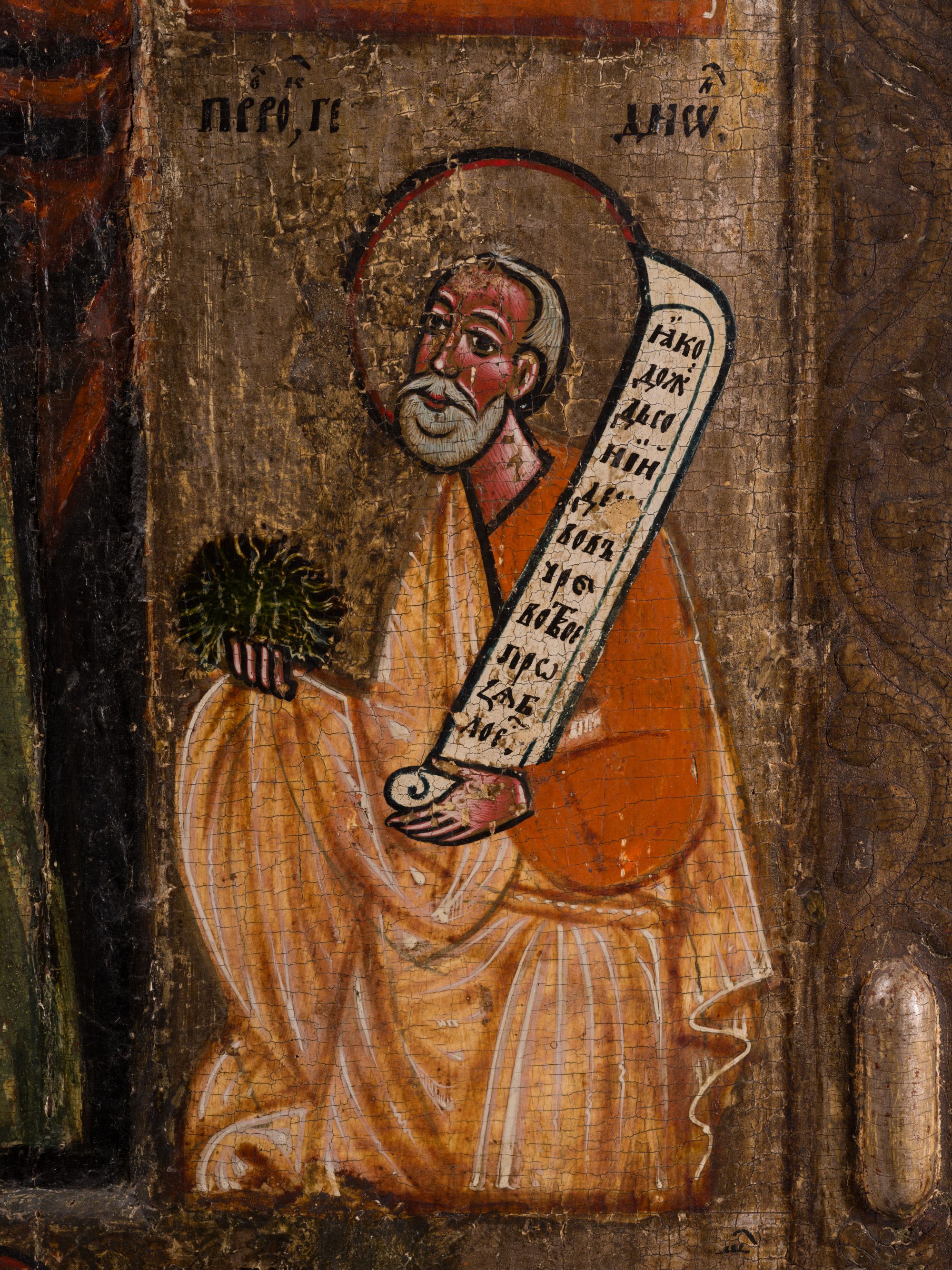
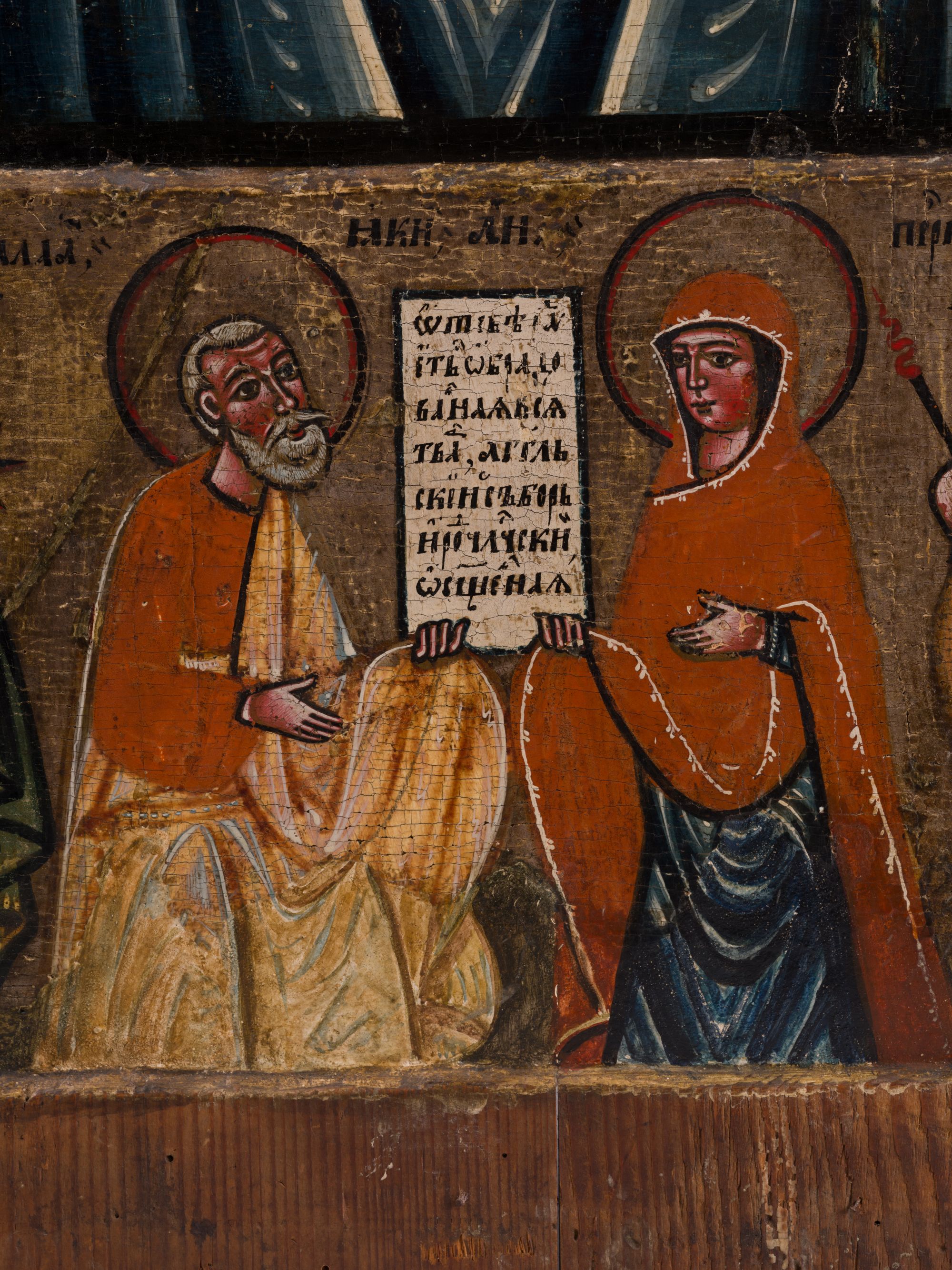
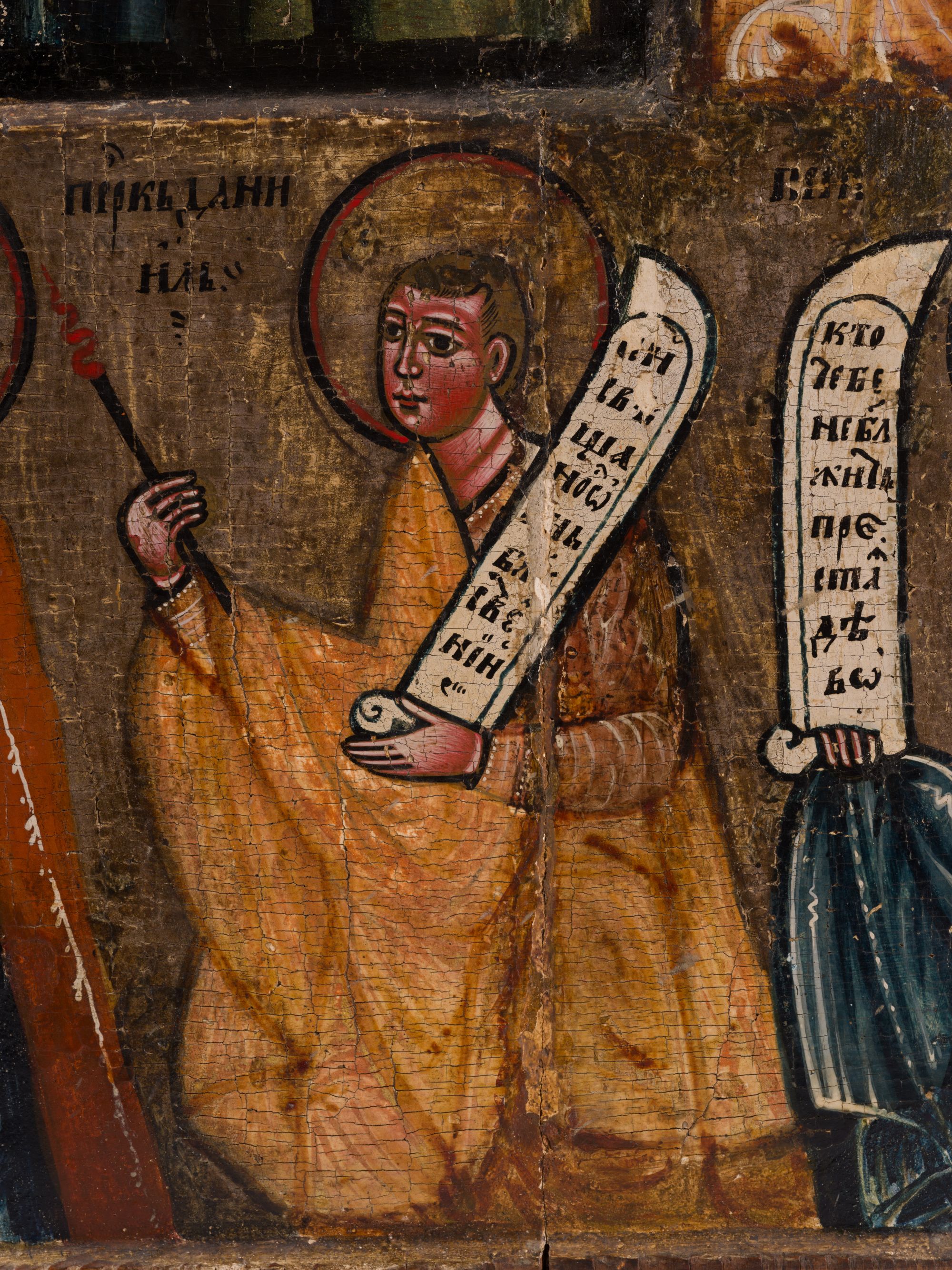
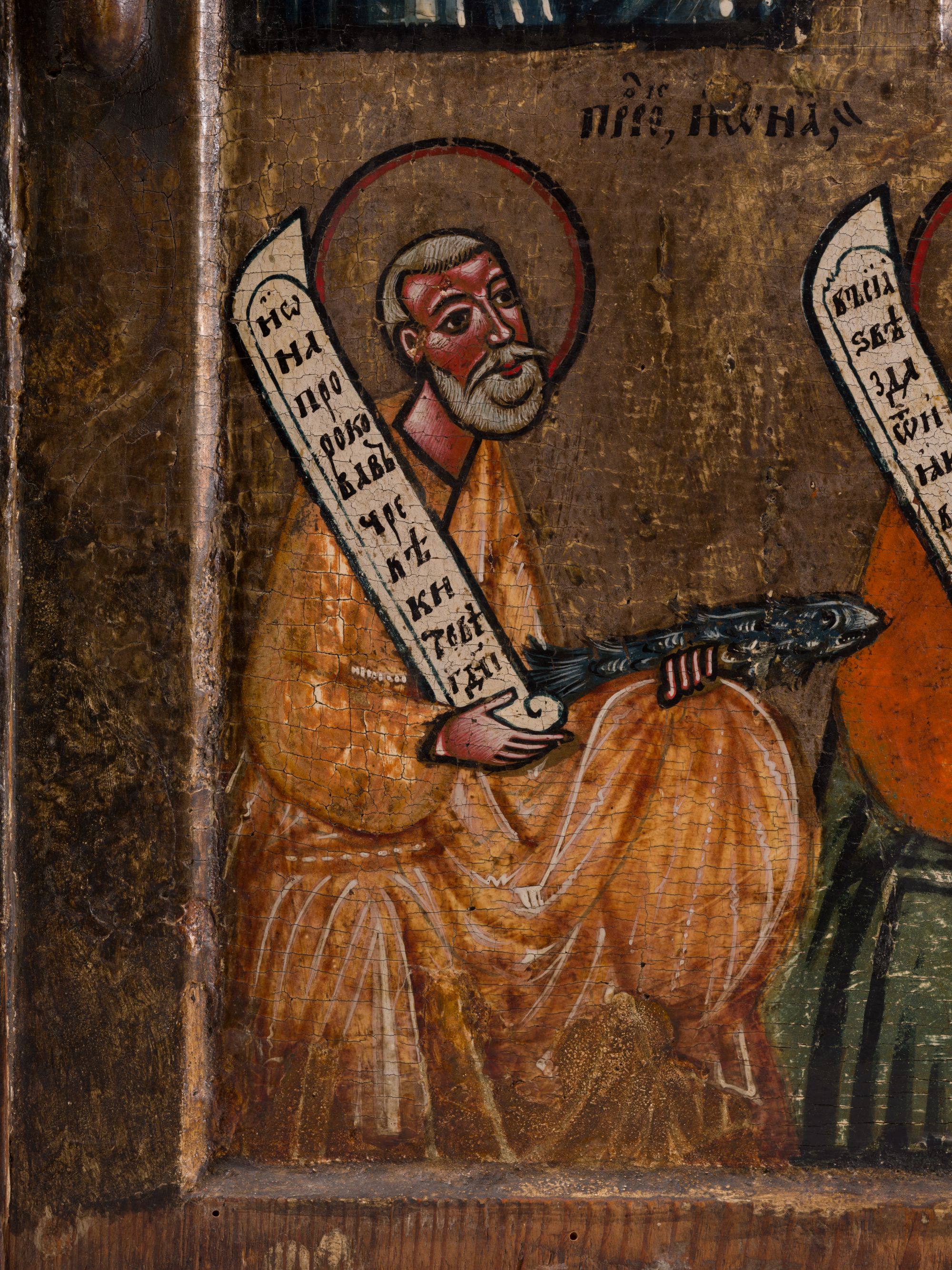
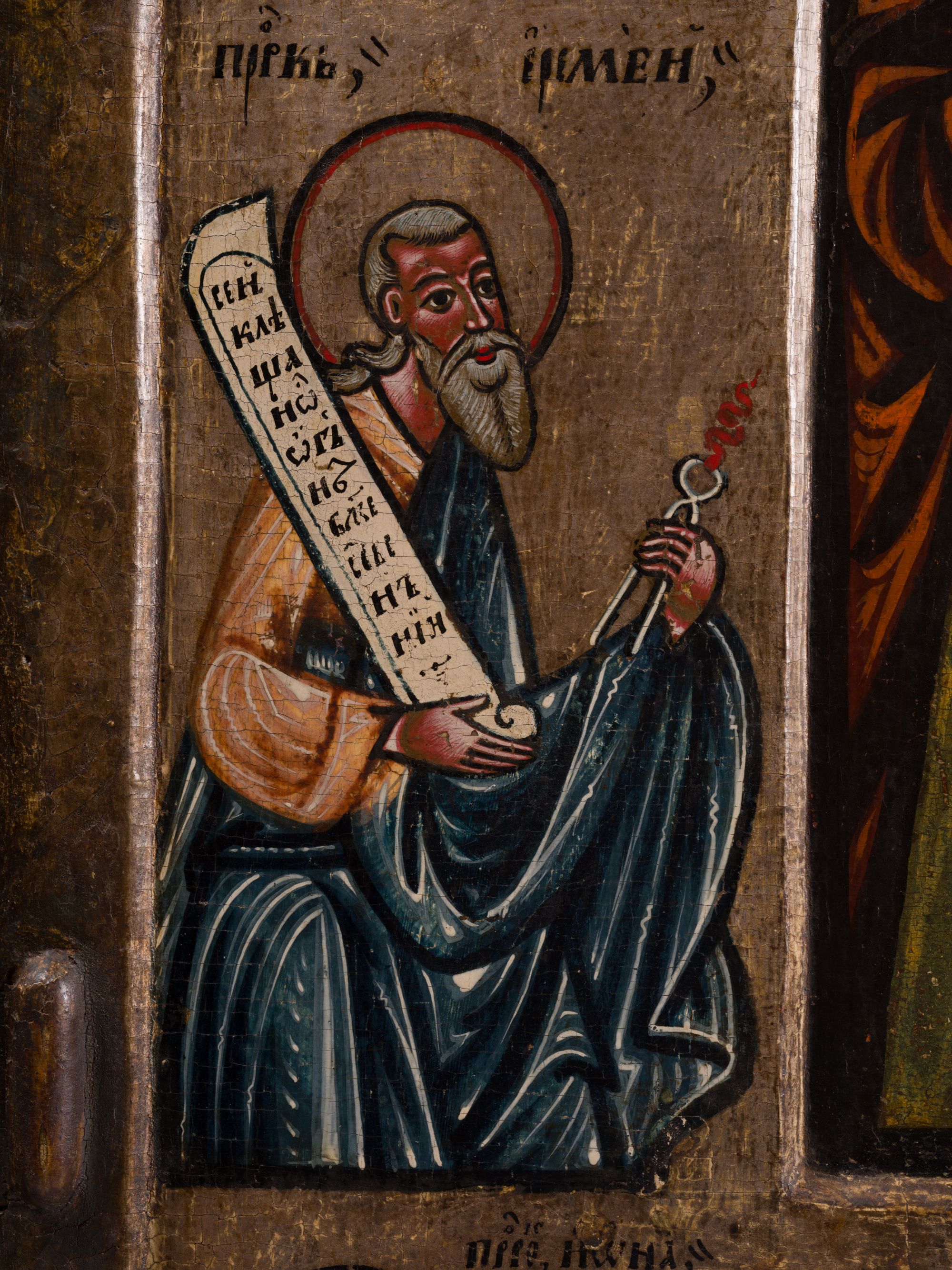
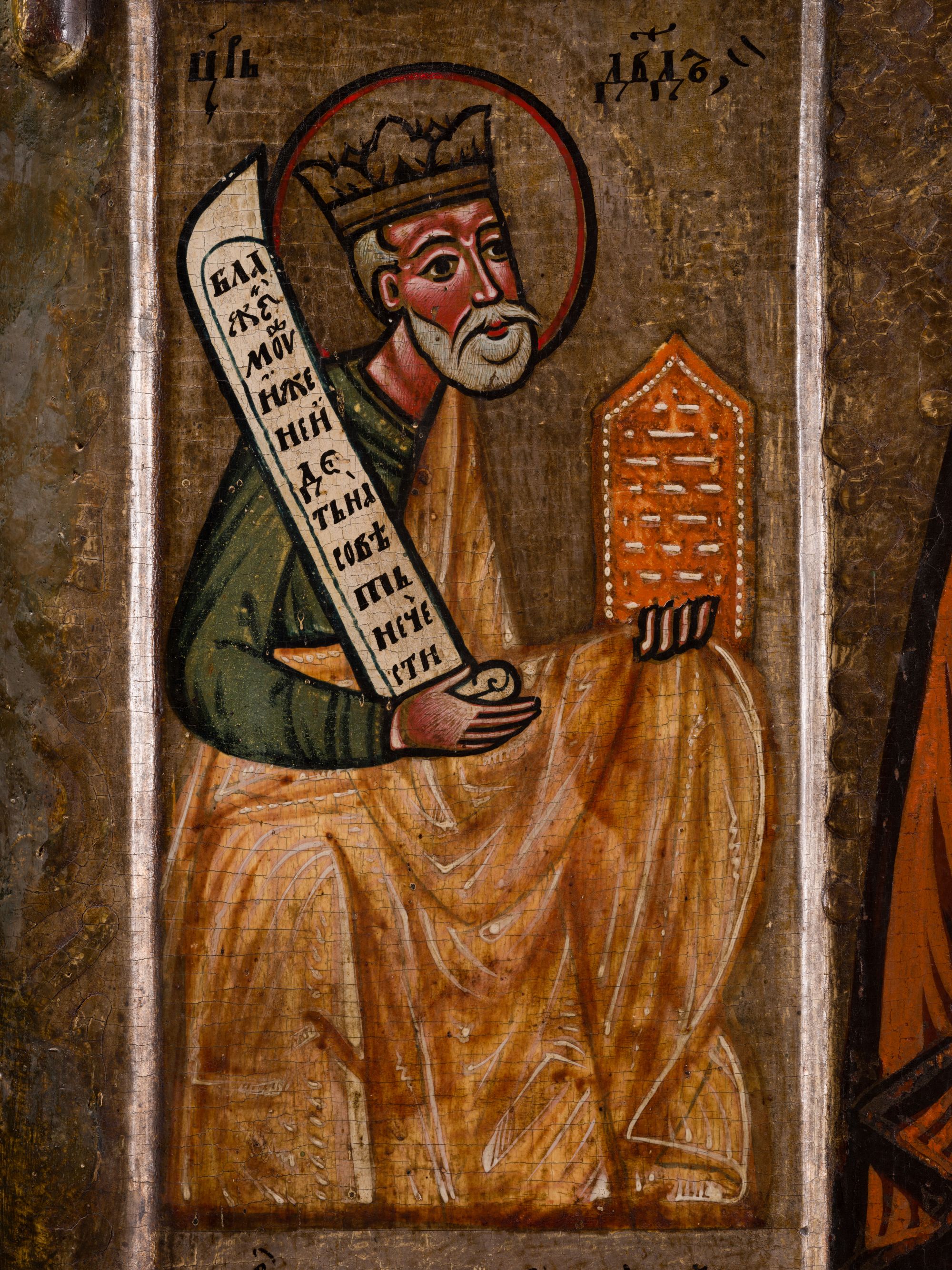
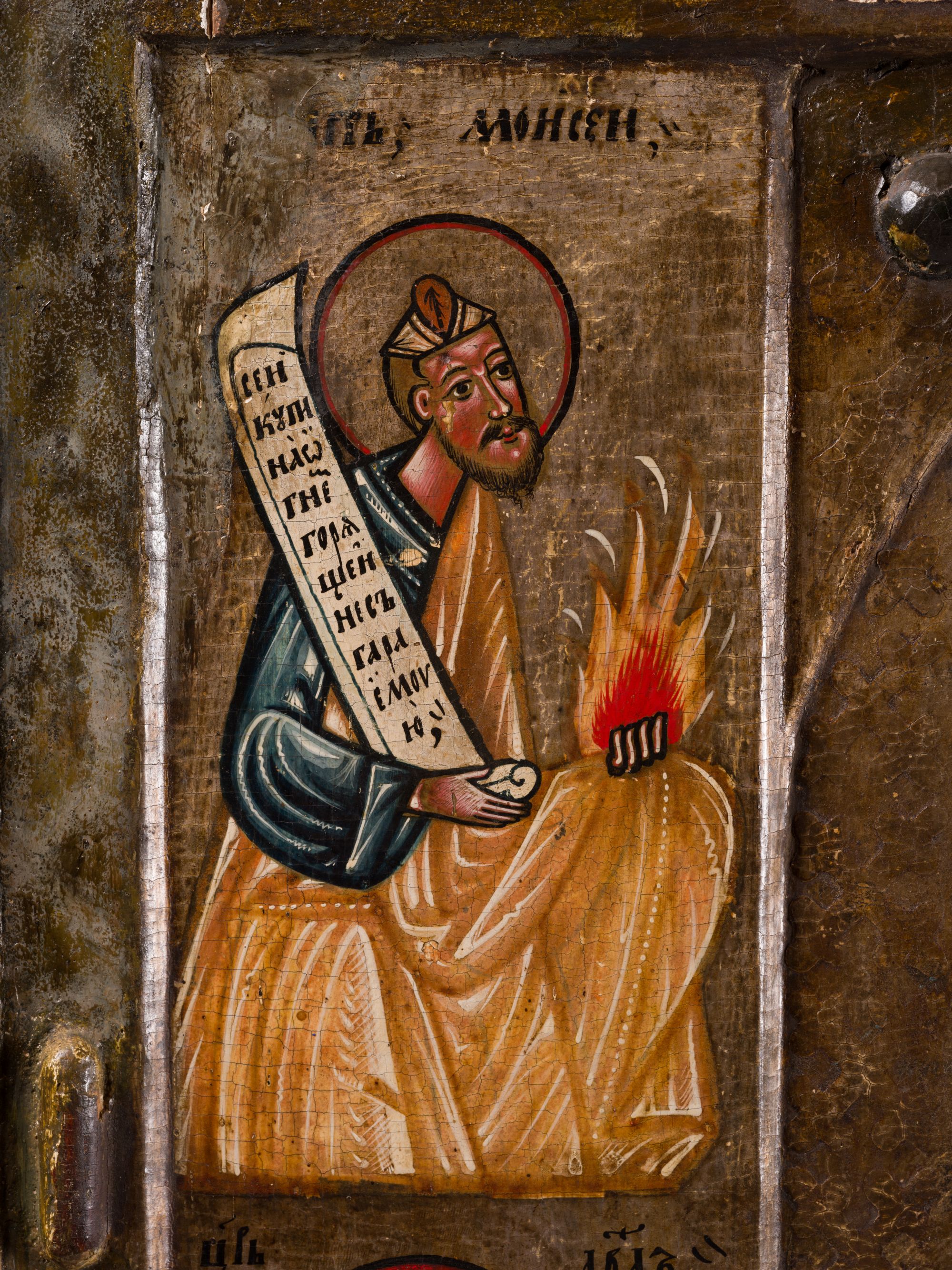
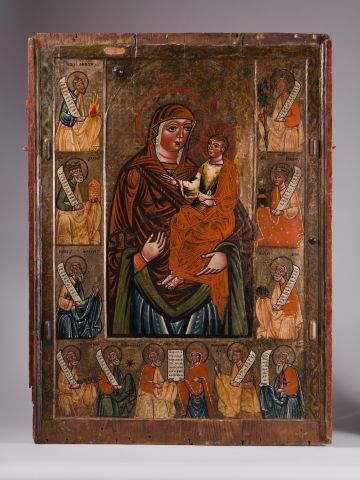
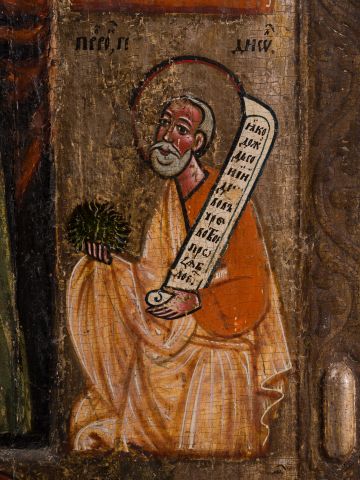
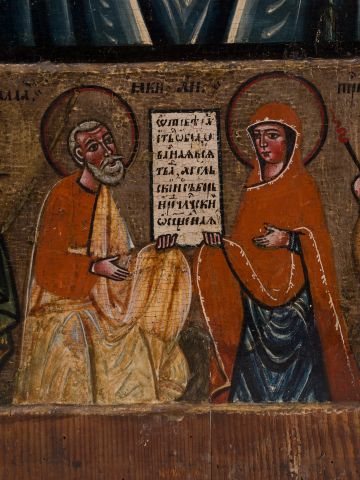
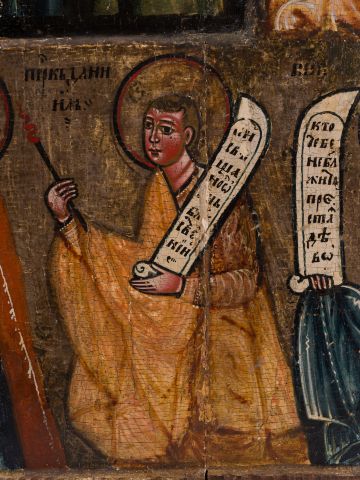
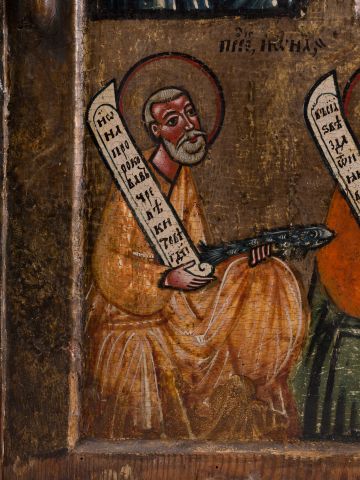
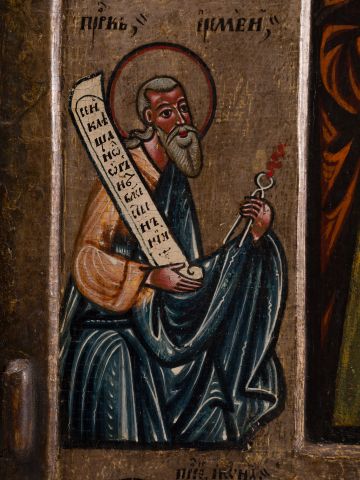
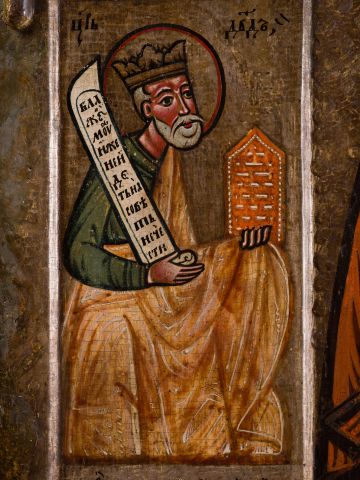
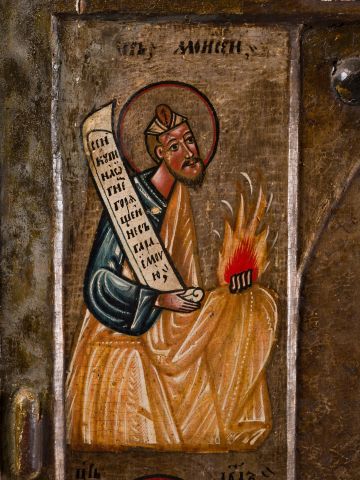
The composition of the icon is multi-figured. The central field presents a dominant frontal depiction of the Mother of God with the Christ Child. The icon belongs to a widespread iconographic type known as Our Lady of the Unfading Bloom, which developed from the Hodegetria iconography and spread throughout the western regions of Ukraine from the late 16th century onwards. This is an image of the Mother of God holding the young Christ and a flower. Surrounding them are figures of prophets with unfurled scrolls, each depicted in a separate border scene. The work is characterised by an archaic organisation of space – the central figure has a larger scale than the saints depicted in the side and lower registers.
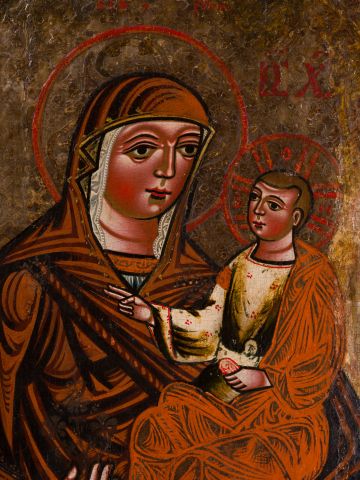
The space of the icon is symbolic and flat, which is traditional for medieval Christian iconography. The figures have crisp, expressive outlines, large almond-shaped eyes, elongated proportions and almost serene, frozen poses. Most of the compositional centre is occupied by an elongated, nearly three-quarter-length image of Mary holding the infant Jesus. The saint is dressed in a red-ochre maphorion, its surface criss-crossed with dark graphic lines of drapery. Beneath the cloak, a blue chiton peeks out at the bottom, rendered with monumental vertical folds highlighted by laconic white stripes. The white lace appearing around the saint's countenance accentuates the face, while the flush on her cheeks fills the image with lifelike vitality.
The infant sitting on her arm is distinguished by a light colour palette. The colour scheme of the icon is based on a combination of ochre, red, light brown, blue and olive-green shades. A distinct, bright core of the icon's composition is created by the contrast between the dark clothing of the Mother of God and the bright countenances and attire of the young Christ. An important role in the work is played by the framing, which is formed by the scenes with saints in the side and lower registers, creating a kind of border system. The icon is perceived not as an individual image of a saint, but as an integrated sacred ensemble in which the central theme is connected with the praise of the Mother of God.
The work combines the canonical nature of the image with decorativeness. Its imagery is not aimed at portrait or natural accuracy. The main task is to create a sense of sacred presence. The special spiritual expressiveness of the icon is formed by the large, graphically defined eyes of the saints, a sharp outline and a rich local colour scheme.
Legal regulation
Borys Voznytskyi Lviv National Art Gallery