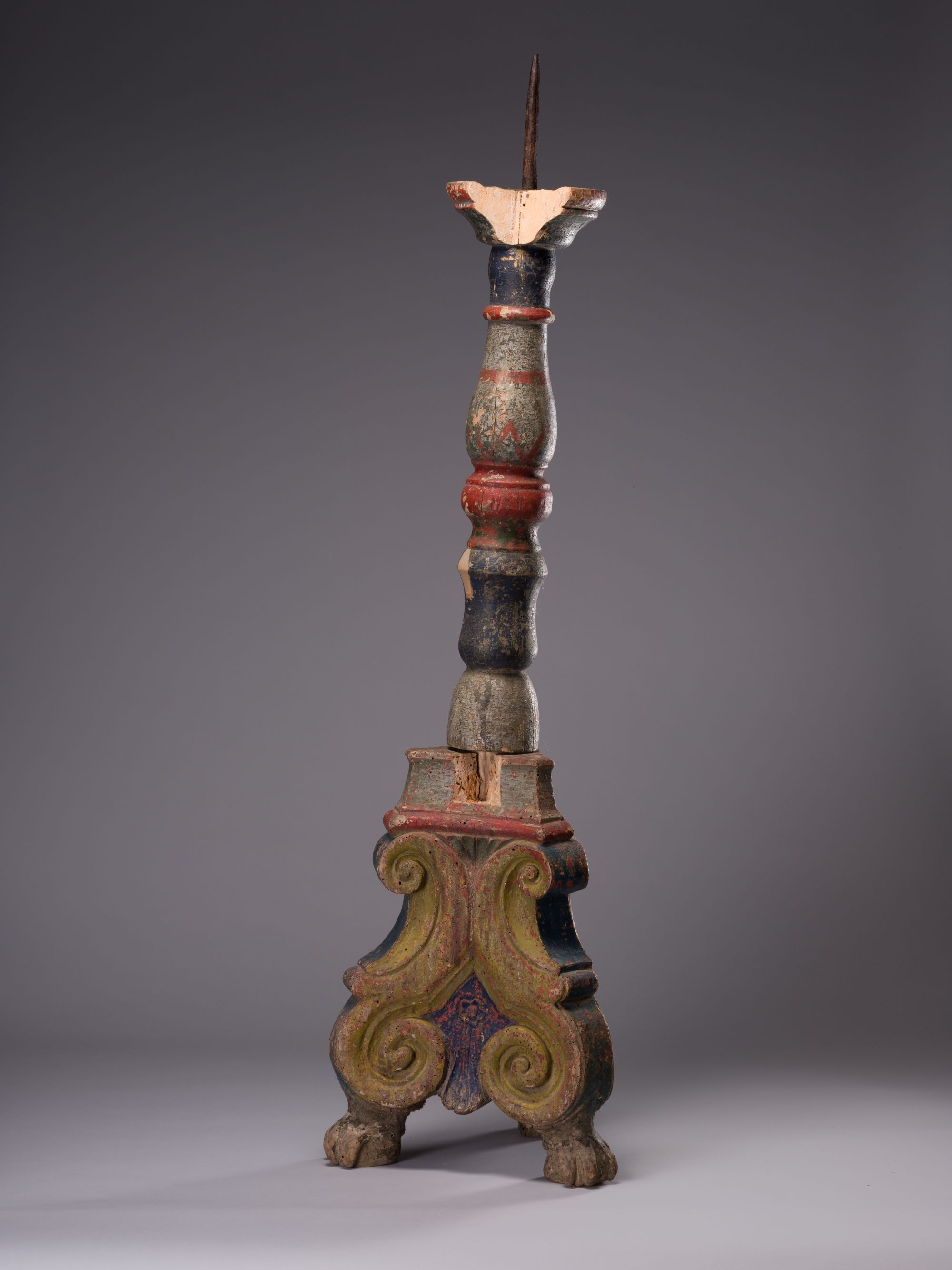
Pricket Candlestick
unknown folk craftsman
Basic information
- ID
- Рз-818
- Author
- unknown folk craftsman
- Name
- Pricket Candlestick
- Date of creation
- 18th c.
- Country
- Ukraine
- Culture
- Folk
- Technique
- carving polychromy
- Material
- wood
- Dimensions
- 171 x 31.5 x 29 cm (height x width x depth)
Additionally
- Type
- decorative and applied arts
- Genre
- religious
Information about author
Object description
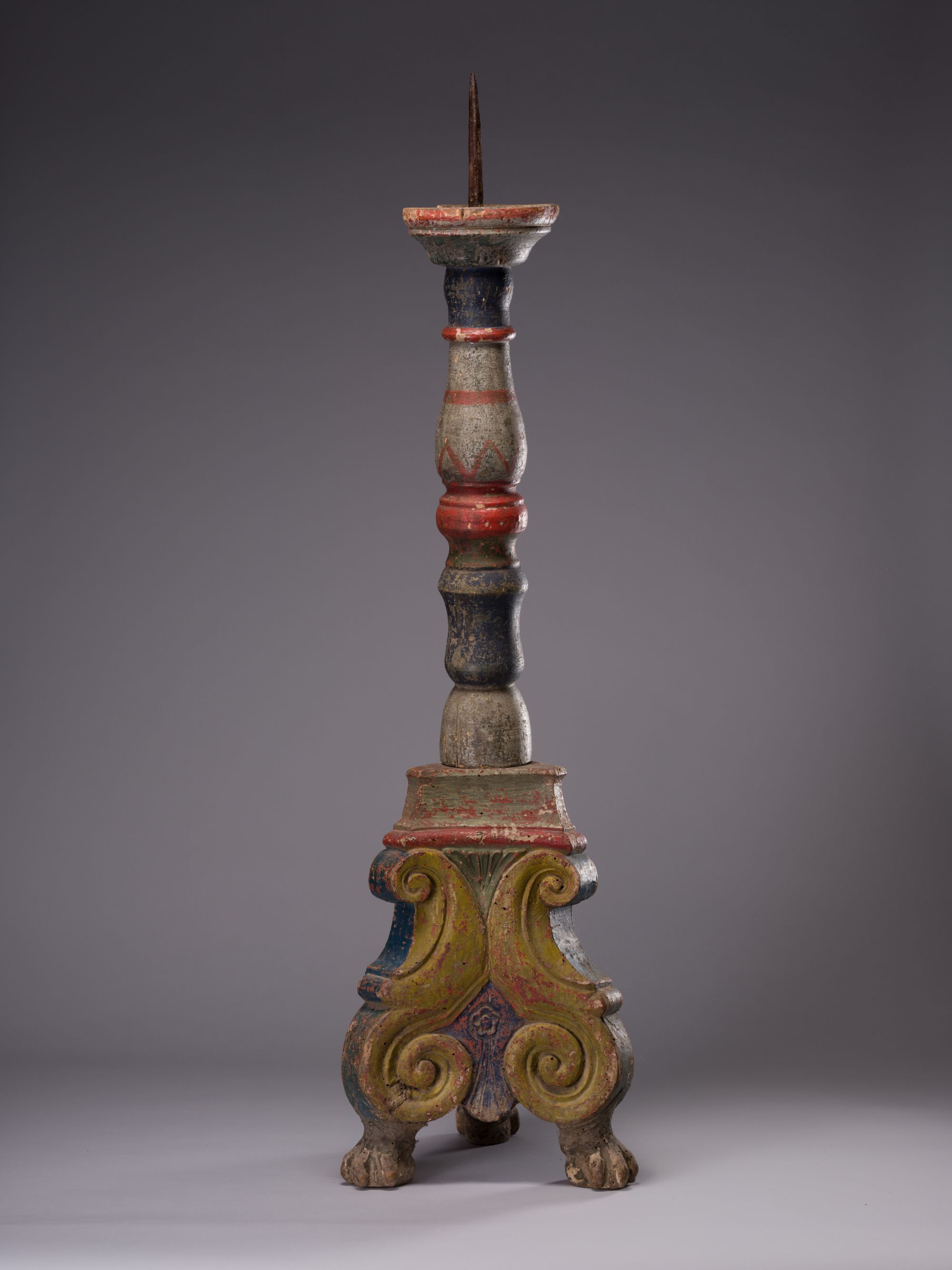
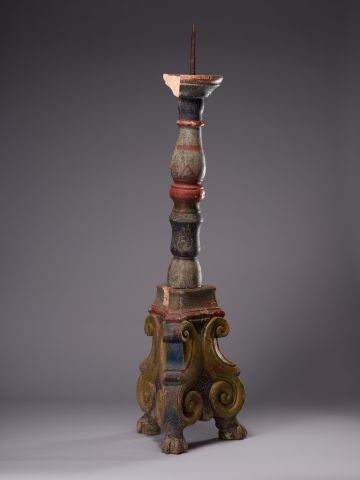
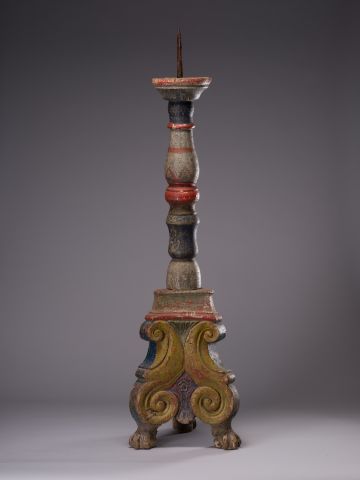
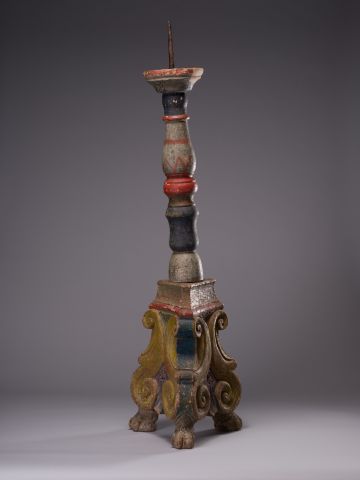
The widespread use of artificial illumination within temples fostered the emergence of fixtures diverse in both typology and design. In church tradition, these are conventionally divided into "portable" and "stationary" light. The presented single-branched wooden floor pricket candlestick typologically belongs specifically to the category of "stationary light".
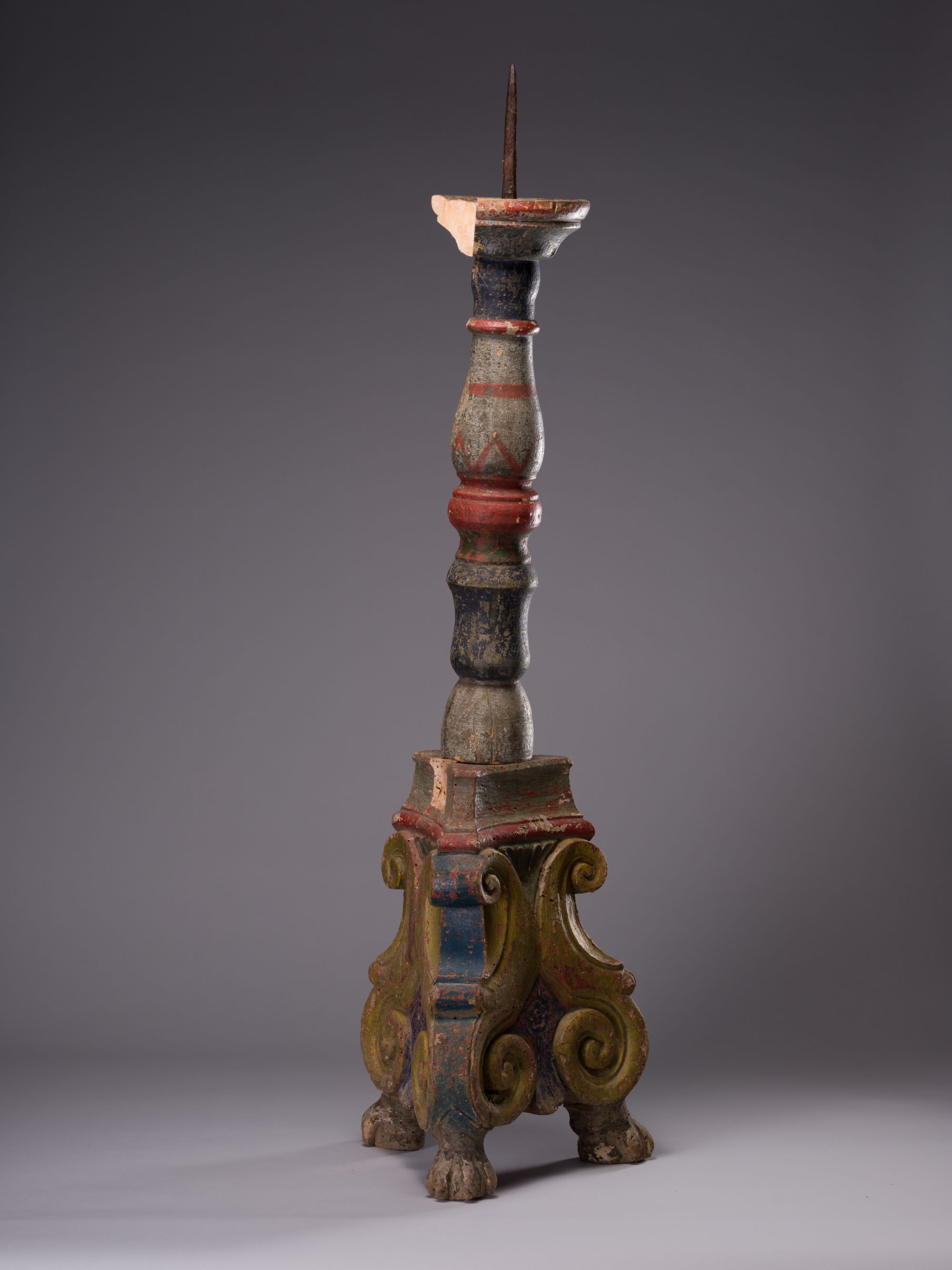
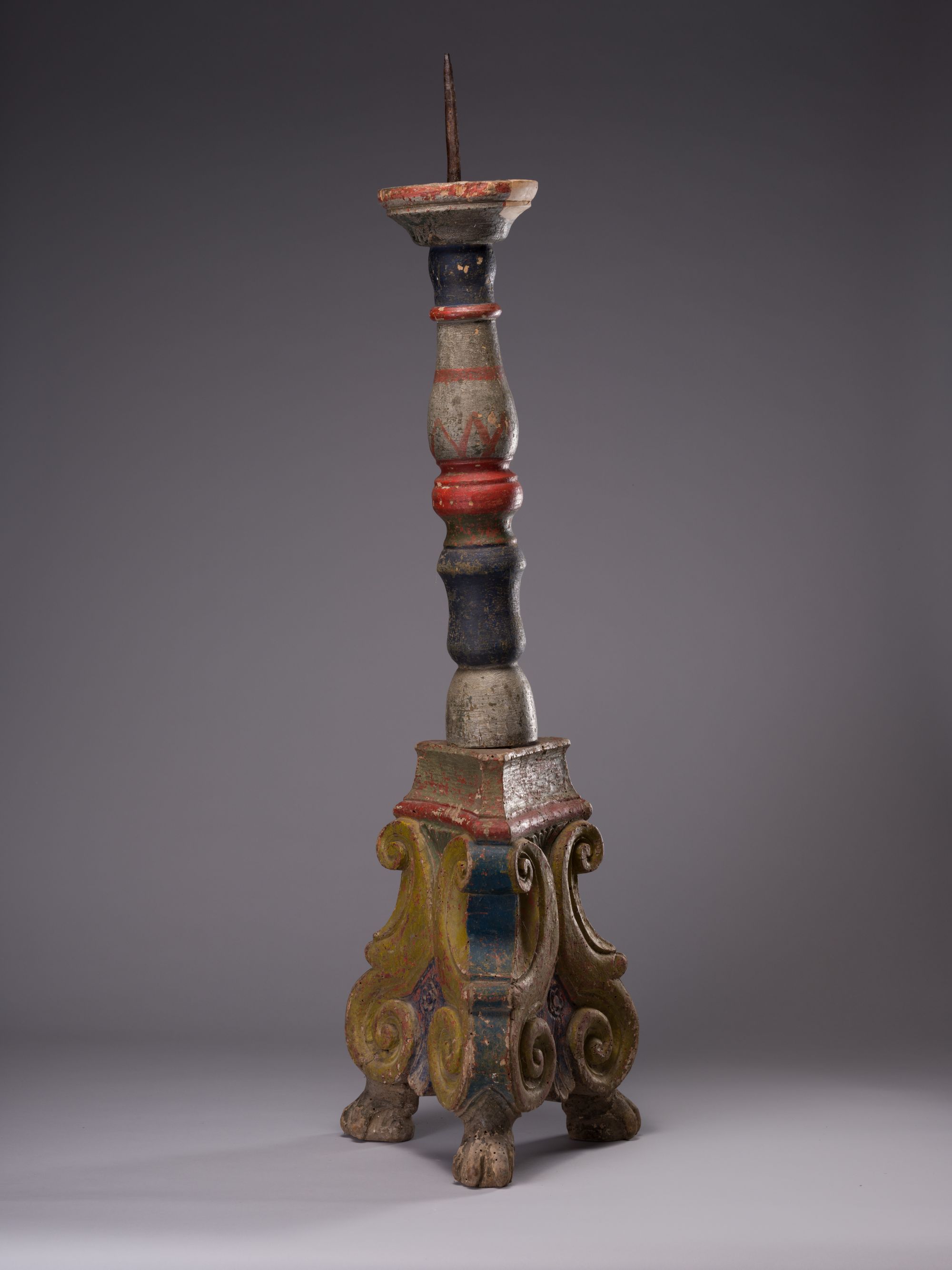
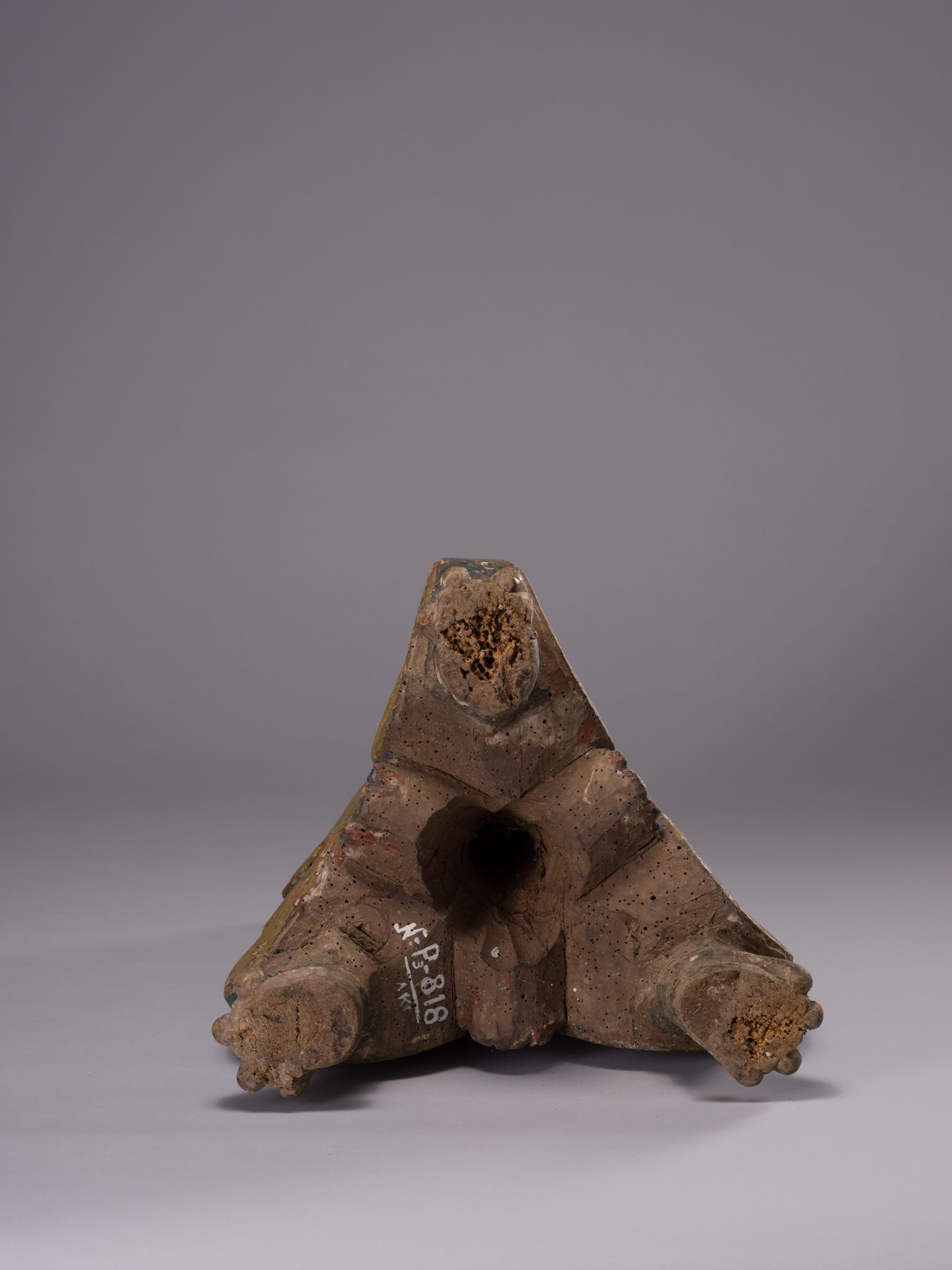
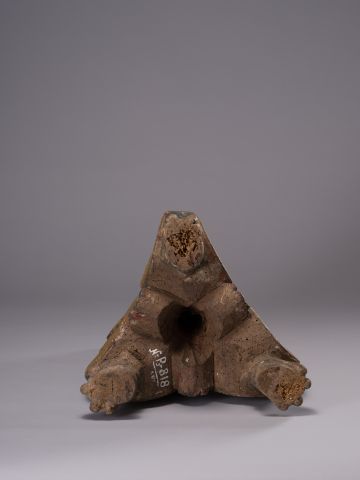
The object of sacred interior combines turned volumes, carved elements, polychrome painting and expressive Baroque plasticity. The design of the candlestick is strictly vertical and axial. It has a complex silhouette with smooth curves distributed symmetrically from the central part to the base. The lower part consists of a massive tripod decorated with carved volutes and scrolls. The carved scrolls lend dynamism to the base while simultaneously performing a structural and decorative function. Floral motifs can be traced on the trilobed stand, enhancing the chiaroscuro play of the decoration.
A unique pedestal is located on the massive base, from which the central stem begins, its surface divided by horizontal bands and profiled protrusions. The central part of the stem is built upon a consistent division of turned forms. Such a technique is characteristic of turned wooden plasticity, where each element has its own rhythm, yet all are subordinate to the vertical axis.
The colour scheme of the candlestick is based on vibrant red, blue and yellow colours. The red shade accents individual horizontal bands, while the vertical planes are filled with blue, creating a contrasting yet balanced decorative system.
In creating the candlestick, the master combined mechanical turning and hand carving, which made it possible to achieve a complex play of textures and silhouette. The vertical wooden ensemble of the candlestick is a complex structure that has transformed into a decorative sculpture, where the lower part appears heavy and earthly, emphasised by massive volutes and small feet; the middle part is elongated, rhythmic and balanced; and the upper part is light, cup-shaped, directed towards the light. The alternation of different shapes creates a unique sculptural rhythm, and the multi-layered polychromy enlivens the surface of the sacred object. The candlestick stands not merely as a functional item, but as a testament to artistic tradition, craftsmanship and the aesthetics of the sacred space of the past.
Legal regulation
Borys Voznytskyi Lviv National Art Gallery