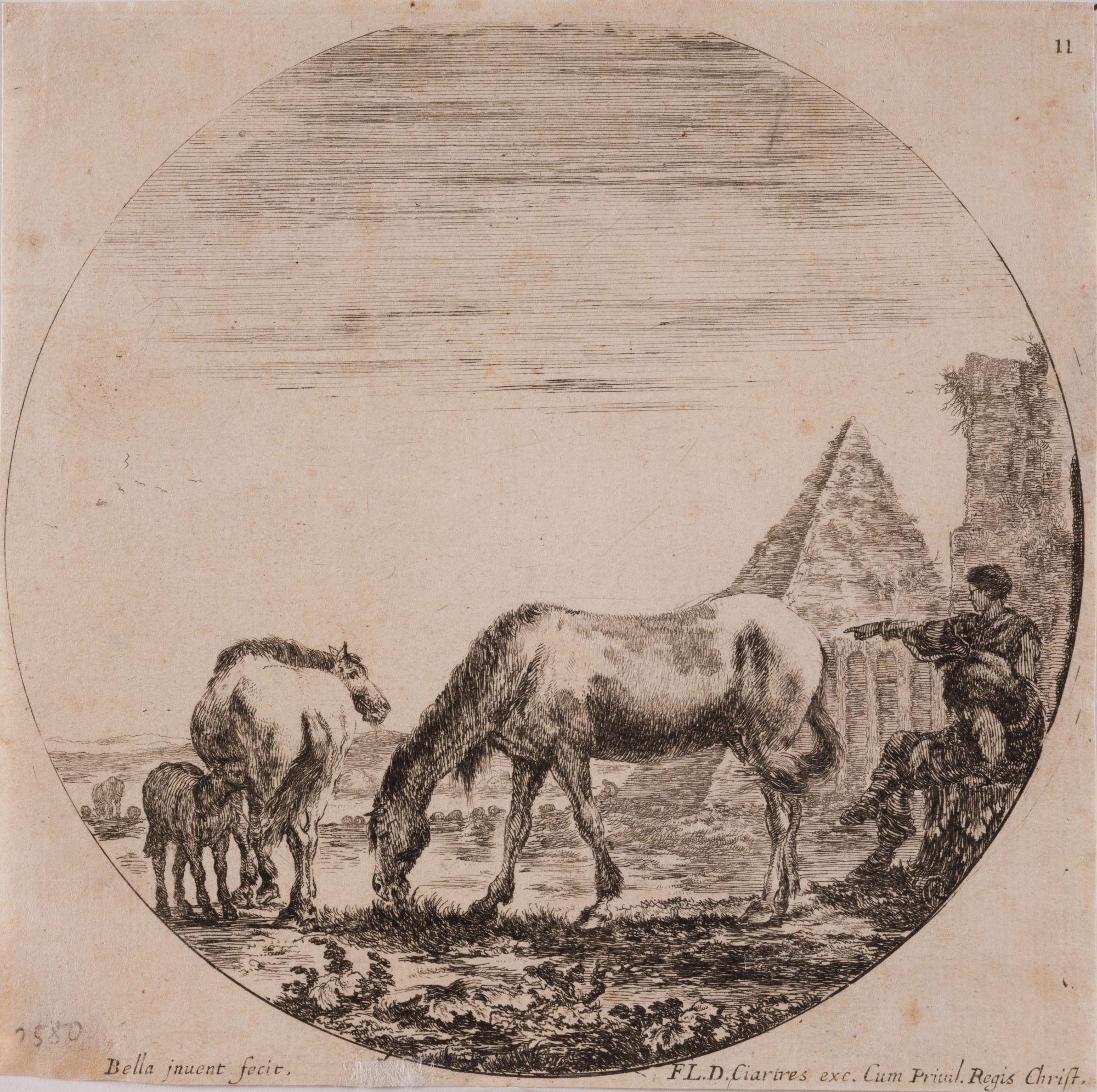
Horses Grazing near the Pyramid of Gaius Cestius. From the "Round Landscapes" or "Roman Landscapes and Ruins" Series, Plate 11
Stefano della Bella
Basic information
- ID
- Г-IV-923
- Author
- Stefano della Bella
- Name
- Horses Grazing near the Pyramid of Gaius Cestius. From the "Round Landscapes" or "Roman Landscapes and Ruins" Series, Plate 11
- Country
- France
- Technique
- etching
- Material
- paper
- Dimensions
- 13.5 x 13.5 cm (height x width)
Additionally
- Type
- graphic art
- Genre
- architectural landscape animal painting
- Provenance
- Received from the Lviv Historical Museum, 1954
Information about author
Object description
The work comes from the "Round Landscapes" series, created by the artist in Paris around 1646. The series consists of 13 prints. In many catalogued descriptions, the work appears as a piece from the "Roman Landscapes and Ruins" ("Paysages et ruines de Rome") series, plate 11. The publisher of this series of prints was François Langlois (1589–1647), known as Ciartres or Chartres. He is considered the first prominent publisher of the French Baroque era.
The print has the shape of a tondo – an experimental format characteristic of della Bella.
In the centre of the composition, horses are depicted in a pasture. In the foreground, a detailed thoroughbred horse is rendered biting the grass. To the left is a mare, with a small foal standing at her feet. The animals are depicted with an accurate rendering of anatomical proportions and coat texture. To the right are two figures of shepherds. One of them points with his hand into the distance. In the middle ground on the right rises the mausoleum of the praetor of the Roman magistrate Gaius Cestius, built at the end of the 1st century BC as a pyramid-shaped tomb. The upper half of the tondo is occupied by a lightly hatched sky with soft clouds, creating a sense of space and a calm evening atmosphere.
The artist demonstrates a masterly command of the stroke. Thanks to the varying density and direction of the lines, the texture of the animals' coats, their volume and musculature, as well as the uneven texture of the architectural masonry, are masterfully conveyed. The soft biting of the lines allows for almost painterly effects of chiaroscuro and aerial perspective.
Inscriptions
At the bottom of the print on the left (effaced): "Bella inuent. fecit.", on the right: "F L. D. Ciartres exc. Сum Priuil. Regis Chrіst." – [François Langlois, known as Ciartres, published with Royal privilege]. Top right: "11". On the mounting cardboard on the left under the sheet, there is a sticker with the stamp of Lviv Historical Museum funds and the former inventory number of the engraving in ink: "Г-4690/54", above it in pencil, the current gallery collection number: "№ Г-IV-923/ ЛДКГ", to the left: "Лв-І". Pencil marks on the mounting cardboard: on the left near the bottom corner of the engraving sheet – "98", on the right – "55".
Legal regulation
Borys Voznytskyi Lviv National Art Gallery