Two Heads of Angels
unknown

Basic information
Additionally
- Type
- sculpture 3D
- Genre
- religious
- Plot
- Cherub
- Provenance
- Museum of Jan III Sobieski in Lviv
Information about author
Object description
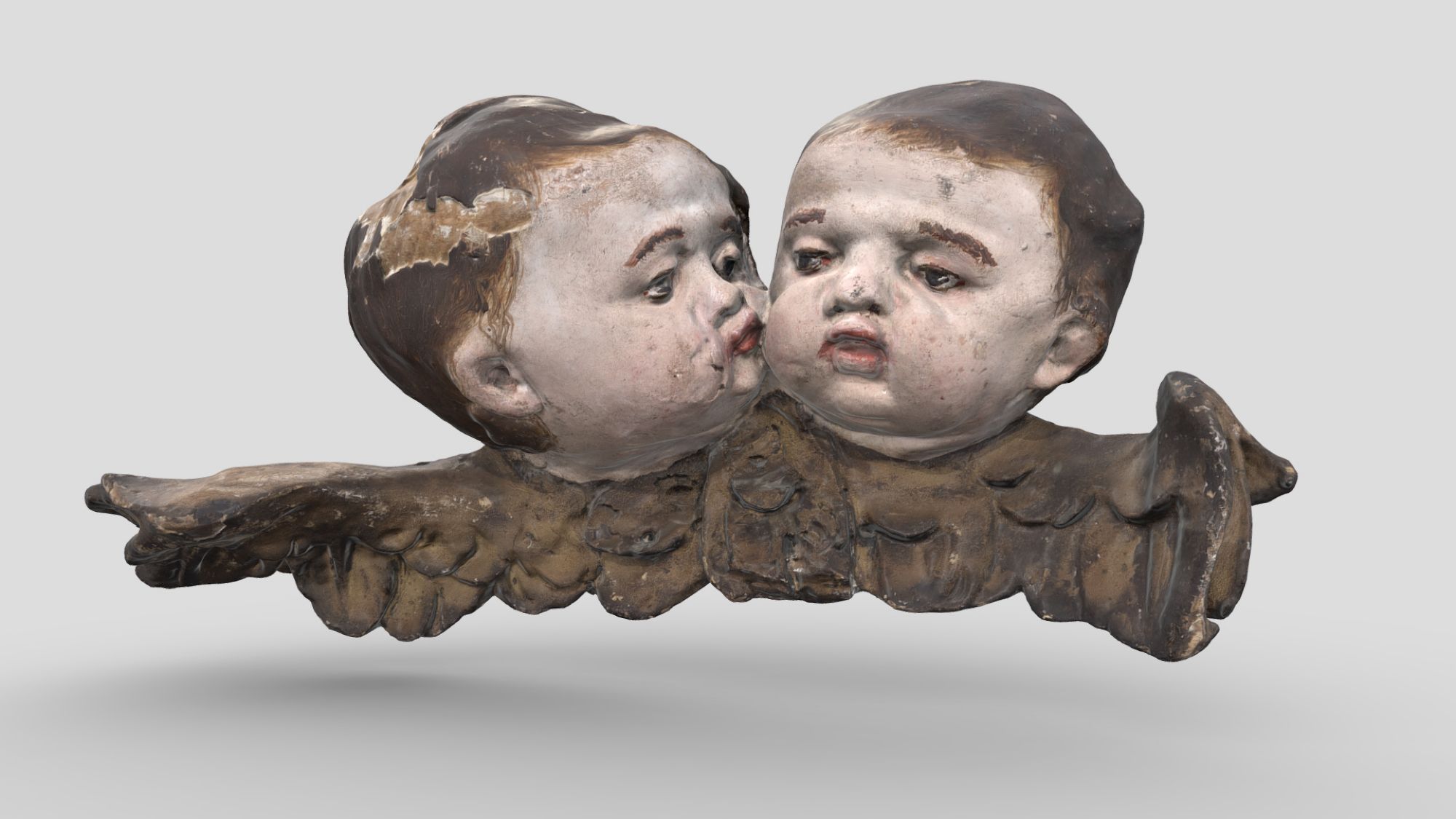
The sculptural depiction of angels' heads, carved from a single piece of wood, is a paired composition united into a single plastic whole. This type of imagery was widespread in the decorative embellishment of altar compositions and iconostases. Paired figures of cherubims were placed in the upper zones of icon frames, pediments, and decorative structures, symbolising a heavenly presence. Incorporating bodiless creatures is a traditional solution for depicting a cherubim as a pure spirit in European and Ukrainian Baroque art.
The heads are positioned close to each other and slightly turned. The cherubims touch cheeks, creating a sense of intimacy and tenderness. The images are united by wings outspread in opposite directions, forming a shared base. They unfold from the centre, as if creating a single solid horizontal line, visually balancing the composition and establishing a rhythm. Despite the compositional symmetry, the faces are distinctly individualised. One cherubim is turned in profile with his gaze directed downwards, eyelids half-closed, and lips delicately sealed as if in a gentle kiss or silent prayer. His expression is calm and focused. A different emotional state is conveyed by the head turned frontally towards the viewer. This cherubim's eyebrows are slightly drawn together, his gaze is directed downwards and to the side, and his mouth is half-open with down-turned corners, giving the face a touching, childishly sad appearance. These psychologically varied depictions give the pair a lively resonance, characteristic of the Baroque interpretation. The facial features of the cherubims are generalised, with chubby cheeks, a high open forehead, and softly modelled eyelids.
The faces are painted in a light flesh tone of carnation, combining diluted soft pink shades. The blush on the cheeks and the red lips lend human warmth to the faces. The eyebrows and eye contours are rendered in brown paint, contrasting with the fair skin. Softly modelled with rhythmic, wavy patterns that imitate feathers, the wings are covered in gilding. The cool pink carnation of the faces and the warm gold create a decorative contrast typical of Baroque works.
The plastic rendering of the angels' heads, the typology of the images, and the colour scheme of the work are characteristic of the traditions of Baroque and, partially, Rococo sculpture that was prevalent in Galicia in the 18th century. Depictions of paired cherubim heads were common in the carved decor of churches. Local masters, adopting Western European models, combined sacred symbolism with vivid human emotionality.
Legal regulation
Borys Voznytskyi Lviv National Art Gallery