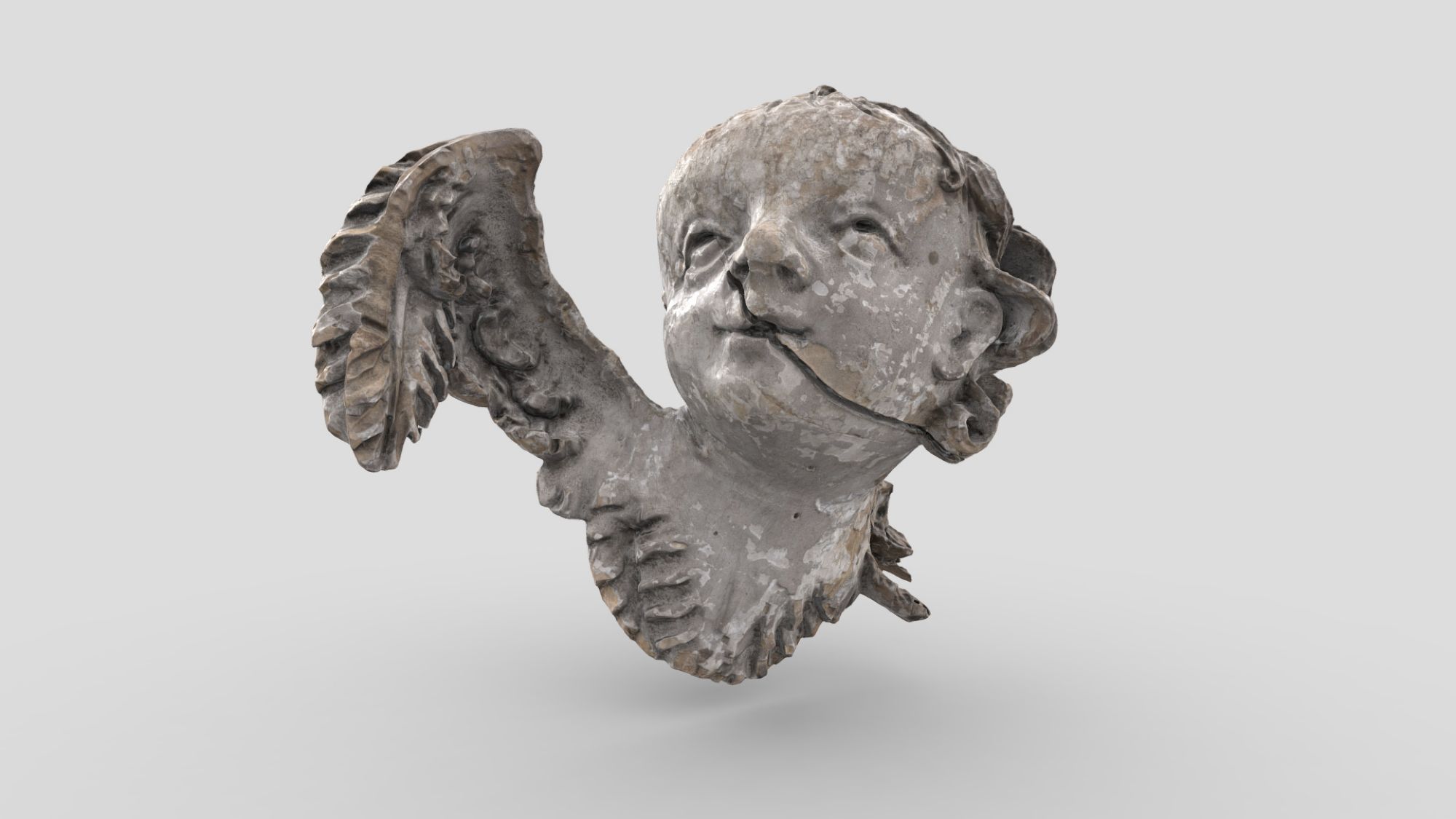
Head of an Angel
unknown

Basic information
Additionally
- Type
- sculpture 3D
- Genre
- religious
- Plot
- Cherub
- Provenance
- Husakiv village, Mostyska district, Lviv region
Information about author
Object description
The carved wooden depiction of an angel's head probably served as an addition to the decorative embellishment of a church interior, altar, or iconostas composition. The cherubim has been a widespread image in European sacred plastic art since the Renaissance and a rather popular motif during the Baroque period. The central image is a bodiless child's face framed by a pair of wings. Such depictions symbolised the presence of heavenly forces within the liturgical space. Within the interiors of sacred buildings, their golden wings personify the invisible presence of God among people.
Carved from a solid block of wood, the rounded head of the cherubim with a short neck transitions into outspread wings. This compositional structure of the work is designed to be viewed from below and from the front. The angel's head is slightly raised and turned towards the right wing, creating a lively, almost playful dynamic. One wing is noticeably unfurled, its tip ending in large, deeply carved feathers. The rounded, softly modelled face of the cherubim is chubby-cheeked, with a prominent open forehead. The nose is snub with a smoothly contoured, rounded tip. The eyes are almond-shaped with heavy eyelids and an upward gaze, giving the image a dreamy contemplation. The slightly raised line of the mouth creates the effect of a gentle, serene smile. Such softness of the face is characteristic of the Baroque interpretation of childish beauty. The voluminous hair frames the angelic face in smooth, dynamic waves falling to the temples. Above the forehead, smooth incised swirls are visible, finished on the sides by lush locks. The carving lends the hair a sculptural quality and a rich play of light and shadow. The feathers on the wings are modelled in rows: short rhythmic feathers transition into elongated flight feathers. The wing feathers are rendered in a deeper relief than the face, making them stand out with distinct shadows.
In sacred art, the image of a cherubim symbolises the heavenly beings surrounding the throne of God. In Baroque aesthetics, it personifies light, joy, and the triumph of faith. Ukrainian carving of the 17th–18th centuries, particularly in Galicia and the Lviv region, developed its own unique interpretation of these images. They harmoniously combine Western European plasticity with local authenticity.
Legal regulation
Borys Voznytskyi Lviv National Art Gallery