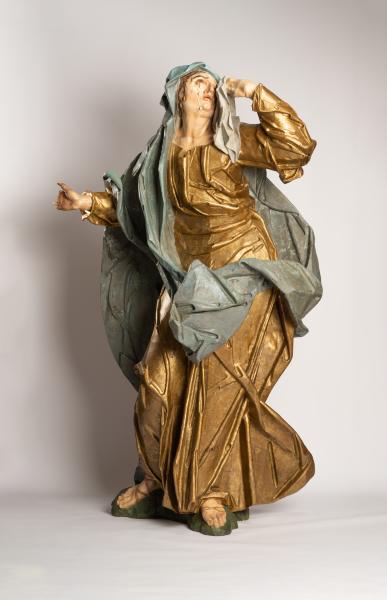
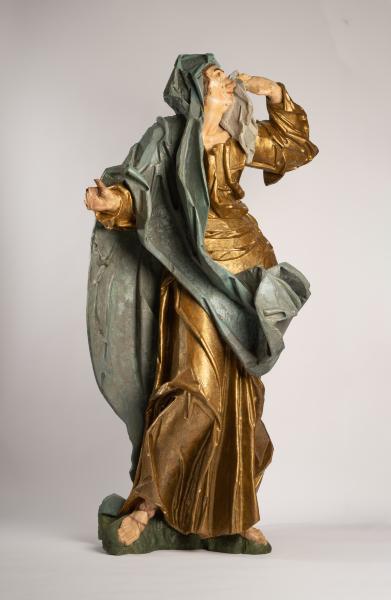
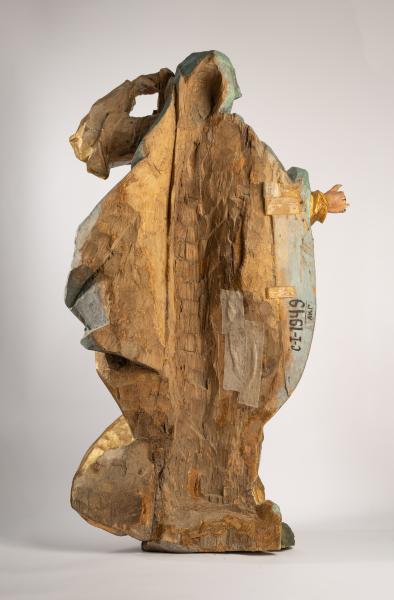
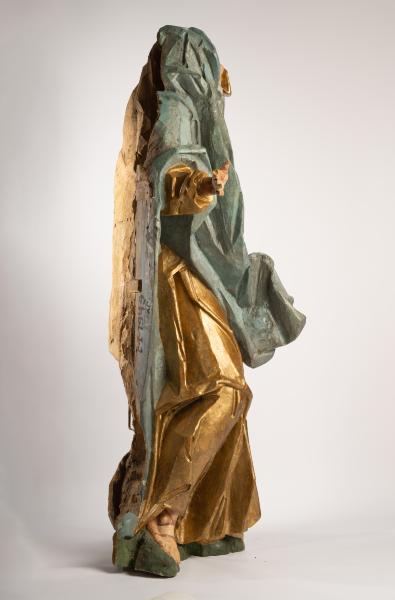
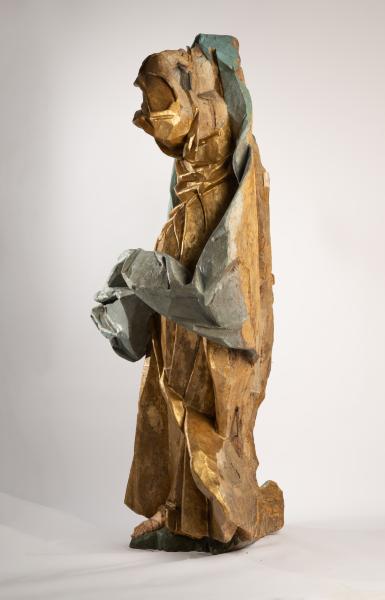
Figure of the Virgin Mary
Jan Obrocki


Basic information
- ID
- С-I-1949
- Author
- Jan Obrocki
- Name
- Figure of the Virgin Mary
- Date of creation
- 1779
- Technique
- carving polychromy
- Material
- wood
- Dimensions (height x width x depth, cm)
- 186 x 110 x 77
Additionally
- Type
- sculpture
- Genre
- religious
- Plot
- The Virgin Mary
- Provenance
- Busk town, Busk district, Lviv region, St. Stanislaus Church
Information about author
Object description
Around 1779, Jan Obrocki and Ignat Buraczynski created a volumetric sculpture for the main altar and pulpit in the Church of St. Stanislaus in Busk. Unlike typical iconographic schemes where several figures are placed near the Crucifixion, the St. Stanislaus Church altar composition features two figures – the Virgin Mary and John the Apostle. The elongated, dynamic figure of the Virgin Mary conveys dramatic, vibrant emotions. The facial features are skillfully carved: protruding cheekbones, a straight, pointed nose, pursed lips and teardrops rolling down her cheek. In the sculptor's characteristic manner, the somewhat coarse, dynamic lines of the garment folds are meticulously detailed, enveloping the Virgin Mary's body. The theatrical pose of the saint, with her head slightly tilted, is characterised by high emotional intensity and a realistic portrayal of the character. Jan Obrocki's works are known for a certain restraint and detachment in interpreting draperies, which can be observed in his creative legacy. In this particular piece, following the artistic style of Johann Georg Pinsel, the sculptor attempted to recreate his depiction of Mary from the Horodenka church.
Legal regulation
Borys Voznytskyi Lviv National Art Gallery