Vision of Saint Helen
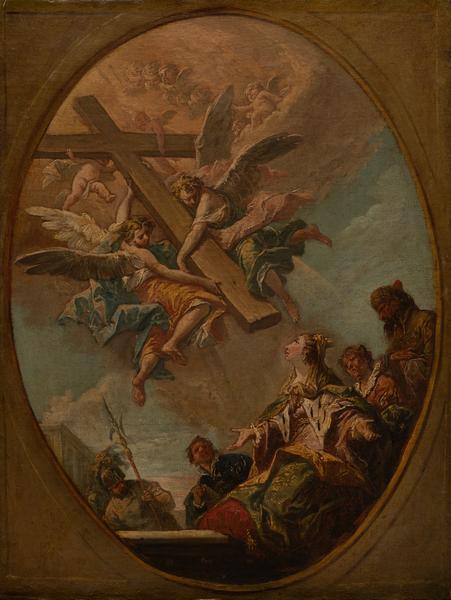
Gaspare Diziani


Basic information
- ID
- Ж-178
- Author
- Gaspare Diziani
- Name
- Vision of Saint Helen
- Date of creation
- 1745–1750
- Technique
- oil painting
- Material
- canvas oil
- Dimensions (height x width, cm)
- 71.3 x 54
Additionally
- Type
- painting
- Genre
- religious
- Plot
- Revelation of the Holy Cross to Saint Helen Saint Helen finds True Cross
- Provenance
- Purchased from a private collection, 1941
- Exposition
- Potocki Palace
Information about author
Object description
Vision of Saint Helen is one of the three sketches from the cycle depicting the life of Saint Helena. It was created by Gaspare Diziani for the plafond of Scuola del Vin at the Church of San Silvestro in Venice and is considered one of the artist's finest works. The sketch depicts the moment of Empress Helena's vision of the Holy Cross. This theatrical, emotional, and imaginative portrayal of the scene is distinctive to the Rococo aesthetics. Saint Helen, the mother of the first Christian emperor Constantine the Great, was born in 250 AD in Bithynia. She married Emperor Constantius, but he divorced her and soon married another woman. Helena and her son were sent to the court of Diocletian. With the sudden death of Constantius in 306, Constantine was declared emperor, and Helena was given the title of Augusta in 325. She was involved in construction and church embellishment. In 326, Helena travelled to Palestine to search for the greatest Christian relic. She came across a pagan temple of Venus and ordered to destroy it. Excavations began at the site, and three crosses were found. To determine which cross was True, Helena commanded that they be placed on the sick, one after the other. She came across a woman with a fatal illness. After placing the first two crosses, nothing happened. Only after the third did the woman get healed. Empress Helena recognized this cross as the one on which the Son of God was crucified. To honour Christ, Constantine commissioned the construction of the Church of the Holy Sepulchre.
Legal regulation
Borys Voznytskyi Lviv National Art Gallery