Back

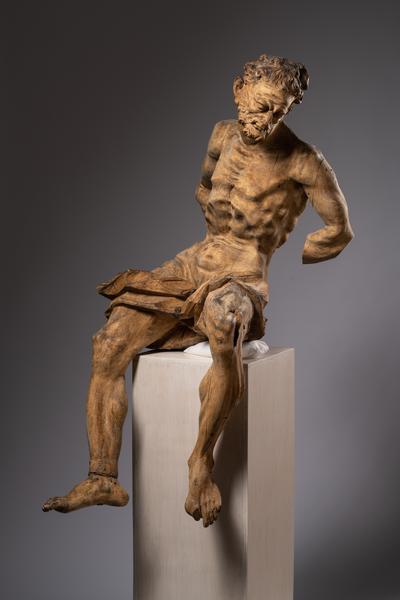
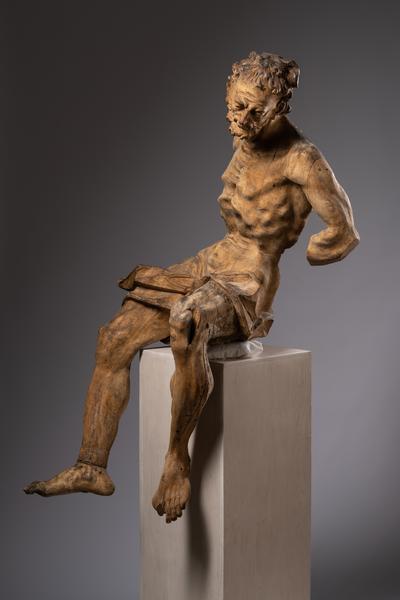
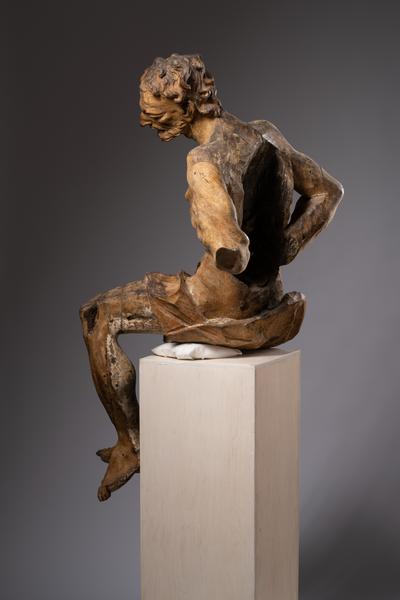
Allegorical Figure of the Prisoner

Franciszek Oledzki

  • Allegorical Figure of the Prisoner 2
  • Allegorical Figure of the Prisoner 3
  • Allegorical Figure of the Prisoner 4
  • Allegorical Figure of the Prisoner 5
  • Allegorical Figure of the Prisoner 6
  • Allegorical Figure of the Prisoner 7
  • Allegorical Figure of the Prisoner 8
  • Allegorical Figure of the Prisoner 9
  • Allegorical Figure of the Prisoner 10
  • Allegorical Figure of the Prisoner 11
  • Allegorical Figure of the Prisoner 12
  • Allegorical Figure of the Prisoner 13
  • Allegorical Figure of the Prisoner 14
  • Allegorical Figure of the Prisoner 15
  • Allegorical Figure of the Prisoner 16
  • Allegorical Figure of the Prisoner 17
  • Allegorical Figure of the Prisoner 18
  • Allegorical Figure of the Prisoner 19
  • Allegorical Figure of the Prisoner 20
  • Allegorical Figure of the Prisoner 21
  • Allegorical Figure of the Prisoner 22
Basic information
ID
С-I-1101
Author
Franciszek Oledzki
Name
Allegorical Figure of the Prisoner
Date of creation
1780s
Country
Ukraine
Technique
carving
Material
wood
Dimensions (height x width x depth, cm)
128 x 54 x 42
Information about author
Author
Franciszek Oledzki
Artist's lifetime
c. 1745–1792
Country
Polish-Lithuanian Commonwealth, now Ukraine
Biography
Franciszek Oledzki was a Lviv sculptor of the second half of the eighteenth century. There are not enough documented works about the artist. His creative activity dates between 1760 and 1792. The author worked with various materials: limestone, marble, stucco, wood (linden was the primary material) and mostly carved round sculptures. Since the 1770s, Oledzki worked in Lviv: he performed stained glass works in the Latin Cathedral (from June 14, 1773 to November 4, 1779, he worked on four altars, a throne for the bishop, and various ornaments); in the Dormition Church, the artist made an iconostasis; in the Church of St. Mary Magdalene, he carved an altar with figures of saints. In addition to Lviv, Franciszek Oledzki worked in Berestechko, Buchach, and Lopatyn. In 1774, he signed an agreement with the superior of the Dominican monastery in Pidkamin to perform sculptural works. A characteristic feature of the sculptor's work is the figures' expressive poses and dynamic gestures – his angels seem to be flying in the sky. The professionalism of the master is felt in the filigree facial features, movements of the depicted figures, and peculiar curls of their hair.
Object description
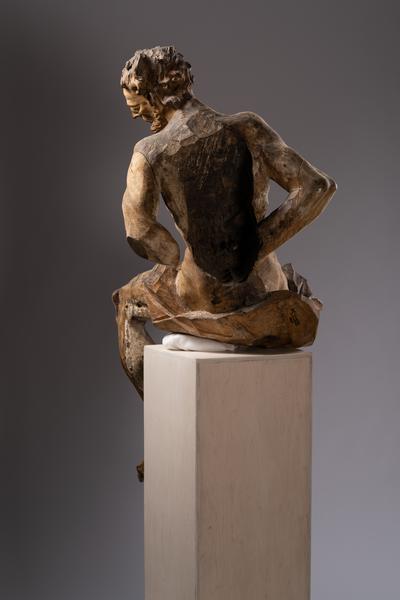
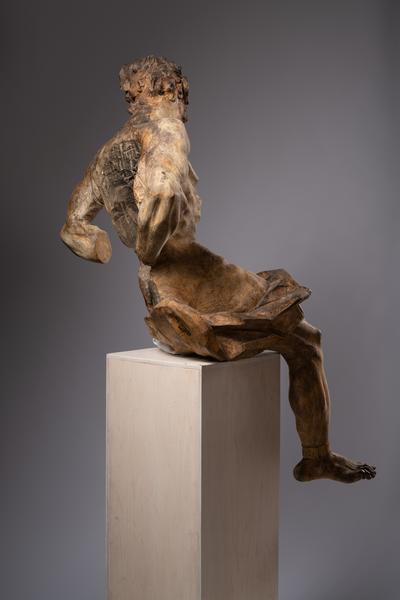
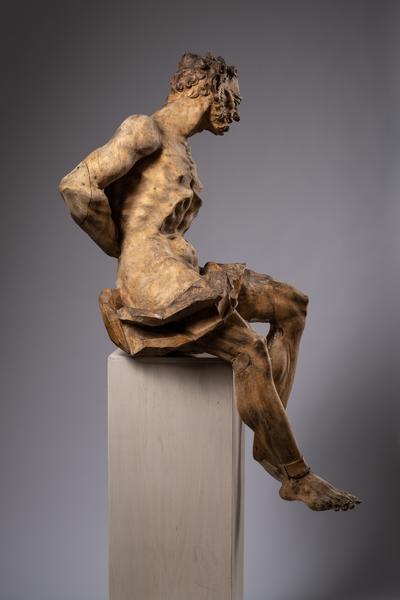
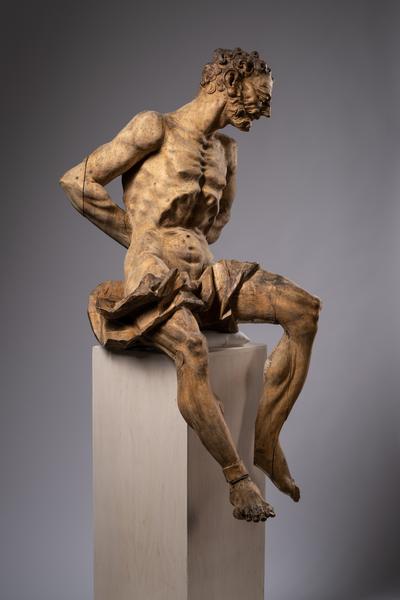
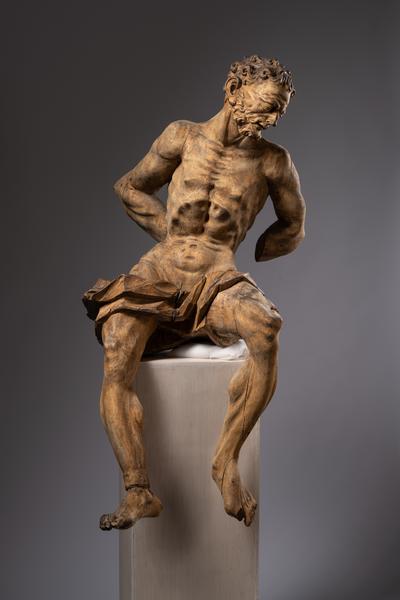
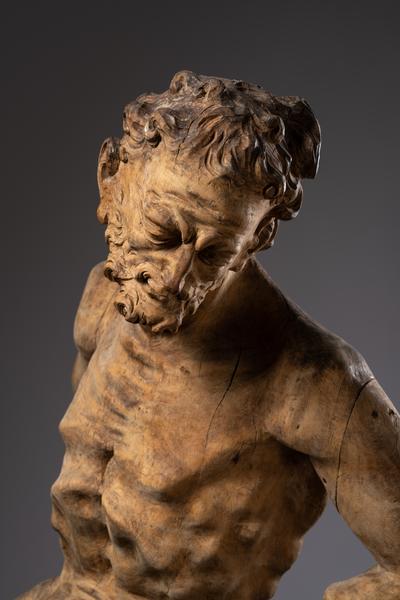
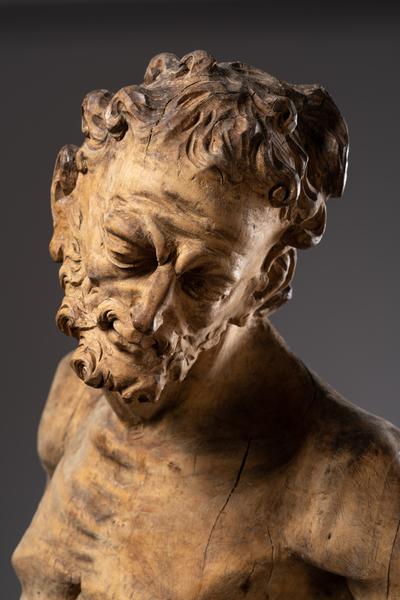
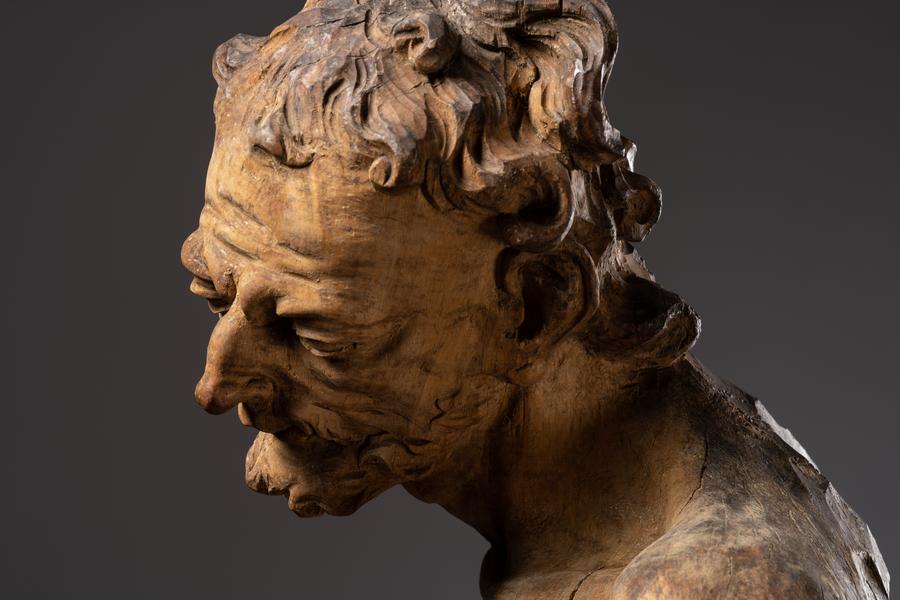
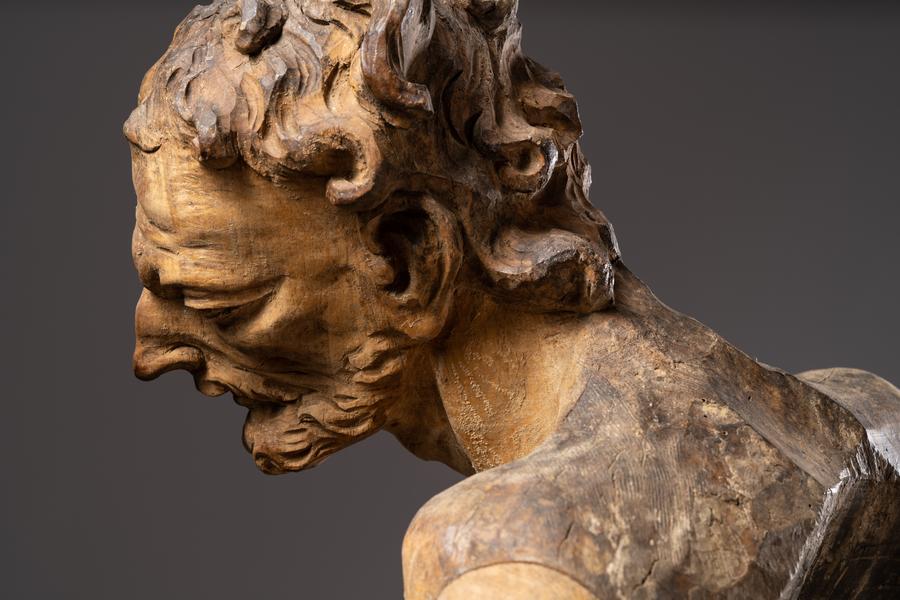
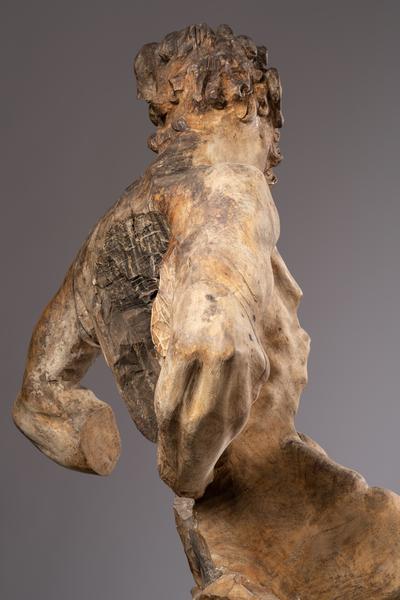
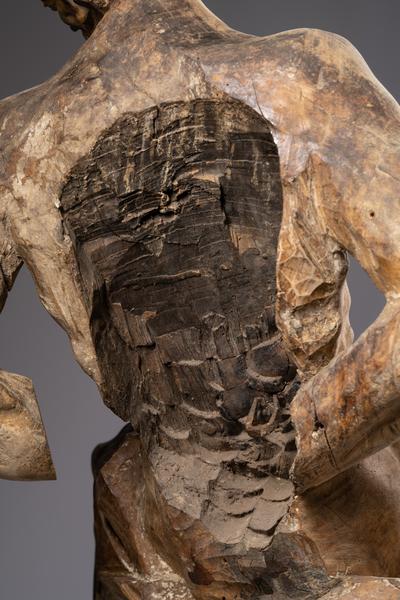
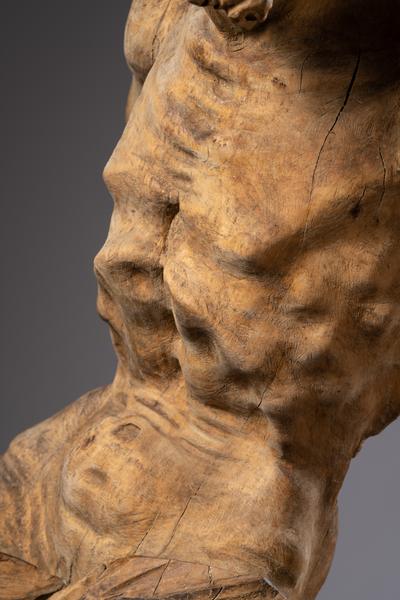
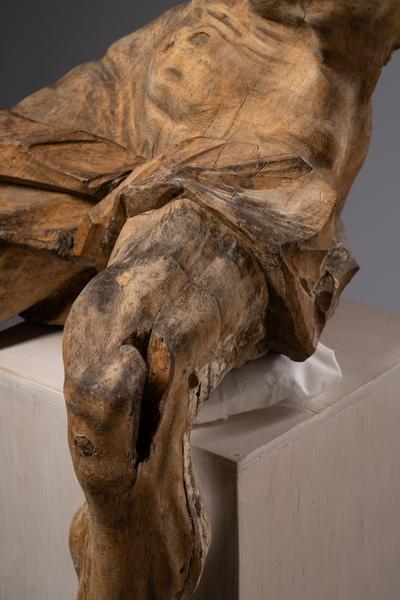
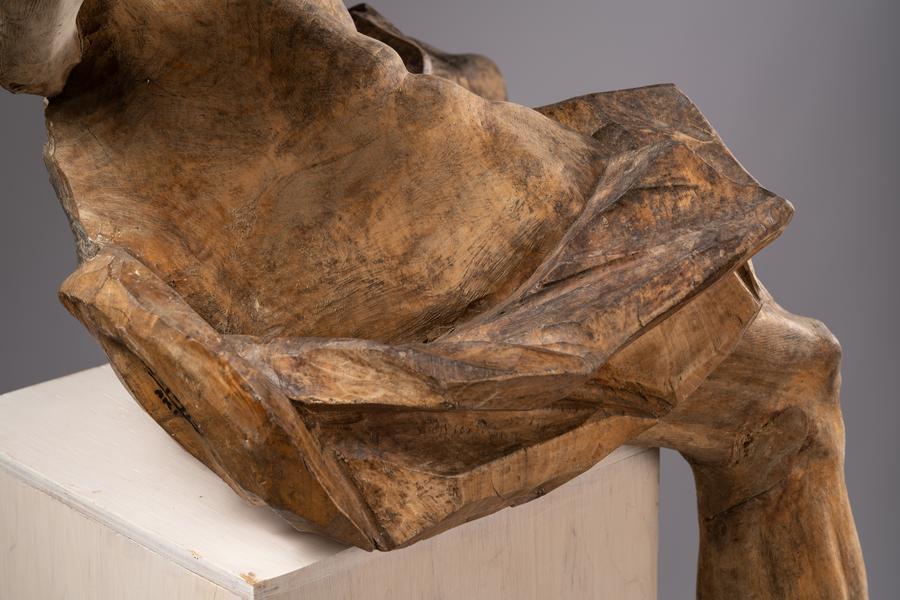
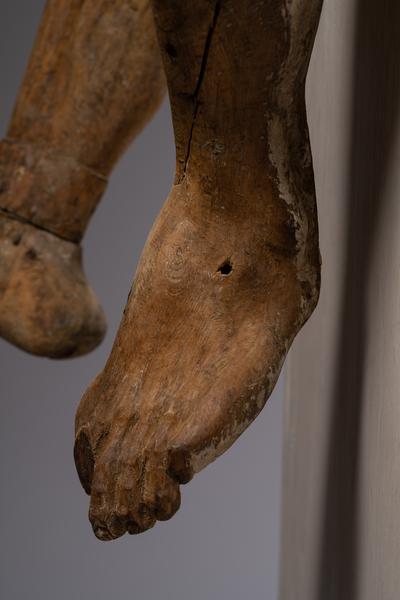
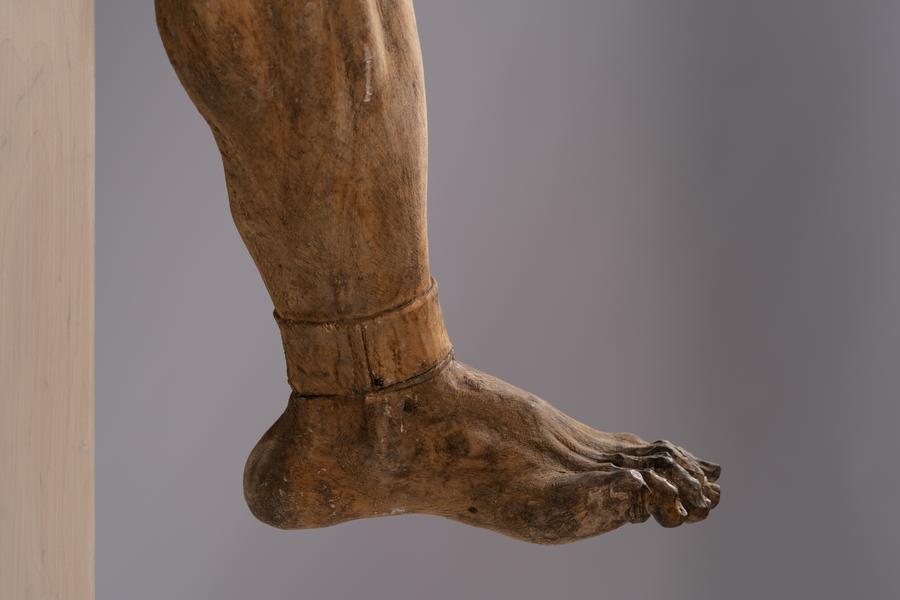
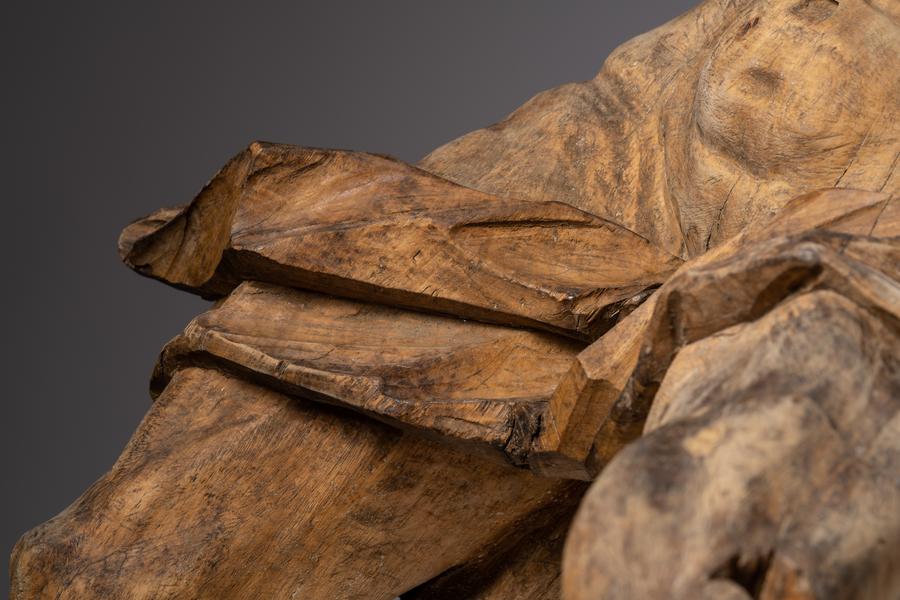
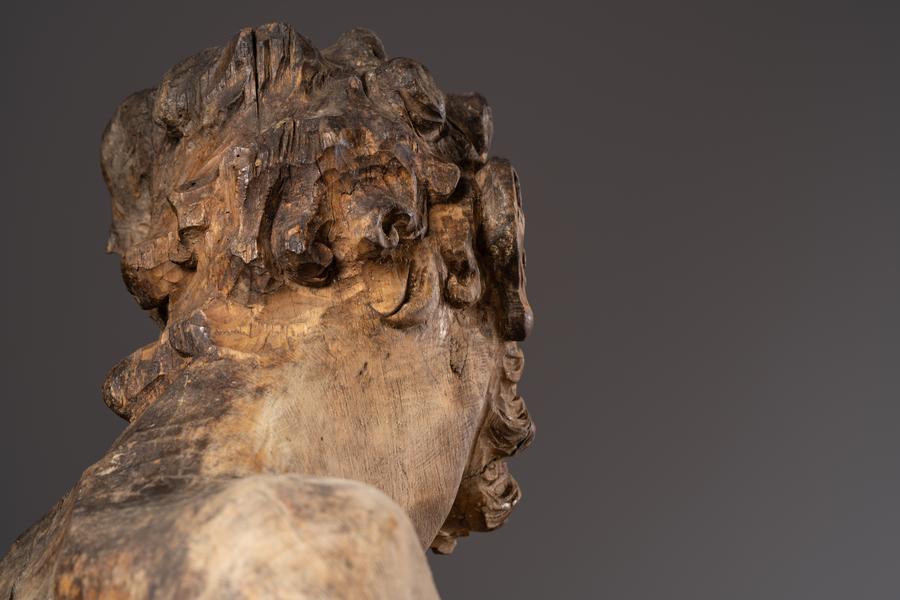
In the 80s of the 18th century, Franciszek Oledzki received an order to make an ensemble of sculptures from two prisoners; they were designed to decorate the upper part of the church's central altar. The artist masterfully reproduced the exhausted body of the prisoner – the tension is felt in every curve. Skilfully using a chisel, the sculptor depicted the man with a protruding chest; the skin outlines his ribs; his arms and legs are muscular, and an abdominal cavity is sunken. The image of pain and suffering froze on the man's face. The prisoner's face is characterised by the typical face form of Oledzki's works; his nose is straight and slightly protruded. In an original manner, the author reproduced hair curls that look dishevelled. The external effect prevails in plasticity, which is felt in the figure's pose and the theatricality of the movement.
Legal regulation
Borys Voznytskyi Lviv National Art Gallery