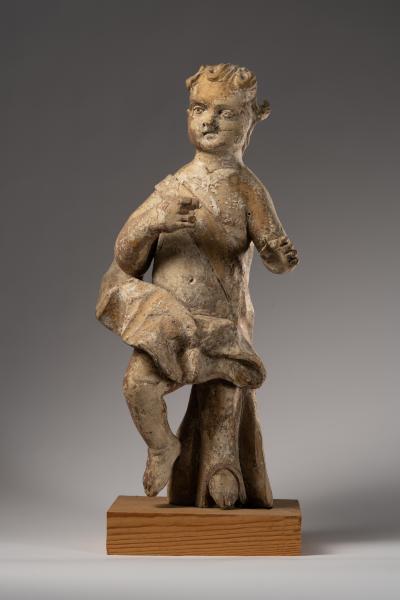
Figure of an Angel
unknown folk sculptor


Basic information
- ID
- С-I-1955
- Author
- unknown folk sculptor
- Name
- Figure of an Angel
- Date of creation
- 19th c.
- Country
- Ukraine
- Technique
- carving polychromy
- Material
- wood
- Dimensions (height x width x depth, cm)
- 63 x 28 x 21
Additionally
- Type
- sculpture
- Genre
- religious
- Plot
- Angel
- Provenance
- Lviv region
Information about author
Object description
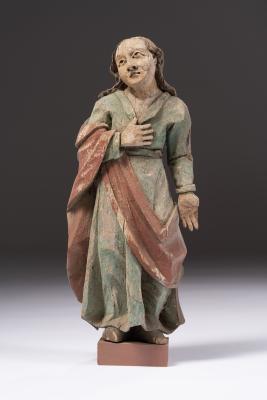
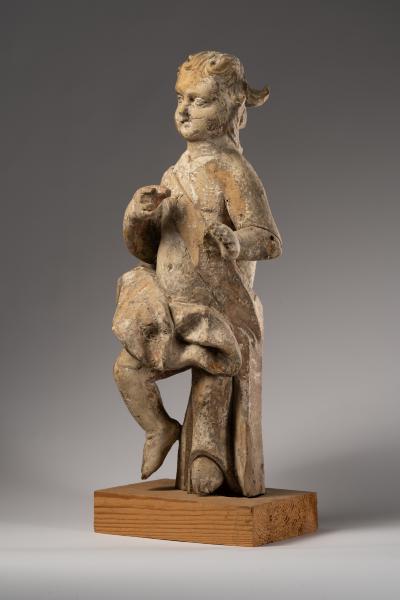
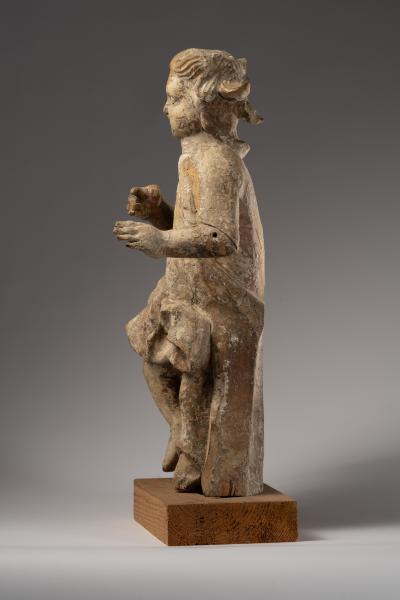
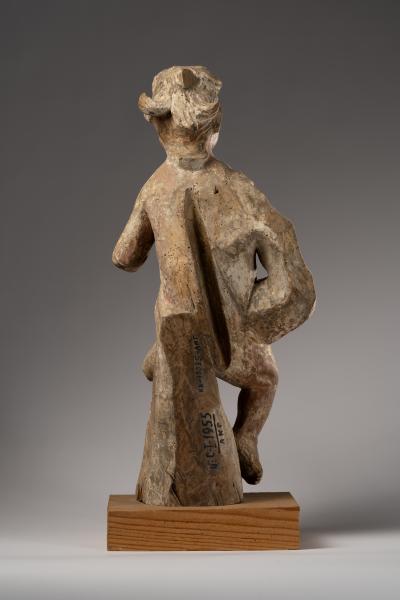
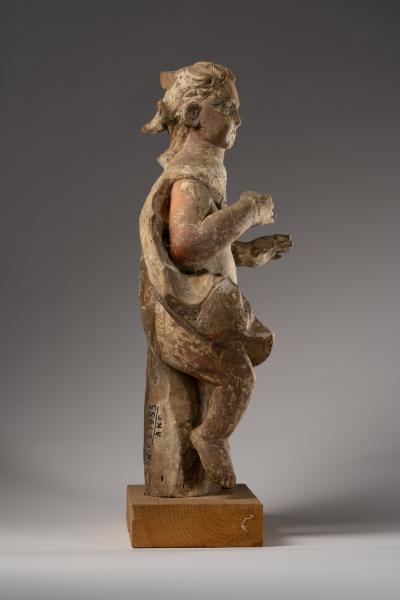
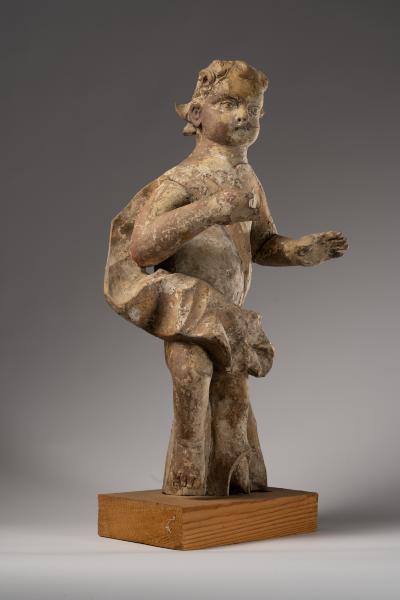
Folk artists' figurative interpretation of angels is distinguished by the artistic authenticity of wooden plastics. The contrapposto sculpture of an angel is depicted in full length. His torso is slightly inclined to the left, and his right leg is bent at the knee and outstretched to the side. Despite the disproportion and schematism in rendering details, the author's desire for an accurate anatomical representation of the human body is evident. The angel's round face is pleasant and serene. The expressive eyes, outlined by clear brow arches, radiate inner peace, while the subtle smile adds a unique lyrical tone to the image. The massive neck smoothly transitions into narrow, drooping shoulders. The angel's exposed body is enveloped in drapery, one part of which, thrown over the right shoulder, covers the hips while the other part flows behind. The drapery is carved with uneven lines of folds, which imbue the frontal static sculpture with emotionality, filling the image with lively immediacy.
Legal regulation
Borys Voznytskyi Lviv National Art Gallery