Back

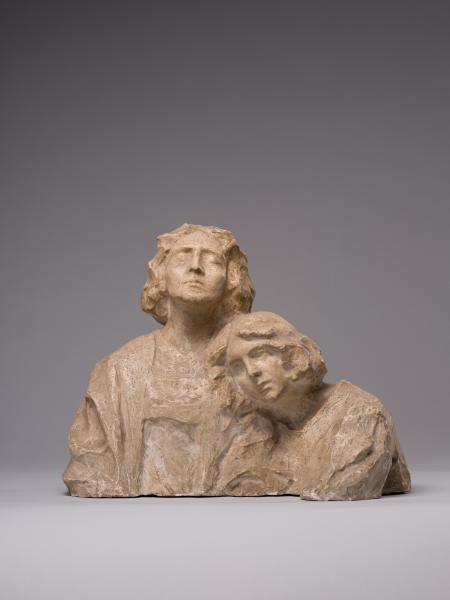
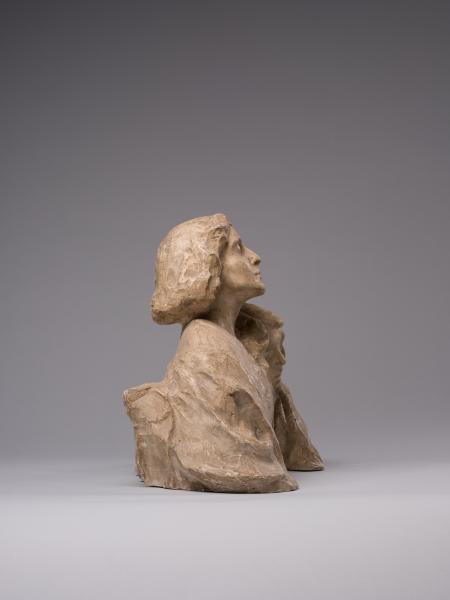
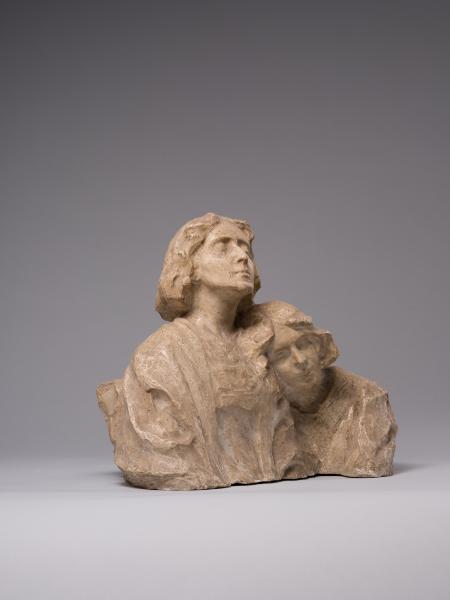
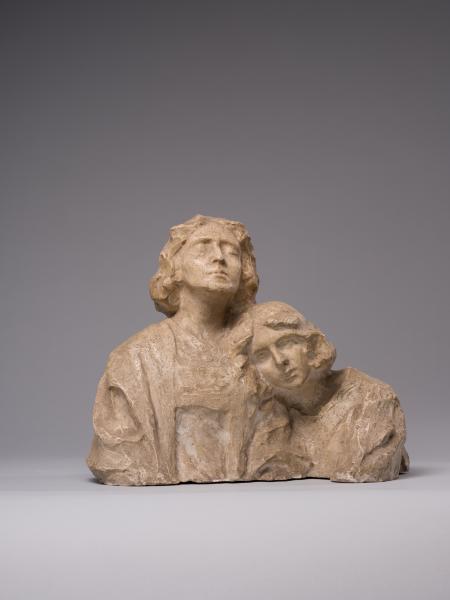
Largo (Mother with Daughter), a miniature model of the upper part of the sculpture

Luna Drexler

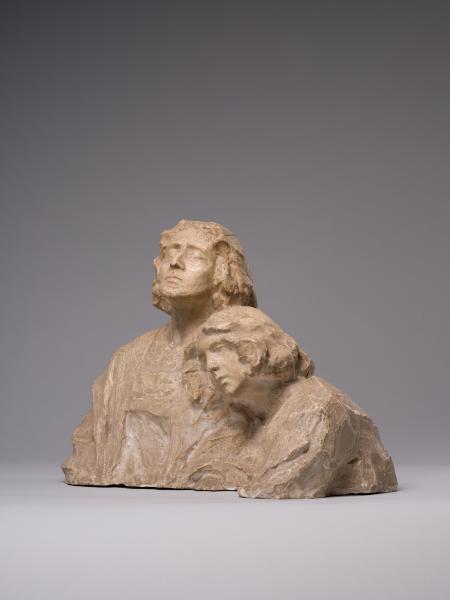
  • Largo (Mother with Daughter), a miniature model of the upper part of the sculpture 2
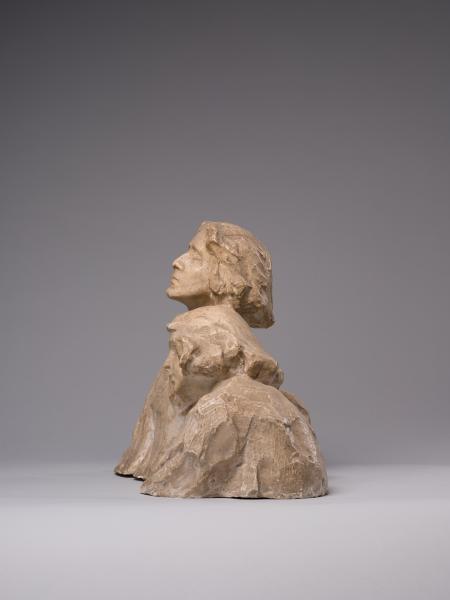
  • Largo (Mother with Daughter), a miniature model of the upper part of the sculpture 3
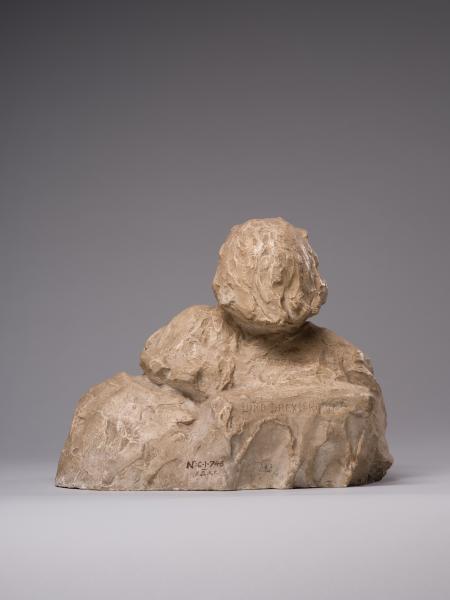
  • Largo (Mother with Daughter), a miniature model of the upper part of the sculpture 4
  • Largo (Mother with Daughter), a miniature model of the upper part of the sculpture 5
  • Largo (Mother with Daughter), a miniature model of the upper part of the sculpture 6
  • Largo (Mother with Daughter), a miniature model of the upper part of the sculpture 7
  • Largo (Mother with Daughter), a miniature model of the upper part of the sculpture 8
Basic information
ID
С-I-746
Author
Luna Drexler
Name
Largo (Mother with Daughter), a miniature model of the upper part of the sculpture
Date of creation
1912 (?)
Country
Austro-Hungarian Empire
Culture
Contemporary times
Technique
moulding
Material
plaster vernix
Dimensions (height x width x depth, cm)
32 x 42 x 22
Information about author
Author
Luna Drexler
Artist's lifetime
1882–1933
Country
Austro-Hungarian Empire, Poland, France
Biography
The artist came from the family of Ignacy Drexler, a Lviv merchant who owned a textile shop in Kapitulna Square. He was known for his artistic talent and for encouraging children's involvement in the arts. Up to the age of 17, Luna was fond of music and later became interested in painting and sculpture. In 1899, she entered the private art school of Marceli Harasimowicz in Lviv, where she studied under the portrait painter and illustrator Stanislaw Reichan (from 1899), a member of a famous Lviv family of artists and a graduate of the Vienna Academy of Arts. She improved her skills by taking lessons from Stanislaw Batowski-Kaczor and the sculptor Antoni Popiel. At the same time, the future artist attended the public drawing and modelling studio of the Lviv Art and Industrial School. She improved her skills at the Adrian Baraniecki Higher Women's Courses in Krakow for some time. In 1907, Luna Drexler studied in Paris at the Académie de la Grande Chaumière under Jean-Antoine Injalbert and the famous sculptor Antoine Bourdelle. She was fascinated by the work of Auguste Rodin, whose symbolic Impressionist style is reflected in a number of her works. In 1908, the artist returned to Lviv and took over the former studio of the Lviv sculptor Tadeusz Baracz, who had died in 1905. In the same year, the first personal exhibition of Luna Drexler was held in the exhibition hall of the Society of Friends of Fine Arts (Towarzystwo przyjaćół sztuk Pięknych), which included more than twenty works.
The collection of European artistic experience continued in 1909: in Paris under Antoine Bourdelle, in Rome – at the Medici Academy, and from 1910 – at the Munich Academy of Fine Arts. The ideological foundations of Luna Drexler's work were formed by her acquaintance with the philosopher, writer, architect and sculptor Rudolf Steiner, who founded the Anthroposophical Society in Dornach (Switzerland). During her stay abroad, the artist was involved in the exhibition life of Eastern Galicia. Between 1911 and 1914, she collaborated with Oleksandr Levytskyi's faience factory in the village of Patsykiv near Stanislav (now Pidlissia, Ivano-Frankivsk region). In 1917, the artist returned to Lviv and settled first in house No. 30 on St. Sofiia Street (now - 114 Franko Street), then at 14 Parkova Street (1910, architect Ivan Levynskyi), where she lived until the end of her life. The creative heritage of Luna Drexler consists of more than 200 sculptures and several dozen paintings. Until the early 1910s, her creative work was dominated by the inspirations of Impressionism, Symbolism, and Secession. Later, she was inspired by the cultures of ancient Egypt and Assyria and ancient Greek and medieval French sculptures, which led to an archaic stylisation. Influenced by the ideas of Rudolf Steiner, the ideological core of the artist's figurative and plastic explorations was the revelation of human spiritual principles through artistic means. In line with the fine arts of the early twentieth century, Luna Drexler sought to integrate painterly means of artistic expression into sculpture, which is confirmed by the texture of the surfaces, polychrome colouring, and soft modelling of forms. The artist's painting legacy is made up of landscapes and portraits. It is known that the artist was also interested in graphic art, significantly etching. Drexler's establishment in the socio-cultural space of the twentieth century is confirmed by her active public activity, participation in the founding of the Union of Polish Artists, membership in the Sculpture Association, as well as membership in the Board of the Union of Polish Artists and the Lviv City Council for the Arts.
Luna Drexler died in Lviv at age 51 and was buried in the Lychakiv cemetery. For the construction of the artist's tombstone, one of the reliefs of her 1927 work "Dedication" (a flying angel, reproduced with a cross and seven roses in his hands) was used, which was cast in bronze and installed on the grave in a black marble frame. A posthumous exhibition of Luna Amalia Drexler's work was held in May–July 1937, featuring 189 works, including 126 sculptures and 63 oil and watercolour paintings.
Object description
The composition "Mother with Daughter" ("Largo") (1912), known in several variations, was recognised by contemporary art critics as one of the best works by Luna Amalia Drexler. A distinctive feature of the sculpture's figurative and plastic execution is visual and sound synthesis, depicting a woman's head tilted back and raised upwards, immersed in musical worlds. The openness of the sculpture to the external space, interpreted as the world of music, the fluid closeness of the outline, and the soft modelling of the faces serve as a means of embodying the artistic idea. The energy of the musical rhythm and the change of musical registers are reproduced by the textured "painterly" impressionistic modelling of the outfit. The subtle differentiation of the individual peculiarities of music perception: elevated meditative – of the mother and dreamy-romantic – of the daughter, adds figurative expressiveness to the work. The semantic "key" to the perception of the sculpture is the name Largo (from the Italian – broadly, extremely slowly, long) – a musical tempo and character similar to adagio, but more strict in performance, differentiated into slow Largo assai di molto, sublime Largo religioso, life-affirming Largo ma non troppo.
Legal regulation
Borys Voznytskyi Lviv National Art Gallery