Bust of Jan Kasprowicz
Kazimiera Malaczynska-Pajzderska


Basic information
- ID
- С-I-331
- Author
- Kazimiera Malaczynska-Pajzderska
- Name
- Bust of Jan Kasprowicz
- Date of creation
- 1906
- Country
- Austro-Hungarian Empire
- Culture
- Contemporary times
- Technique
- moulding
- Material
- plaster
- Dimensions (height x width x depth, cm)
- 51 x 66 x 35
Additionally
- Type
- sculpture
- Genre
- portraiture
- Plot
- Portrait bust
- Provenance
- Museum of the Lubomirski Princes in Lviv
Information about author
Object description
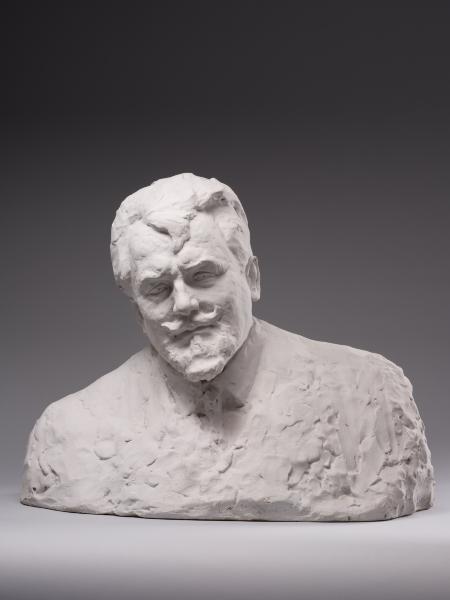
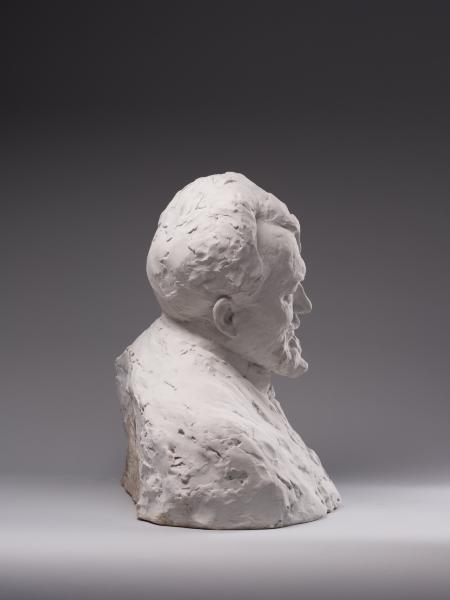
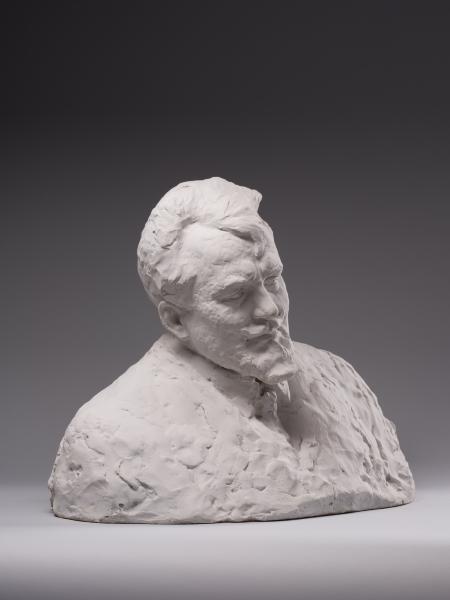
The work is dedicated to Jan Kasprowicz, a poet, translator, literary critic, philosopher, historian, and contributor to the "Kurier Lwowski" and "Słowo Polskie", in 1909–1923 lecturer in literature and comparative literature at the Jan Kazimierz University in Lviv, and in 1921–1922 its rector. The sculpture belongs to the early works by Kazimiera Malaczynska-Pajzderska, exhibited at the artist's first exhibitions in Lviv in 1909, including 13 portrait sculptures.
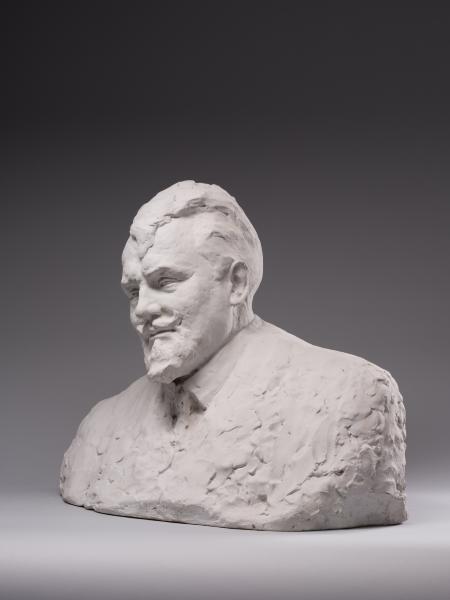
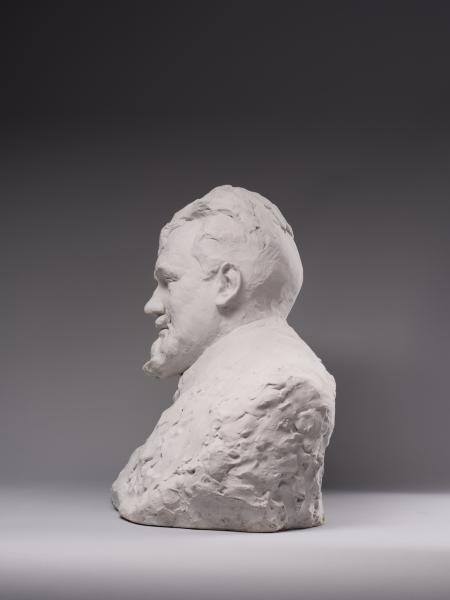
The peculiarity of the work lies in the vigorous modelling and authenticity of reproducing individual characteristic psychological features – the inspiration by A. Rodin and Impressionism, in general, can be seen in the relaxed inclination of the head and shoulders, the naturalness of the facial expression, and the attempt to capture the moment in the flow of events. The artistic solution is conditioned by impressionistic sculptural insights, as evidenced by the asymmetry of the sculptural volumes, the "painterly" surface modelling, the effects of light and shadow, the "blurring" of outlines, and the active interaction of form with space. The intellectualism of the sitter is emphasised by a high, open forehead and a pensive gaze as if conceived by thought and words. The "communicative" nature of the sculpture, its belonging to the time-space of the viewer, is achieved by the low height of the base-shoulders and the author's deliberate disregard for plastic means of separating the image from the environment.
The peculiarity of the work lies in the vigorous modelling and authenticity of reproducing individual characteristic psychological features – the inspiration by A. Rodin and Impressionism, in general, can be seen in the relaxed inclination of the head and shoulders, the naturalness of the facial expression, and the attempt to capture the moment in the flow of events. The artistic solution is conditioned by impressionistic sculptural insights, as evidenced by the asymmetry of the sculptural volumes, the "painterly" surface modelling, the effects of light and shadow, the "blurring" of outlines, and the active interaction of form with space. The intellectualism of the sitter is emphasised by a high, open forehead and a pensive gaze as if conceived by thought and words. The "communicative" nature of the sculpture, its belonging to the time-space of the viewer, is achieved by the low height of the base-shoulders and the author's deliberate disregard for plastic means of separating the image from the environment.
Inscriptions
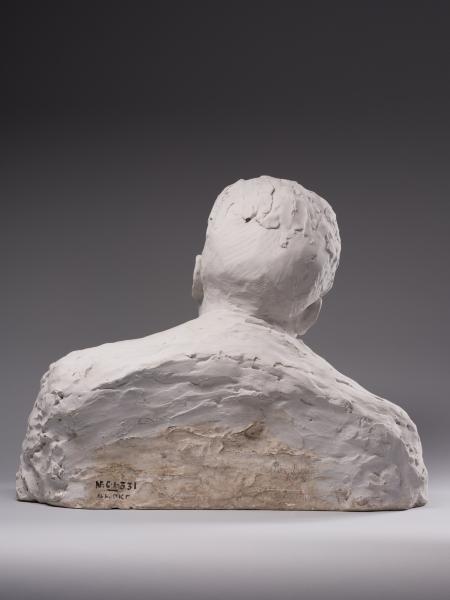
Signed at the bottom: "K. Malaczyńska"; on the back: "Muz. Lub. / Nr. Spisu 19. / Wys. 50 cm".
Portrayed person
- The name of the person portrayed
- Jan Kasprowicz
- Lifetime of the person portrayed
- 1860–1926
Legal regulation
Borys Voznytskyi Lviv National Art Gallery