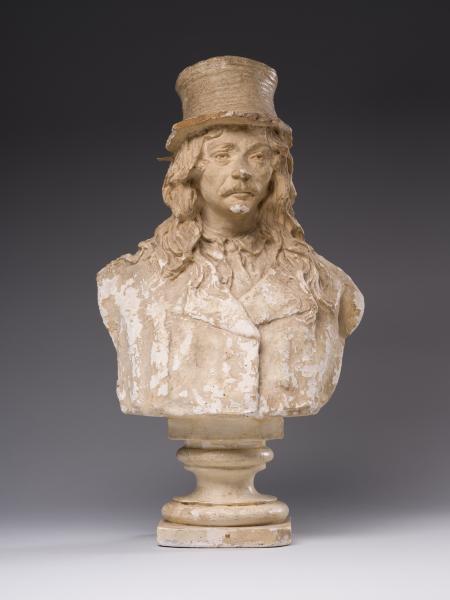
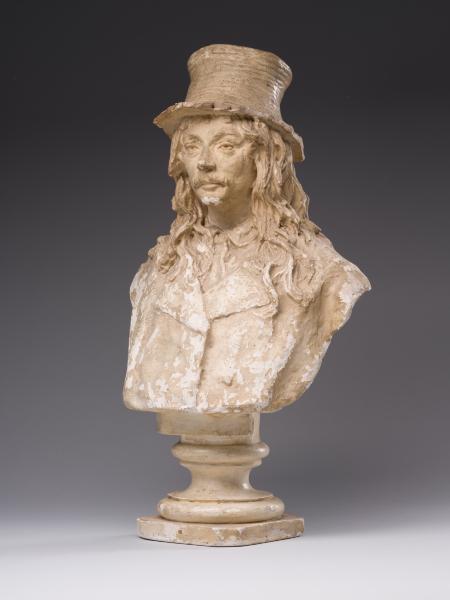
Bust of a Peasant
Tadeusz Baracz


Basic information
- ID
- С-I-25
- Author
- Tadeusz Baracz
- Name
- Bust of a Peasant
- Date of creation
- c.1879
- Country
- Austro-Hungarian Empire
- Culture
- Modern times Contemporary times
- Technique
- moulding
- Material
- plaster
- Dimensions (height x width x depth, cm)
- 41.5 x 23 x 16
Additionally
- Type
- sculpture
- Genre
- portraiture
- Plot
- Portrait bust
- Provenance
- National Gallery of Lviv (until 1940)
Information about author
Object description
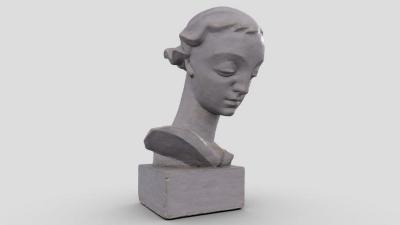
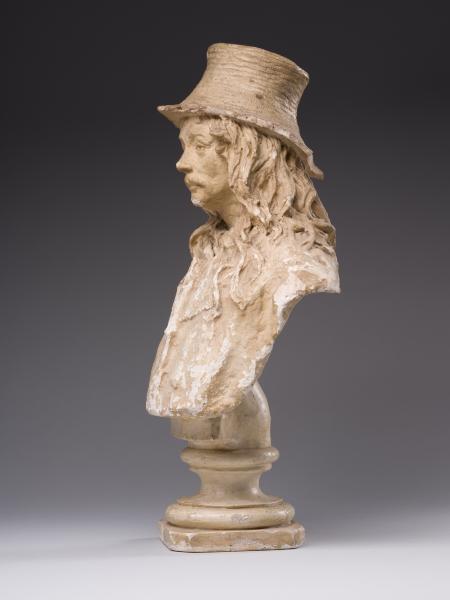
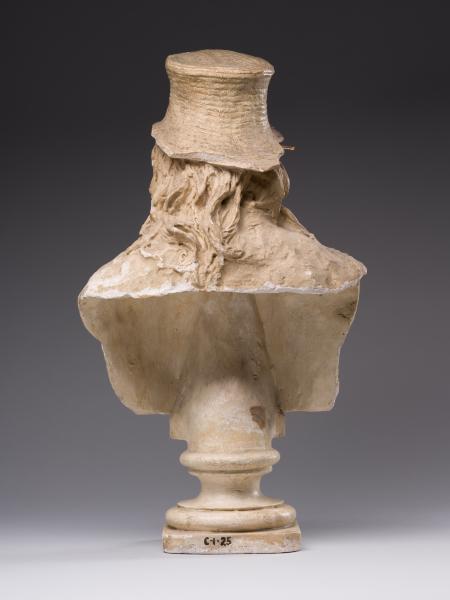
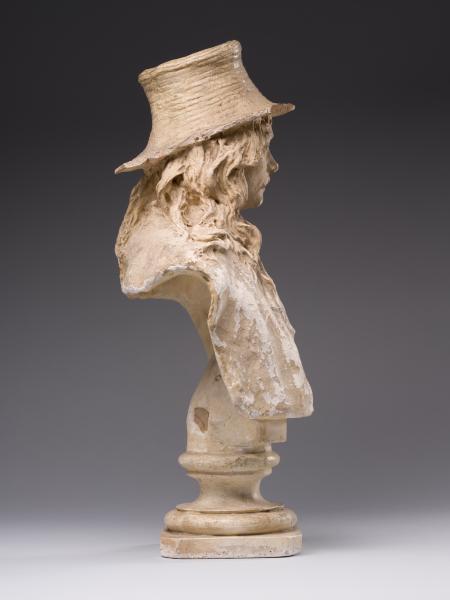
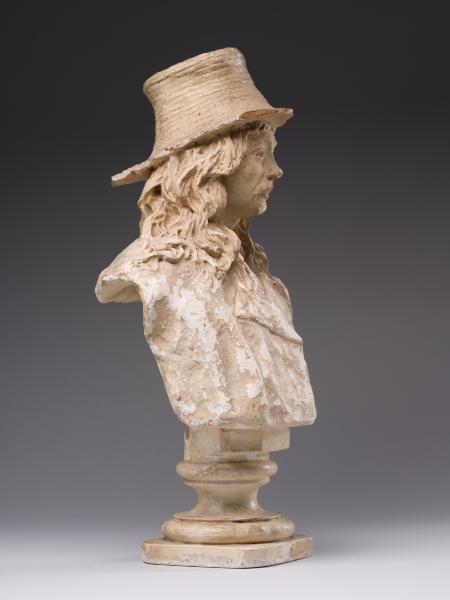
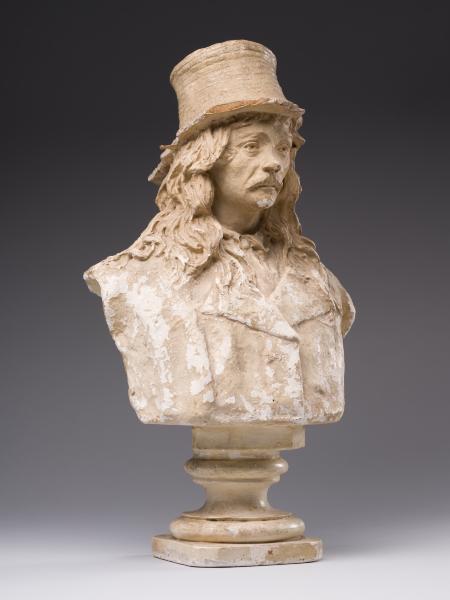
All the aspects characteristic of Romanticism – the affirmation of the idea of nation-building, the understanding of the national as the folk, and the development of the concept of cultural renewal by turning to folk sources – led to the spread of folk themes, including sculpture. An example is the "Bust of a Peasant" (1879) by T. Baracz – full of empathy and respectful attention to the portrait and its individual and typical folk features. The peculiarity of the figurative solution of the work is the establishment of the value of an ordinary folk appearance as an object of artistic understanding and reproduction. Thus, in T. Baracz's work, an old, simple face with a large, snub nose, a naive gaze and colourful folk costumes acquire aesthetic significance. The artist's departure from the academic style is evident in the painterly contours, the shimmering effects of light and shadow, and the free, almost impressionistic modelling of forms.
Inscriptions
On the back, on the base, a sticker with a seal: "Galerja / Narodowa / m. Lwowa" and "7".
Legal regulation
Borys Voznytskyi Lviv National Art Gallery