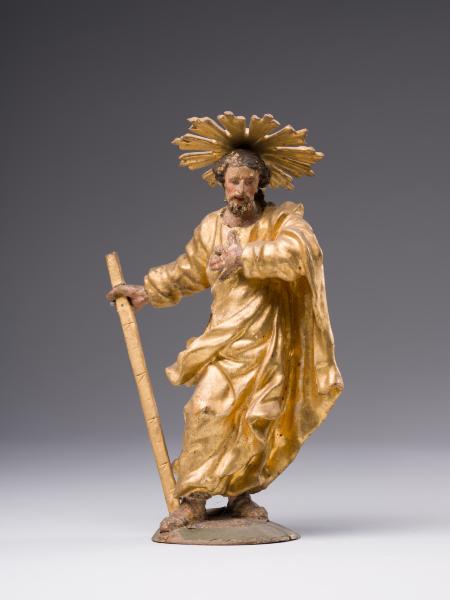
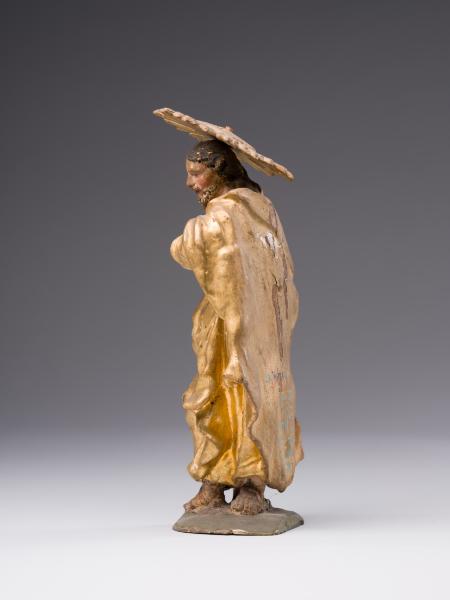
Saint Simon
unknown (Austrian School)


Basic information
- ID
- С-I-260
- Author
- unknown (Austrian School)
- Name
- Saint Simon
- Date of creation
- 18th c.
- Country
- Austria
- Culture
- Modern times
- Technique
- carving
- Material
- wood gilt
- Dimensions (height x width x depth, cm)
- 23 x 14.5 x 7
Additionally
- Type
- sculpture
- Genre
- religious
- Plot
- Saint Simon
- Provenance
- Collection of Leon Pininski
Information about author
Object description
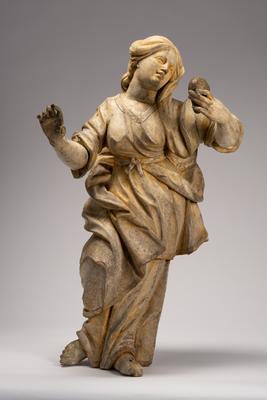
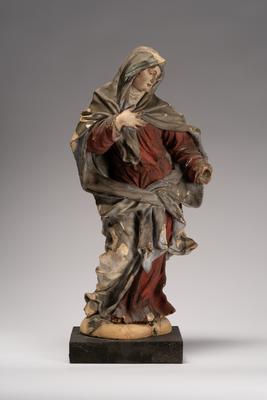
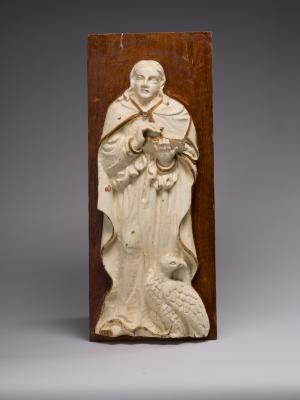
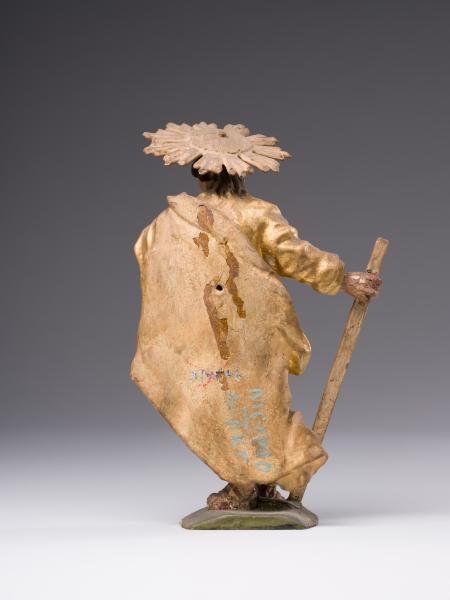
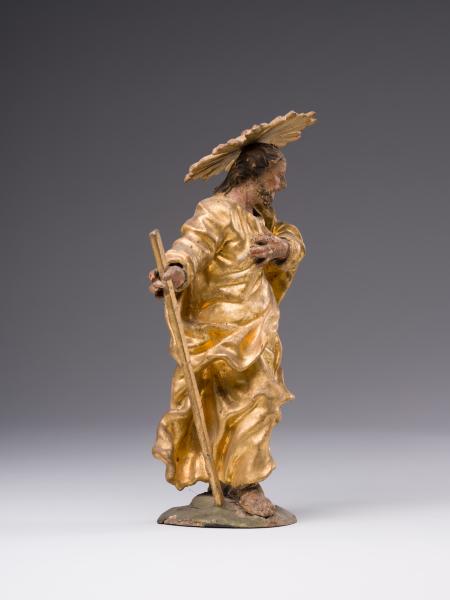
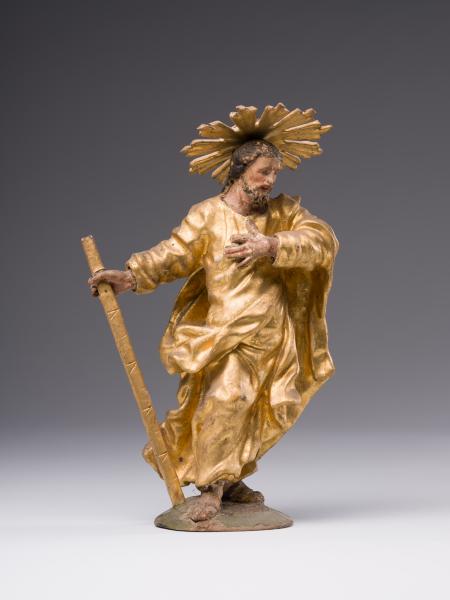
The holy apostle Simon the Canaanite, one of the twelve apostles, came from Cana in Galilee. He was one of Joseph's four sons by his first wife and thus a half-brother of Jesus Christ. "Canaanite" means "zealot" in Aramaic. One of the interpretations of the apostle's name is linked to Cana in Galilee, where Jesus Christ performed his first miracle at Simon's wedding, turning water into wine. This is described in the Gospel of John the Theologian. This passage, read during the celebration of the Sacrament of Matrimony, probably gave rise to the veneration of the Apostle Simon the Canaanite as the patron saint of Christian marriage. After witnessing the miracle at a wedding in Cana, Simon became so convinced of Christ that he followed him despite his recent marriage. After the Ascension, he began to preach the faith of Christ. Simon later settled in a cave in the gorge of the Psyrtskhi River (near modern-day New Athos), where he performed many signs and wonders. During the brutal persecution of Christians by the pagan Georgian king Aderkii, Simon was martyred. According to one version, he was cut down with a sword; according to another, he was sawed to pieces. There is also a tradition that he was crucified on a cross. The disciples buried the body of the saint not far from his cave. Believers began to come to his tomb to ask for help in their troubles and for healing from illnesses. In the ninth century, a church was built on the relics of Simon the Canaanite in white hewn limestone. The sculptural image of the saint from the collection of Borys Voznytskyi Lviv National Art Gallery is characterised by the solemnity of the image and the skilful modelling of the forms. The Baroque inspiration can be seen in the expression of the robe's folds and the active interaction of the volumes with the space.
Legal regulation
Borys Voznytskyi Lviv National Art Gallery