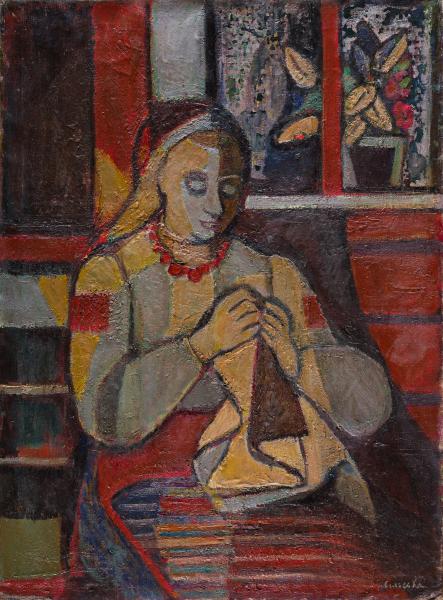
Embroideress
Margit Selska (Reich)


Basic information
- ID
- Ж-5105
- Author
- Margit Selska (Reich)
- Name
- Embroideress
- Date of creation
- 1968
- Country
- the Ukrainian SSR
- Culture
- Contemporary times
- Technique
- oil painting
- Material
- canvas oil
- Dimensions (height x width, cm)
- 80 x 60
Additionally
- Type
- painting
- Genre
- genre art
- Provenance
- Handed over by the Exhibition Directorate of the Union of Artists of Ukraine
Information about author
Object description
"Embroideress" is an example of the understanding of the ethno-cultural theme in the paradigm of plastic modernist experience, characteristic of M. Selska's work in the 1950s and 1960s. The semantic basis of the work is the archetype of the house – a valuable space associated with the life of one's kin and family, which is "one's own" and which opposes the "strangeness" of external, uncontrolled, and unknown worlds. The image of the liminal topos of the window emphasises the understanding of the domestic scene in the fundamental archaic coordinates of "one's own" – "someone else's". The axial fullness, closeness and warmth of the farmhouse are visualised by the flattening, Cezanne-like radiant painting, a combination of deep, warm, rich browns, ochres, olives and greys. The connection between man and the microcosm of their home is emphasised by the repetition of colour reflexes on a female figure, a houseplant, and a wall. A representative of family life and the world of folk culture is perceived as a woman in the fullness of her archaic symbolism and functions in everyday life. The semantics of thread, which is inherent in embroidery and is associated with happiness, family continuity and the connection between generations (O. Potebnia), adds to the significance of the work. The basis of the plastic solution of the canvas is a synthesis of post-Impressionist and Cubist inspirations, which can be seen in the affirmation of the value of the painting surface, the impasto painting, and the reduction of the visible to colour planes. The work is linked to the folk art tradition through the careful reproduction of the folk system and the colour rhythm of the painting surface, similar to the patterns of folk carpets.
Inscriptions
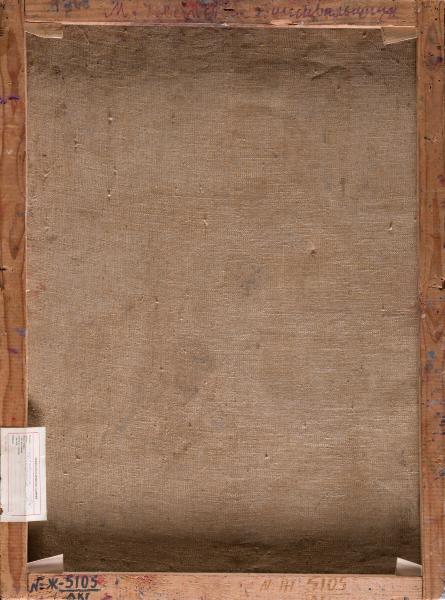
In the lower right corner is the inscription: "Selska".
Legal regulation
Borys Voznytskyi Lviv National Art Gallery