Dancing Satyr
unknown


Basic information
Additionally
- Type
- sculpture
- Genre
- mythological painting
- Plot
- Satyr
- Provenance
- Collection of Boleslaw Orzechowicz
Information about author
Object description
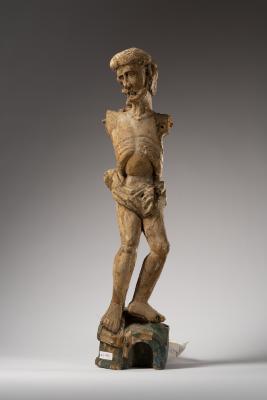
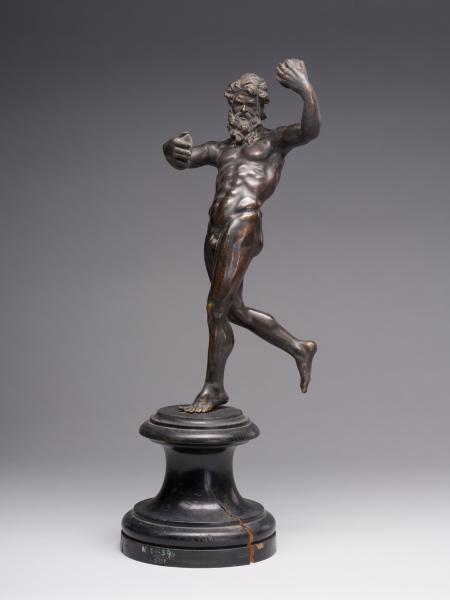
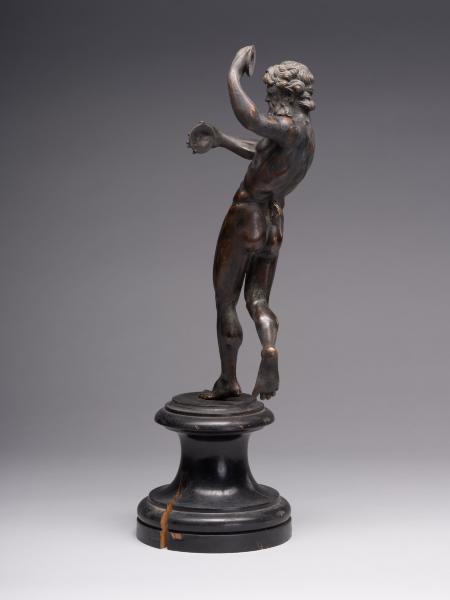
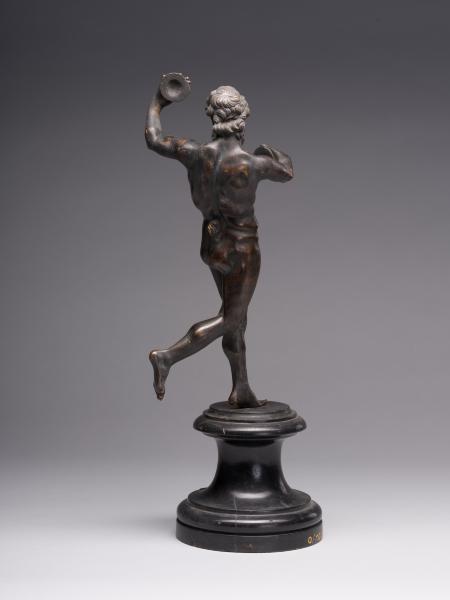
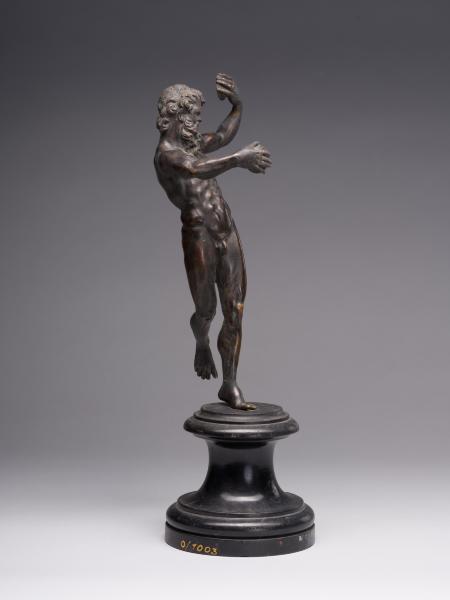
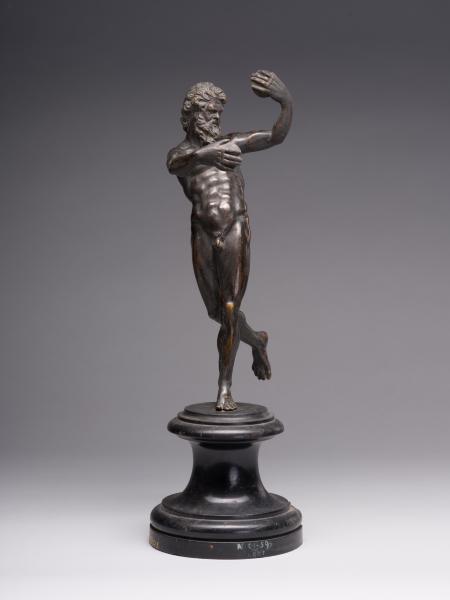
A Roman copy of an ancient Greek sculpture depicting a dancing satyr was found during archaeological excavations in Italy in 1824. The original work is traditionally attributed to the prominent representative of late Greek classics and early Hellenism, the court sculptor of Alexander the Great, Lysippus (4th c. BC). The found Roman copy was restored by Bertel Thorvaldsen in 1834 and purchased by the Borghese family. It is now on display in the Borghese Gallery in Rome. Sculptors of the nineteenth century repeated this work in bronze, making changes and additions to their versions. The figure of a mythological creature is represented naked during a dance. The animal nature of the character can be traced in the sharp ears, ivy wreath on the tousled hair, and a small horse's tail. The satyr's muscular body contrasts with his face, which resembles that of an elder, and his beard. He holds a cymbal in his open hands. Unlike the ancient original, in this work the satyr's right leg is set back; he rests entirely on his left leg, which acts as the compositional core of the work. The nineteenth-century author brings dynamics to his version of the classical work, which is fully consistent with the prevailing neo-Rococo trends in the second half of the nineteenth century.
Inscriptions
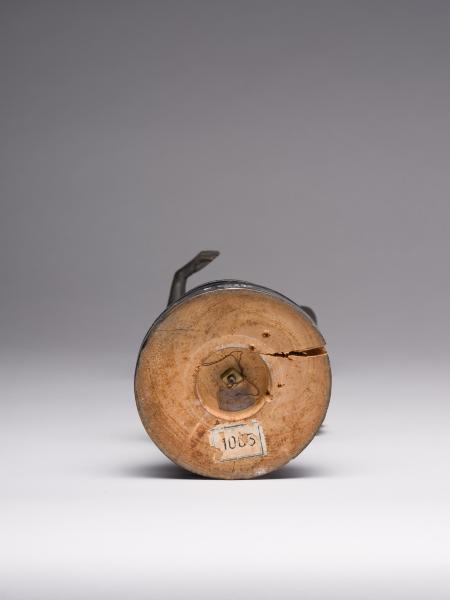
At the bottom of the wooden podium are inscriptions: in yellow – "0/1003"; in white – "№ С-І–594/ Л.ОКГ". On the bottom of the podium is a stamp with the number "1003".
Legal regulation
Borys Voznytskyi Lviv National Art Gallery