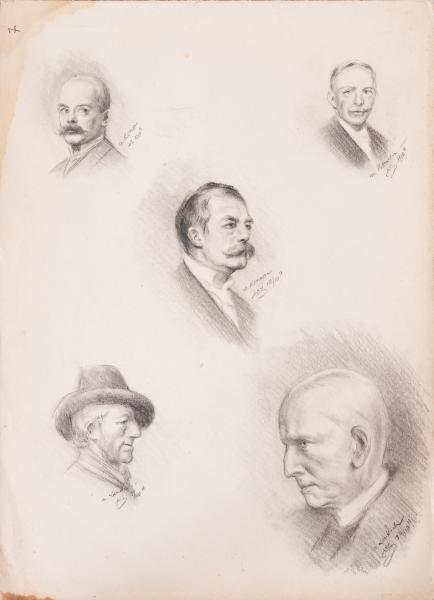
Рисунки п’ятьох чоловічих погрудь
Юліан Заяць


Основна інформація
- ID
- Ф-З-Арх-ЛГМ-5/5
- Автор
- Юліан Заяць
- Назва
- Рисунки п’ятьох чоловічих погрудь
- Дата створення
- 1991
- Країна
- Німецька імперія (?)
- Техніка
- рисунок
- Матеріал
- папір вугілля
- Розміри (висота x ширина, см)
- 29.9 x 21.8
Додатково
- Вид
- графіка
- Жанр
- портретний
- Сюжет
- Портрет
- Провенанс
- Надійшла від Ніни Микитівни Заяць
Інформація про автора
Опис роботи
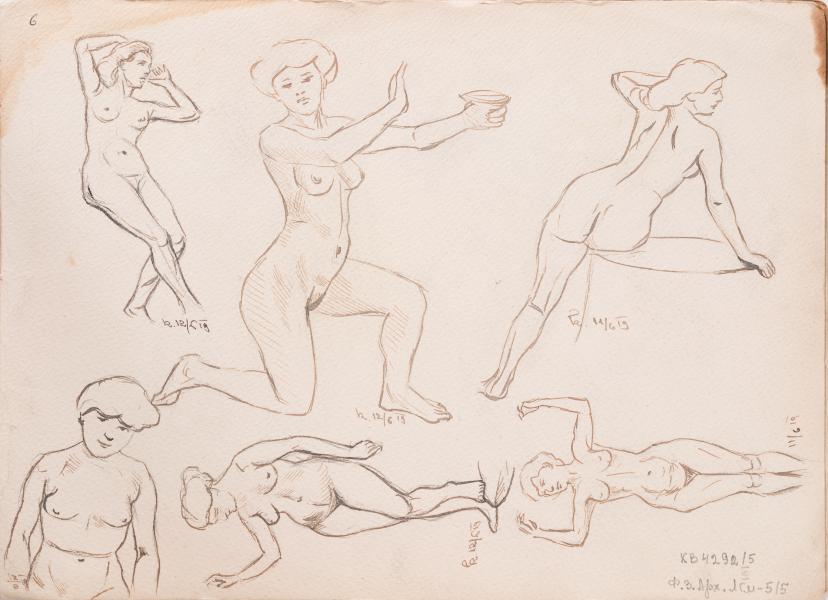
На лицьовому боці листа зафіксовано п’ять оплічних портретних шкіців чоловіків різного віку, виконаних у техніці академічного рисунка – олівцем на папері (матеріал з ознаками процесів окиснення). Композиційно роботи розташовані окремо на віддалі один від одного. Всі портретовані у різних ракурсах – тричвертному, фасовому та профільному. Такий підхід до компонування етюдів характерний для навчальних рисунків, виконаних у межах академічної програми. Кожен з портретів супроводжується підписом, у якому зазначено автора оригіналу (такий підхід притаманний для Юліана Зайця), а також із зазначенням точної дати – жовтень 1911 року, що дозволяє трактувати ці начерки як частину систематичної освітньої практики у межах художньої школи. Обличчя зображених індивідуальні, є характерні міміка, вирази очей, форми голів, зачісок тощо. Відчутна увага автора до психологічної компоненти – одні постаті передають стриманість і зосередженість, інші – риси вікової споглядальності. Один із персонажів зображений у капелюсі, що надає шкіцу побутовості. Світлотіньове моделювання з використанням м’якого штрихування, із поступовими тональними переходами, формує об’єм та глибину. Особлива увага надана моделюванню обличчя. Усі зображення мають злагоджену тональну гармонію, ретельно опрацьовані пропорції та анатомічна достовірність. Цей лист є прикладом якісного академічного рисунка початку XX століття, що демонструє копіювання з класичних джерел. Робота є свідченням комплексного опанування автором вмінь фіксації портретних характеристик та моделювання форми світлом. Водночас рисунок є свідченням підходу Юліана Зайця до естетики подачі образів. На звороті листа є більш пізні, датовані 1919 роком шкіци жіночої оголеної натури. Тут ми бачимо серію навчальних (?) академічних рисунків оголеної жіночої натури. Зображено шість фігур у різноманітних ракурсах, позах та з різним ступенем деталізації, що є характерними для практики академічного рисунка вказаного періоду. Позначки дат дозволяють припустити, що серія є частиною щоденного процесу з дослідження людської фігури, де автор фіксував пози натурниці протягом декількох сесій. У центральній частині – фігура з піалою (?) у лівій руці, оперта на праве коліно, можливо, виконана як елемент для декоративної композиції або театральної сцени. Всі фігури – жіночі, оголені, зображені в пластичних динамічних позах, що свідчить про високий рівень професійної підготовки автора. М’яка лінія та чіткий контур відтворюють рельєфність тіла, міміку, напругу м’язів та пропорції. Композиційна побудова листа вказує на те, що шкіци не мали іншого призначення аніж ретельні вправи, але у них відчутні обізнаність із законами перспективи та побудови фігури у просторі. Як й інші рисунки з цього періоду, цей графічний лист Юліана Зайця є цінним джерелом для вивчення академічної системи навчання першої третини XX століття, а також репрезентує практику студіювання рисунка оголеної натури – обов’язкової частини освіти художника. Водночас ці шкіци ілюструють соціокультурні уявлення про жіноче тіло як об’єкт мистецького дослідження в академічному дискурсі.
Надписи та символи
На лицьовій частині – нерозбірливі підписи авторів оригінальних зображень, а також сигнатура Юліана Зайця. Під портретами вказано дати виконання: «9/ 10 1911»; «10/10 1911»; «7/ 10 1911»; «15/ 10 1911»; «14/ 10 1911». На звороті: «11/ 6 19» (двічі); «12/ 6 19» (тричі).
Правове регулювання
Львівська національна галерея мистецтв імені Б.Г. Возницького