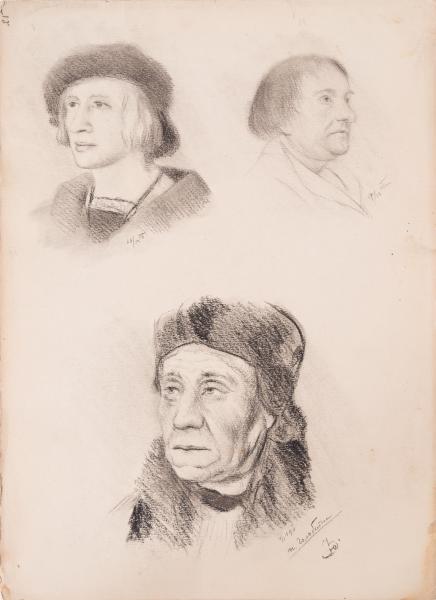
Рисунки трьох голів (за мотивами творів Ганса Гольбейна-молодшого)
Юліан Заяць


Основна інформація
- ID
- Ф-З-Арх-ЛГМ-5/14
- Автор
- Юліан Заяць
- Назва
- Рисунки трьох голів (за мотивами творів Ганса Гольбейна-молодшого)
- Дата створення
- 23.05. 1911–25.05.1911
- Країна
- Німецька імперія (?)
- Техніка
- рисунок
- Матеріал
- папір олівець
- Розміри (висота x ширина, см)
- 29.4 x 21.4
Додатково
- Вид
- графіка
- Жанр
- портретний
- Сюжет
- Портрет
- Провенанс
- Надійшла від Ніни Микитівни Заяць
Інформація про автора
Опис роботи
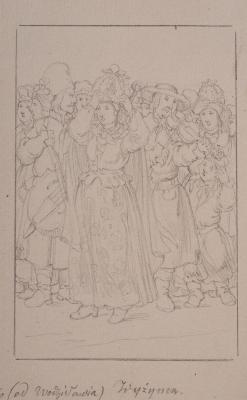
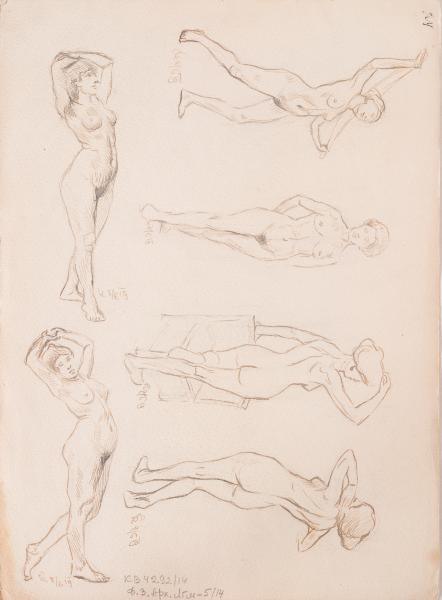
На лицьовій стороні рисунка зображено три оплічні чоловічі портрети, виконані в академічній техніці з використанням м’якого графітного олівця. В основі композиції – графічні мотиви з творчої спадщини Ганса Гольбейна-молодшого, мистця, відомого точністю у відтворенні індивідуальних рис та глибоким психологізмом образів. Композиція позбавлена жорсткої симетрії: портрети розміщено з інтервалами, що дозволяють глядачеві розглядати кожний образ як автономну, завершену студію. Ці рисунки є прикладом вправи з вивчення історичних типажів та особливостей портретування у практиці мистців Північного Відродження. Серед зображених – архієпископ Кентерберійський Вільям Ворхем, чий образ вирізняється з-поміж інших завдяки детально проробленому обличчю, окресленому контурові головного убору та виразно змодельованим зморшкам. Портрет вражає стриманою гідністю, внутрішнім зосередженням і тонкою передачею психоемоційного стану особи. Два інші зображення, також за мотивами творів Ганса Гольбейна-молодшого, подані у тричвертному розвороті та майже у профілі, із характерною для майстра увагою до точного відтворення рис обличчя. Вартим уваги є використання освітлення: художник вдається до тонкої роботи лінією, що надає змогу чітко моделювати форму. Особливість цієї композиції полягає у тому, що художник не лише повторює іконографічну структуру оригіналів, а й намагається вивчити та відчути ритм лінії, акценти штриха та образну специфіку портретної традиції. Це надає роботі не лише навчального, а й інтерпретаційного характеру, виявляє складний діалог між академічною школою XX століття та ренесансною спадщиною. На звороті листа розміщено шість студій оголеної жіночої натури у повен зріст. Фігури подані у різних позиціях – як у статиці, так і в легких поворотах корпуса, з акцентом на природність постави й точне відтворення пропорцій тіла. Деякі з них представлені у фронтальному положенні, інші – майже у профіль або злегка у ракурсі, що дозволяє вивчити об’єм та баланс фігури в різних ракурсах. Студії вирізняються увагою до пластичної анатомії з притаманною для академічної традиції точністю. Попри оголеність моделей, композиції зберігають стриманість та зосередженість на формальних завданнях, дослідженні балансу, симетрії та пропорцій.
Надписи та символи
На зворотній частині зверху вниз зліва направо: сигнатура Юліана Зайця «8/6 19». Сигнатура Юліана Зайця; «7/6 19». Сигнатура Юліана Зайця; «8/6 19». Сигнатура Юліана Зайця; «7/6 19». Сигнатура Юліана Зайця; «7/6 19». Сигнатура Юліана Зайця; «8/6 19».
Портретована особа
- Ім'я портретованого
- Вільям Ворхем, архієпископ Кентерберійський (нижній ряд)
- Роки життя портретованого
- бл. 1450 – 22.08.1532
Правове регулювання
Львівська національна галерея мистецтв імені Б.Г. Возницького