Altar Cross
unknown folk sculptor



Basic information
- ID
- С-II-1103
- Author
- unknown folk sculptor
- Name
- Altar Cross
- Date of creation
- 19th c.
- Country
- Ukraine
- Technique
- carving
- Material
- wood
- Dimensions (height x width x depth, cm)
- 48 x 14.5 x 15
Additionally
- Type
- decorative and applied arts ritual items
- Genre
- religious
- Provenance
- Rozvazh village, Zolochiv district, Lviv region
Information about author
Object description
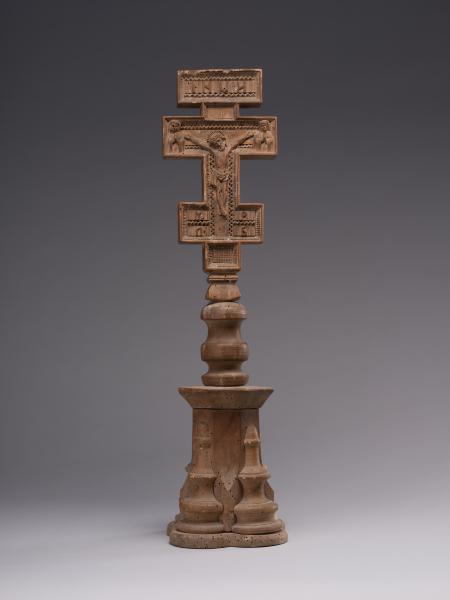
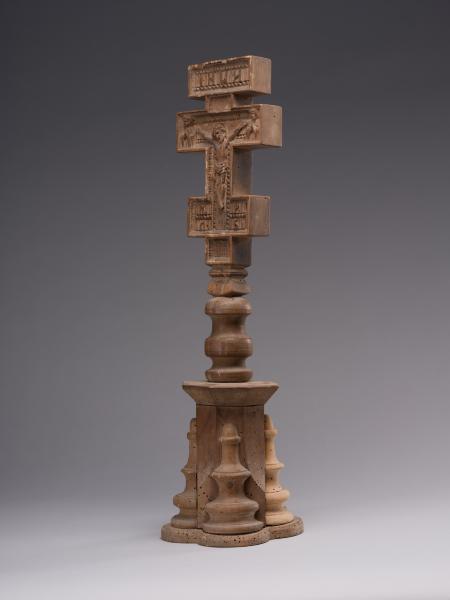
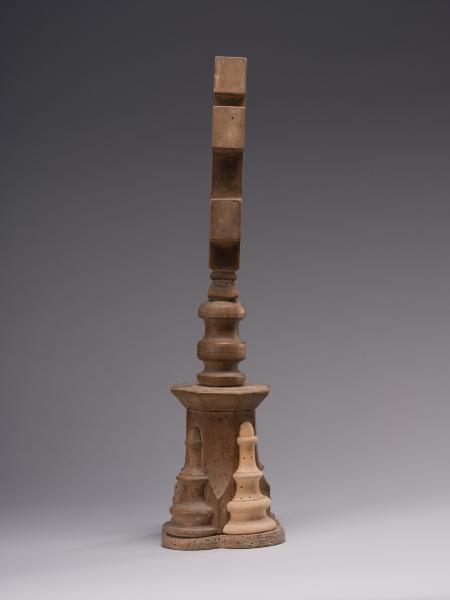
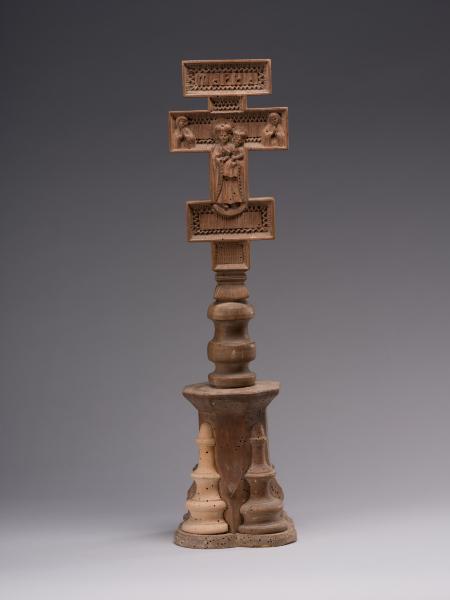
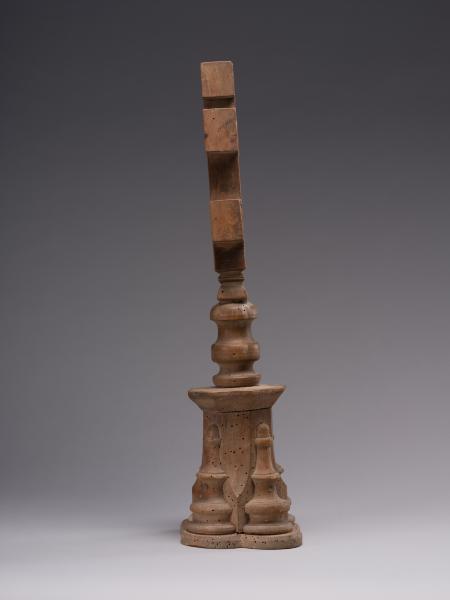
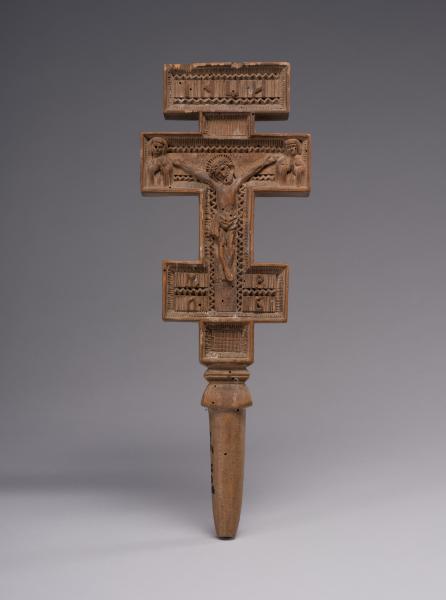
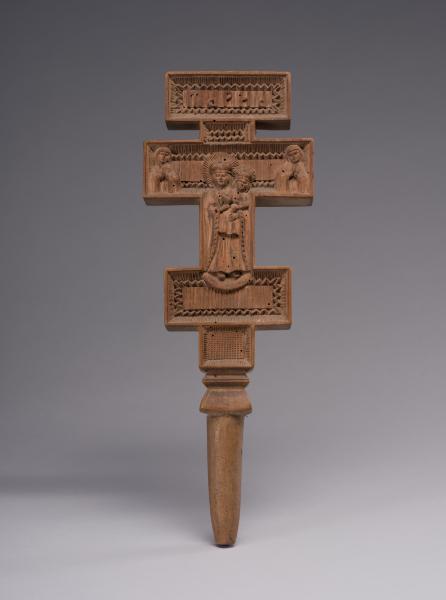
In its structural design, the hand cross is seven-ended, with an elongated central crossbar set upon a low carved wooden figured base. The work is executed with a chisel in the techniques of contour, hollow, and low-relief carving. The compositional solution of the altar cross is simple and concise. On the obverse, in the centre, is carved a squat, disproportionate depiction of the Crucifixion with a distinct plastic modelling of the body and clear anatomical structure. The arms of Christ are widely outstretched, and around His head is a halo. At the ends of the central crossbar are plastically carved two half-length figures of saints. In the centre, separated from the main composition by contour profiling, is the upper arm with the inscription “INCI” on a background of pierced lines, framed by a serrated pattern. Along the perimeter of the cross, on both the obverse and reverse, a band runs, repeating the form of the arms. On the reverse, in the central section, is a carved depiction of the Virgin in a crown holding the Child Christ. The frontal figure of the saint is clothed in a long maphorion, with a halo around her head. The Child on her right arm blesses with His right hand. At the ends of the arms are half-length figures in prayerful poses. The surface of the altar cross on both sides is decorated with geometrised patterns: dentils, mesh, and lines creating a rhythmic background. The conventionality of the figures and the dominance of the relief line over volumetric modelling reveal the hand of a folk master. The skilled carving of the work combines the folk simplicity of woodcraft with profound spiritual symbolism.
Legal regulation
Borys Voznytskyi Lviv National Art Gallery