Female Portrait
Pieter Paul Rubens (circle), Jan Anthonisz van Ravesteyn


Basic information
- ID
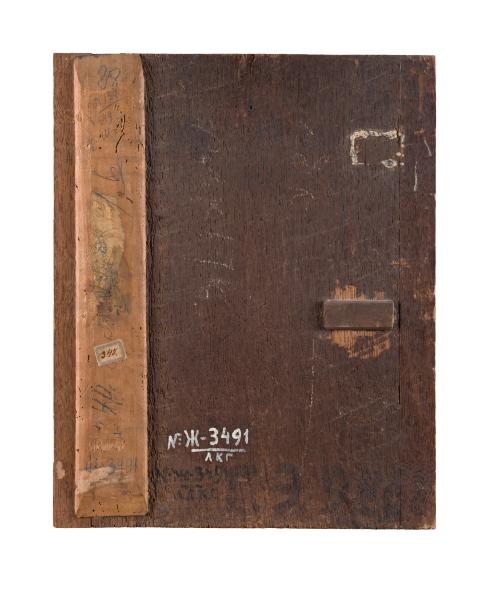
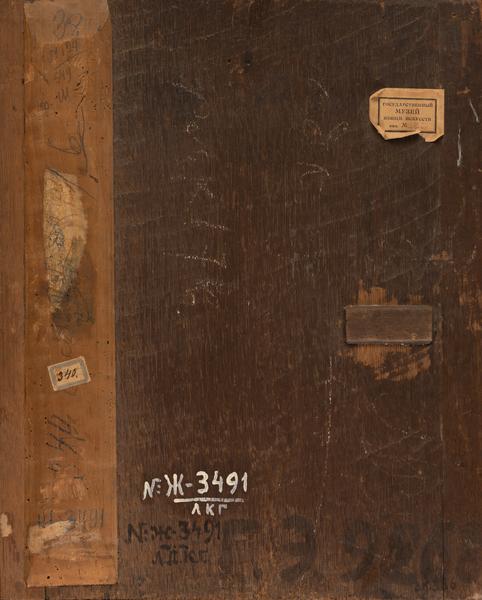
- Ж-3491
- Author
- Pieter Paul Rubens (circle) Jan Anthonisz van Ravesteyn
- Name
- Female Portrait
- Date of creation
- c.1620
- Country
- Holland
- Technique
- oil painting
- Material
- wood oil
- Dimensions (height x width, cm)
- 45.5 x 37
Additionally
- Type
- painting
- Genre
- portraiture
- Plot
- Portrait
- Provenance
- Received from the Hermitage, 1955
- Exposition
- Potocki Palace
Information about author
Information about author
Object description
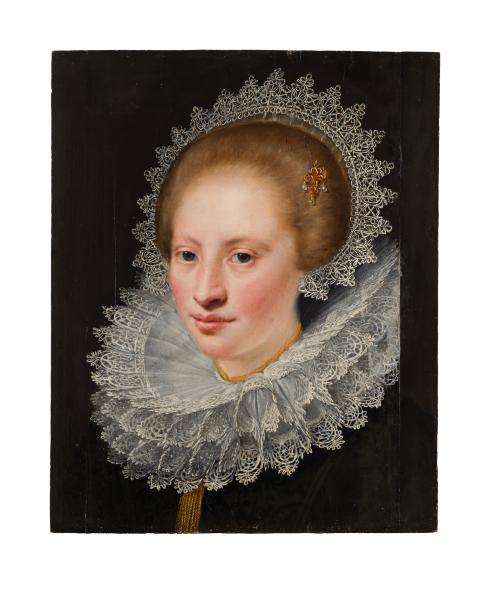
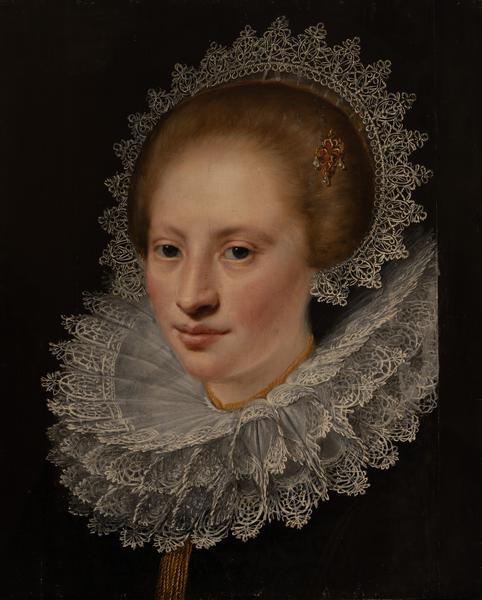
The work is a bust portrait of a young rosy-cheeked woman. Her head is turned three-quarters to the right, and her torso to the left. The large blue eyes of the portrayed woman in a dark dress are directed at the viewer. The person depicted in this Gallery portrait resembles the portrait of Mevrouw Vrijdags van Vollenhoven, which is preserved in a museum in Lille (France) and was painted by Jan Anthonisz van Ravesteyn. The same characteristic angle of the portrayed person and the head-turning can be observed. The light and shadow modelling of the face and its carnation are also similar. There is also a very detailed depiction of clothing and jewellery. Hans-Joachim Raupp, a well-known scholar of the Dutch Golden Age art, noted that fashion development was only prominent in elite circles. And in the 20s and 30s of the seventeenth century, black suits and dresses with white lace collars, often in the form of a ruffle, were popular. In the Gallery portrait, the subject's outfit looks more modest, and gold chains around her neck hang down from under the ruffled collar.
Portrayed person
- The name of the person portrayed
- Mevrouw Vrijdags van Vollenhoven (?)
Legal regulation
Borys Voznytskyi Lviv National Art Gallery