Allegory of Vanity of Vanities
Monogrammist "G.C."


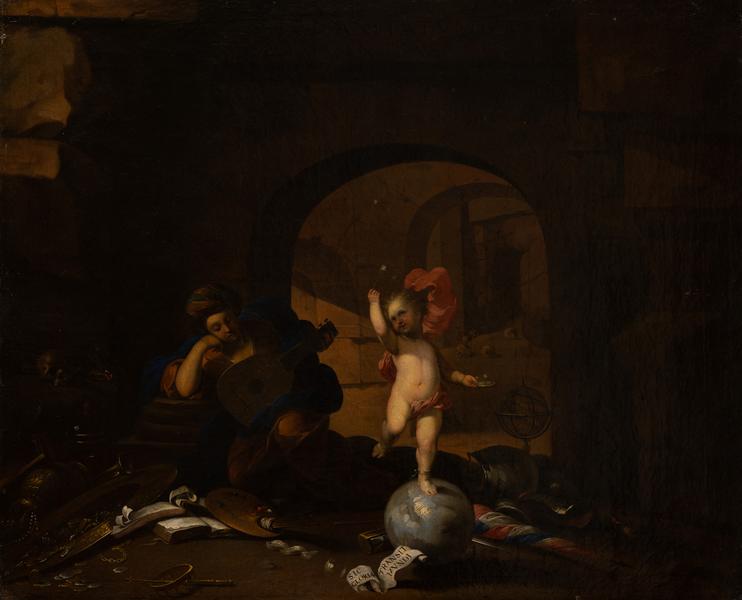
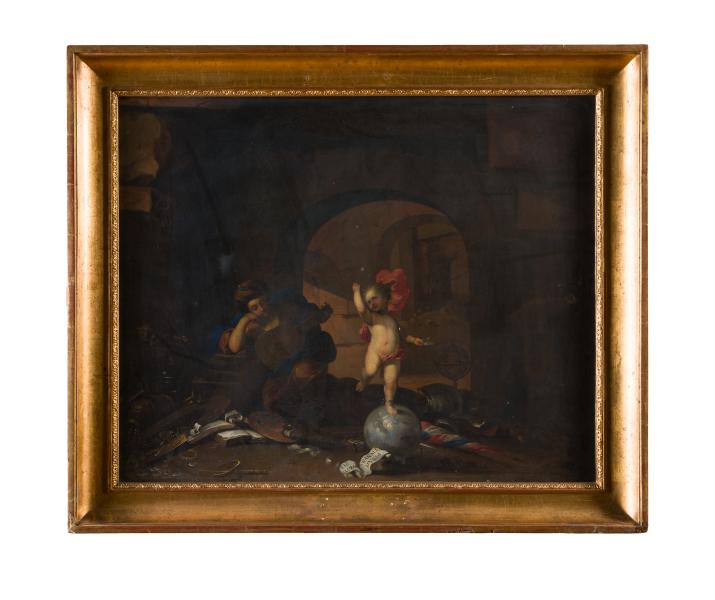
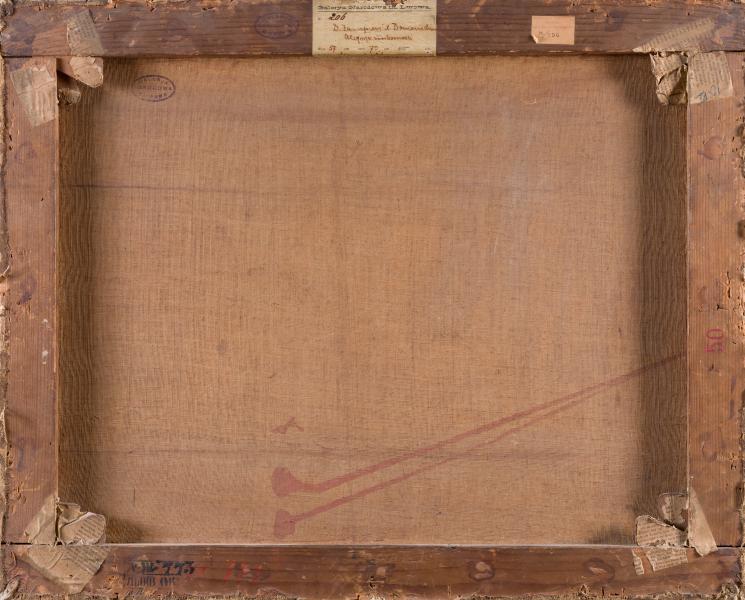
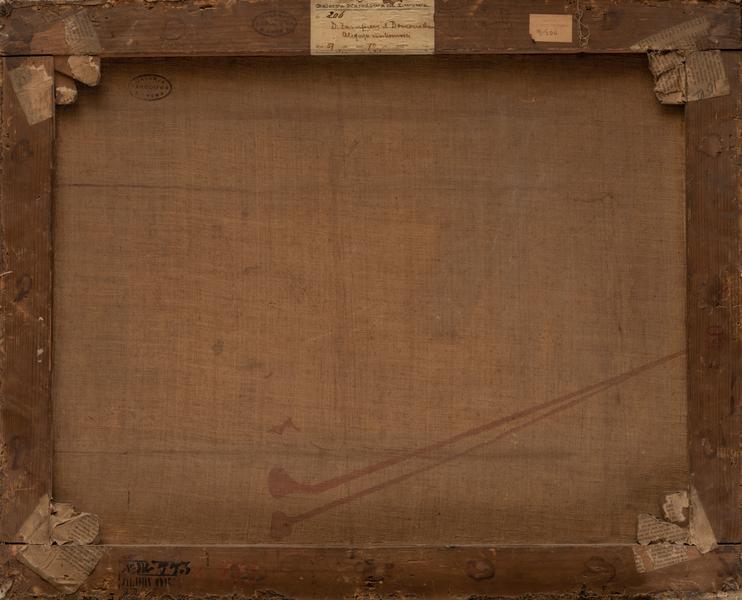
Basic information
- ID
- Ж-773
- Author
- Monogrammist "G.C."
- Name
- Allegory of Vanity of Vanities
- Date of creation
- 1st half of the 17th c.
- Technique
- oil painting
- Material
- canvas oil
- Dimensions (height x width, cm)
- 57 x 70
Additionally
- Type
- painting
- Genre
- allegory
- Plot
- Cupid
- Provenance
- Collection of Lviv City Gallery
- Exposition
- Potocki Palace
Information about author
Object description
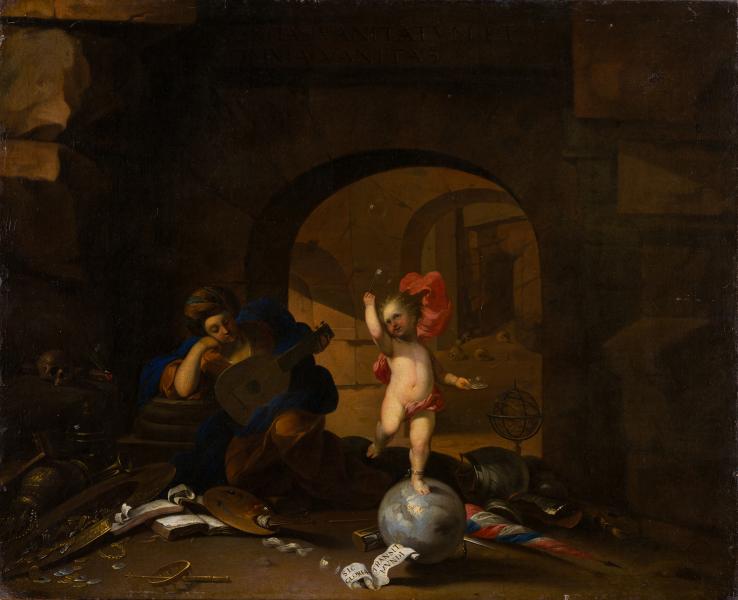
The painting depicts a young Cupid standing before the viewer on a globe. Various objects are lying beneath him, including books, a palette with brushes, coins, jewellery, a sceptre, a crown, and a white ribbon with a Latin inscription: "Sic transit gloria mundi". A woman in a slumber with a musical instrument is depicted on the left side. To the left of her, there is a skull. At the top, a Latin inscription reads: "Vanitas vanitatum". This genre of painting is known as vanitas. Its name comes from a passage in the Old Testament that contrasts the fleeting nature of earthly life with the eternal nature of faith: "Everything is meaningless. What do people gain from all their labours at which they toil under the sun?" The human effort, pleasures, and possessions, symbolised by books and musical instruments, are portrayed as ephemeral and futile. Interpreted this way, books can be seen as a reference to learning and intellectual effort. Musical instruments were seen as a reflection of the fleeting pleasures of music and wine. The crown and sceptre represent wealth and power, while the skull reminds us of a wasted life. The philosophical tension between material prosperity and piety was considered something to be remembered and reflected upon, not avoided. The painting illustrates that all earthly possessions, such as power, money, knowledge, and art, are insignificant compared to love, which transcends the material.
Legal regulation
Borys Voznytskyi Lviv National Art Gallery