Baptism of Emperor Constantine
Pierre Subleyras


Basic information
- ID
- Ж-1460
- Author
- Pierre Subleyras
- Name
- Baptism of Emperor Constantine
- Technique
- oil painting
- Material
- canvas oil
- Dimensions (height x width, cm)
- 45 x 54.5
Additionally
- Type
- painting
- Genre
- religious
- Plot
- Baptism of Emperor Constantine
- Provenance
- the Brunicki collection
- Exposition
- Potocki Palace
Information about author
Object description
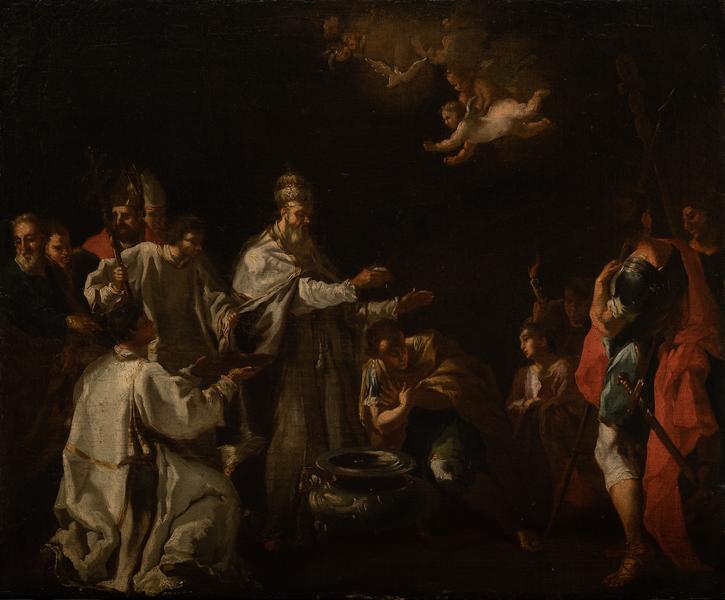
Constantine the Great was born on February 27, 272, in the Roman province of Nis (territory of present-day Serbia). His father was Constantius I, and his mother was Helena, a Christian from a common family. After his father's death in 306, the military proclaimed Constantine the ruler. At that time, the empire was ruled by four different lords, leading to disarray in the country. There was an ongoing civil war between the regional rulers for almost ten years. Constantine achieved victory in this conflict through the reputation and results of Constantius's rule and the respect of citizens and the army. During his reign, an ideological revolution took place: Christianity was recognised, and just in a few decades, it turned from a persecuted religion into a state religion. In 313, Constantine adopted the Edict of Milan, establishing religious tolerance in the empire. Later, laws were passed exempting Christian communities from taxes and public duties. In addition, Constantine initiated the historic Council of Nicaea. In 330, he relocated the capital to Byzantium, a more strategically convenient city for governing the empire. Byzantium was renamed New Rome, but it became known as Constantinople during the emperor's lifetime. The emperor himself was baptised only before his death. It happened in the palace of Nicomedia, where he then passed away on May 21, 337. The central figure in the painting is a grey-bearded priest in a headdress. He raises his hands, blessing the kneeling young man with his hands clasped on his chest, bowing before the baptismal font. Behind him are the bishops. To the right is a group of people, with a warrior holding a sword in the foreground. Above are angels and a white dove between them.
Legal regulation
Borys Voznytskyi Lviv National Art Gallery