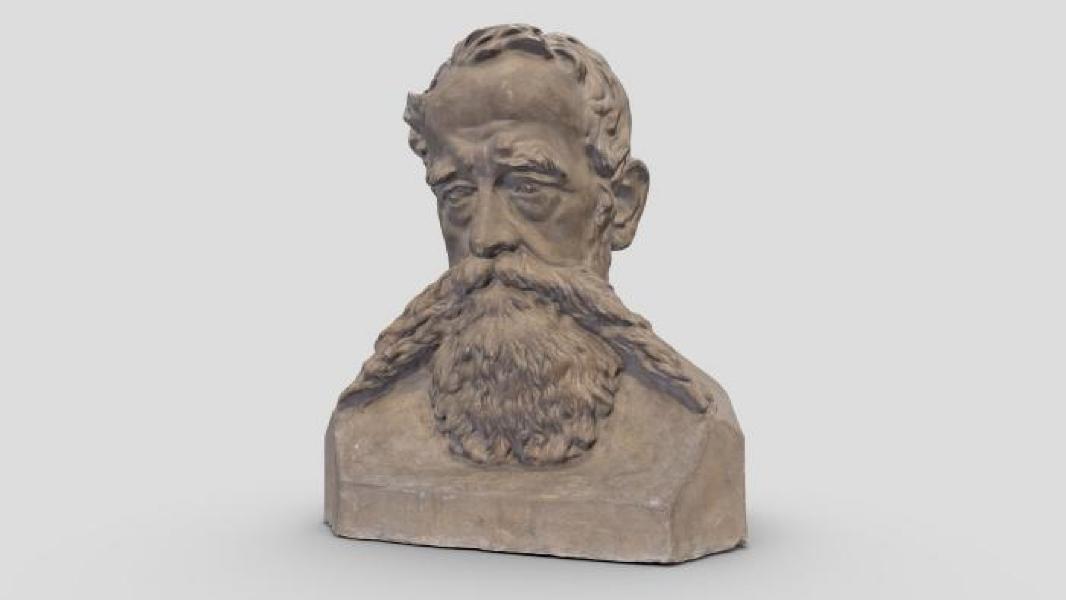
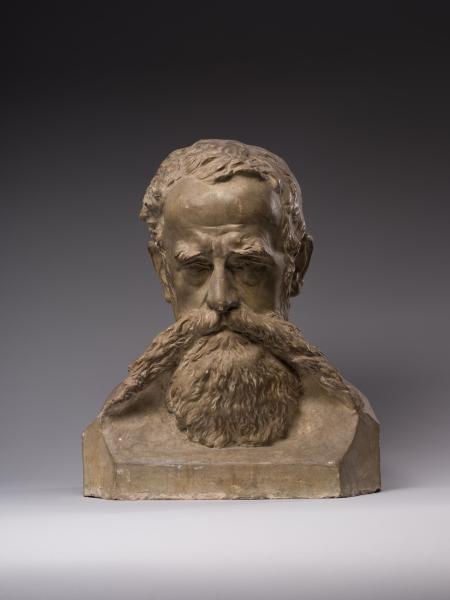
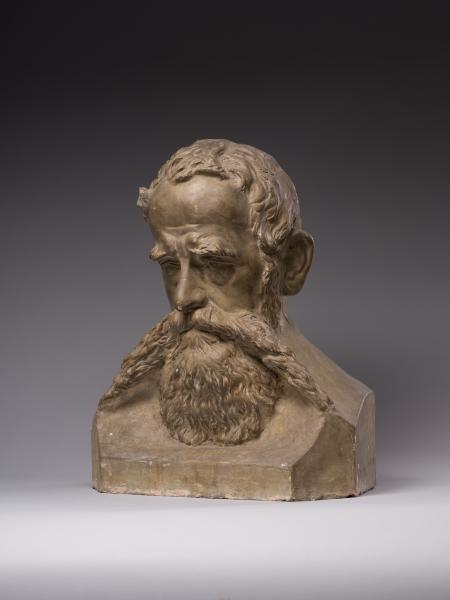
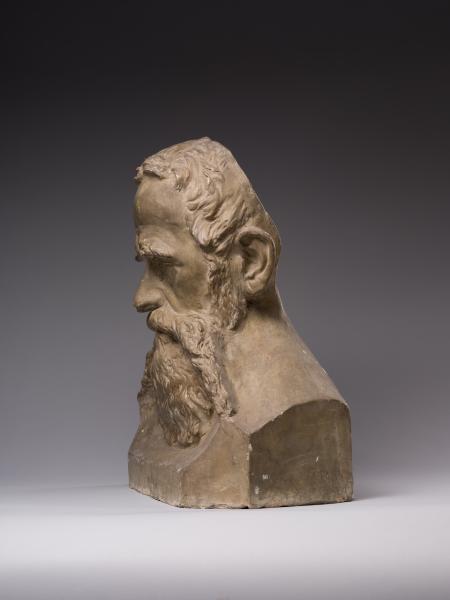
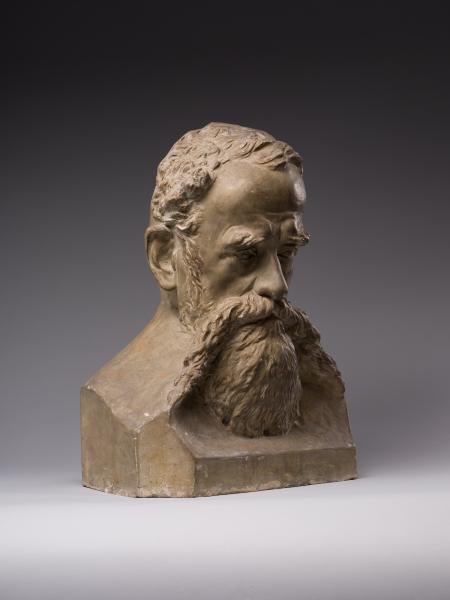
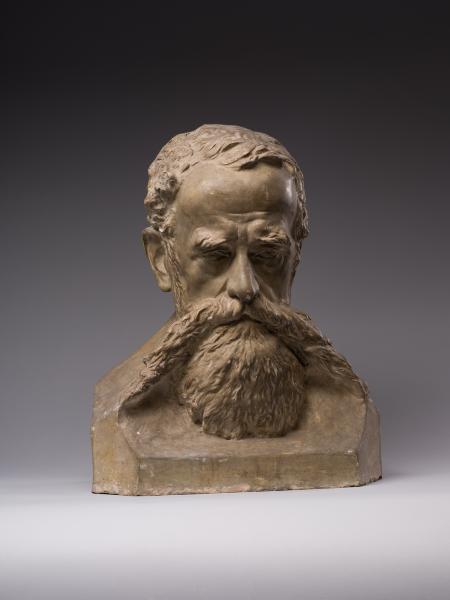
Bust of Franciszek Smolka
Tadeusz Blotnicki


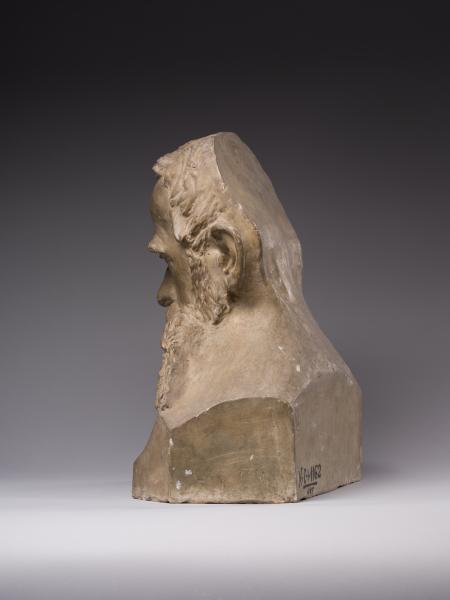
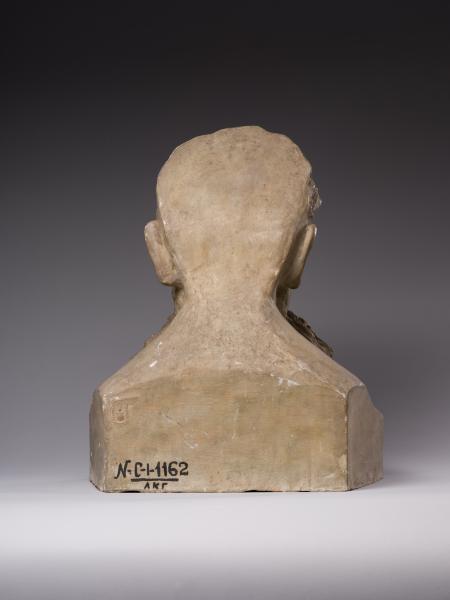
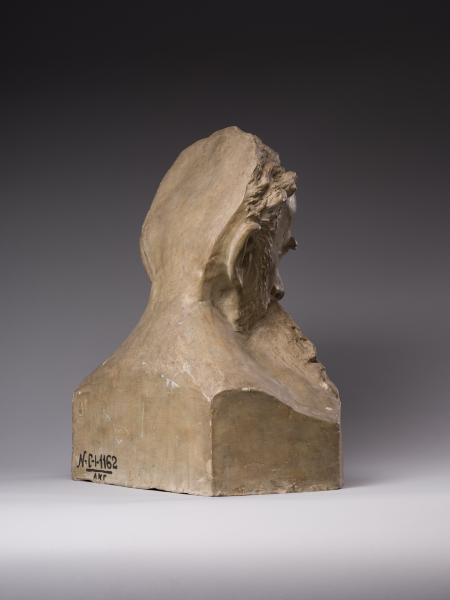
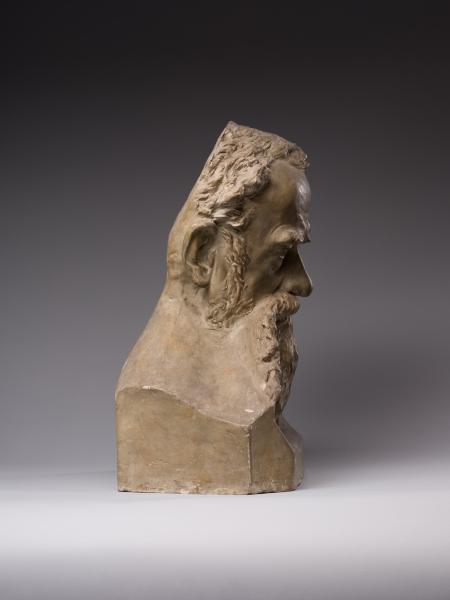
Basic information
- ID
- С-I-1162
- Author
- Tadeusz Blotnicki
- Name
- Bust of Franciszek Smolka
- Date of creation
- c.1895
- Country
- Austro-Hungarian Empire
- Culture
- Modern times Contemporary times
- Technique
- moulding
- Material
- faience
- Dimensions (height x width x depth, cm)
- 43 x 37 x 21
Additionally
- Type
- sculpture 3D
- Genre
- portraiture
- Plot
- Portrait bust
- Provenance
- Museum of the Lubomirski Princes in Lviv Vasyl Stefanyk Scientific Library of Ukraine in Lviv
Information about author
Object description
The "Bust of Franciszek Smolka" (1895) from the collection of Borys Voznytskyi Lviv National Art Gallery is one of T. Blotnicki's numerous attempts to portray the famous politician, lawyer, Lviv advocate, honorary citizen of Lviv (1861), ambassador of the Galician Sejm and the Austrian Parliament in Vienna, and its president in 1848, 1881–1893. In 1874, the sculptor created the first plaster bust of the politician and presented it to the public in the High Castle. In 1893, T. Blotnicki received an order for a marble bust of F. Smolka, then a member of the Galician Regional Sejm and the Austrian Parliament in Vienna, President of the Chamber of Deputies, for the hall of the Lviv City Council. He worked on the portrait from nature in Lviv in April–July 1893. He immortalised the image in a marble bust, which has stood in the Lviv Assembly Hall since November 1895, and in a plaster half-figure (1898 /?/). In 1905, he proposed to the city council a project for the tomb of F. Smolka in the Lychakiv cemetery as a bust on a granite column. The neoclassical bronze monument to the politician by T. Blotnicki was unveiled on 8 December 1913 on F. Smolka Square in Lviv (destroyed after 1949). The portrait in the Borys Voznytskyi Lviv National Art Gallery collection was cast in faience from a terracotta model (1895) in a factory in Patskiv in 1912–1914. As with all of Blotnicki's works of the 1890s, the bust is characterised by a combination of clear academic architectonics and the Baroque dynamism of "open" sculptural form, filigree rhythm, and decorative detail. The historical significance and monumentality of the image are given by the majestic inclination of the head and its expression through the beard and moustache, which form a triangular base. The sculpture's plastic solution is characterised by a combination of soft modelling, accurate reproduction of the portrait's features, psychology and an almost Secessionist decorative and rhythmic interpretation of the form. The figurative emotional mode of the sculpture is determined by a deeply satisfied grief, full of knowledge. The memorial character of the portrait, created at the end of F. Smolka's life, indicates its constitutionalising on the edge of history, modernity, and the future.
Inscriptions
Signed at the bottom right: "T. Błotnicki"; at the back left is the company's mark: a shield with the Rogala coat of arms; framed by the inscription: "POLOGNE / PACYKÓW /... / GALICIE / 118 / 5. / 7: / 7".
Portrayed person
- The name of the person portrayed
- Franciszek Smolka
- Lifetime of the person portrayed
- 1810–1899
Legal regulation
Borys Voznytskyi Lviv National Art Gallery