Woman and Boy
Julia Smolkowna


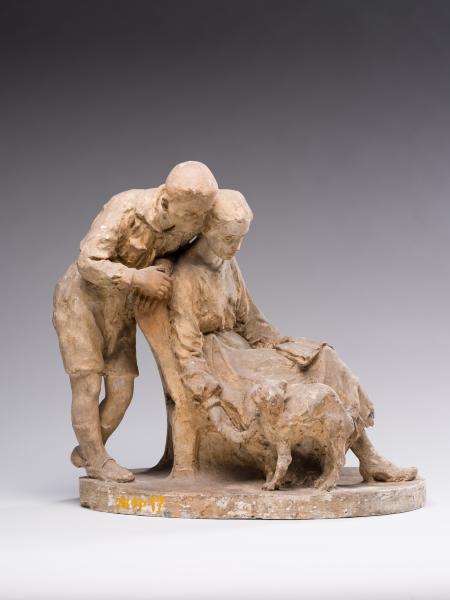
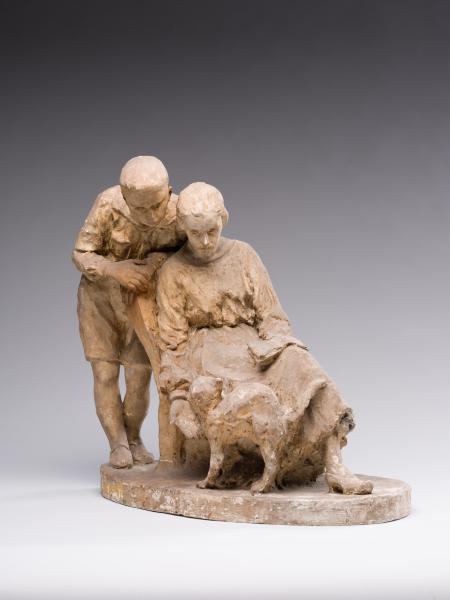
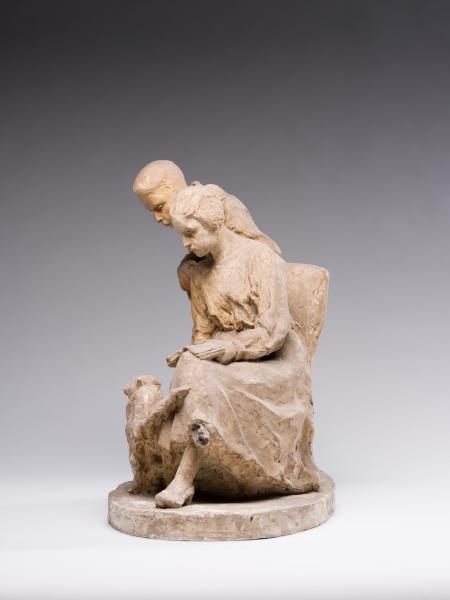
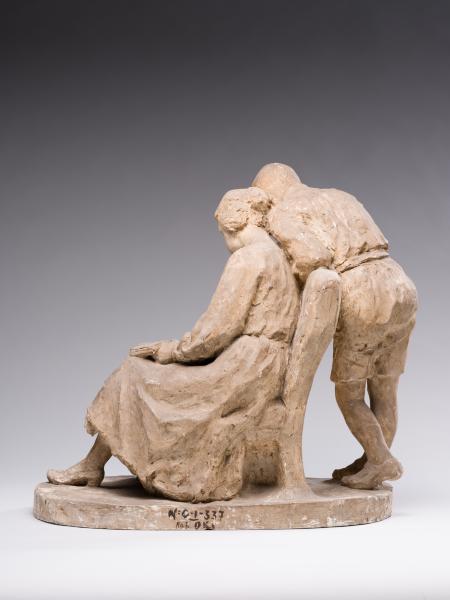
Basic information
- ID
- С-I-337
- Author
- Julia Smolkowna
- Name
- Woman and Boy
- Date of creation
- 1925
- Country
- Poland
- Culture
- Contemporary times
- Technique
- moulding polychrome
- Material
- plaster
- Dimensions (height x width x depth, cm)
- 38.5 x 40 x 24
Additionally
- Type
- sculpture 3D
- Genre
- genre art
- Provenance
- National Gallery of Lviv (until 1940)
Information about author
Object description
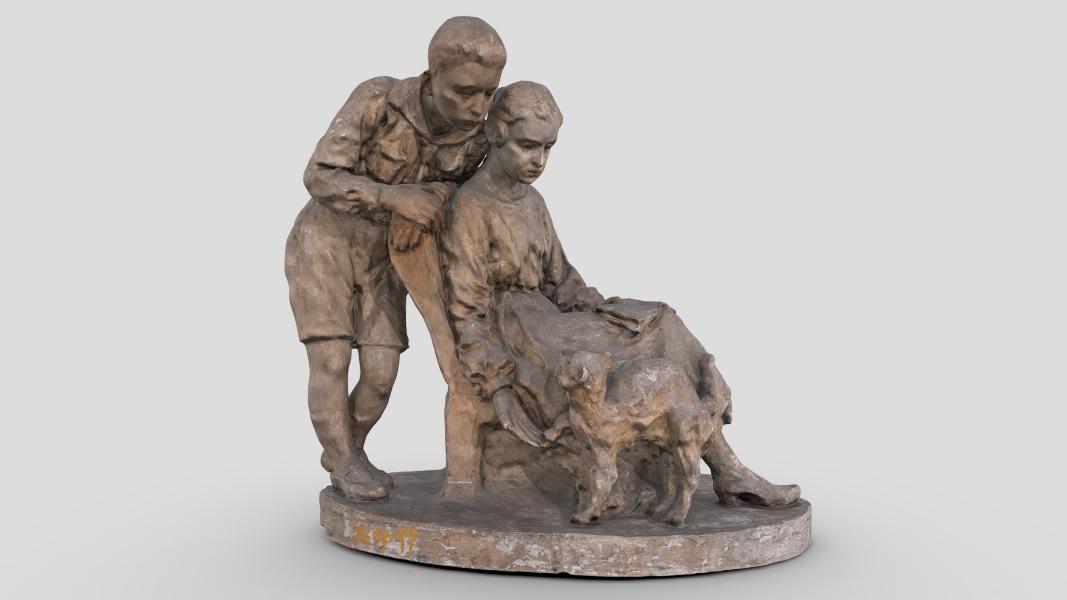
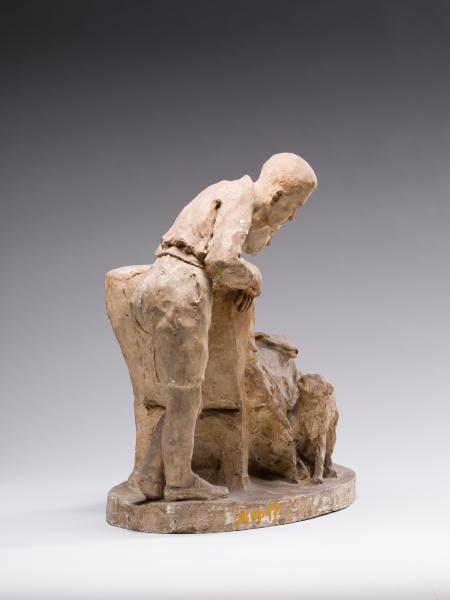
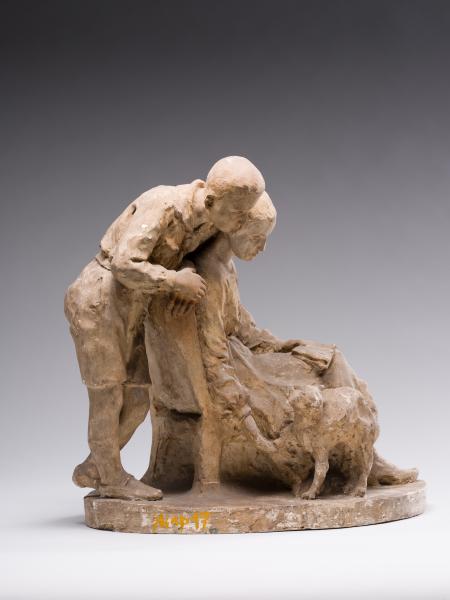
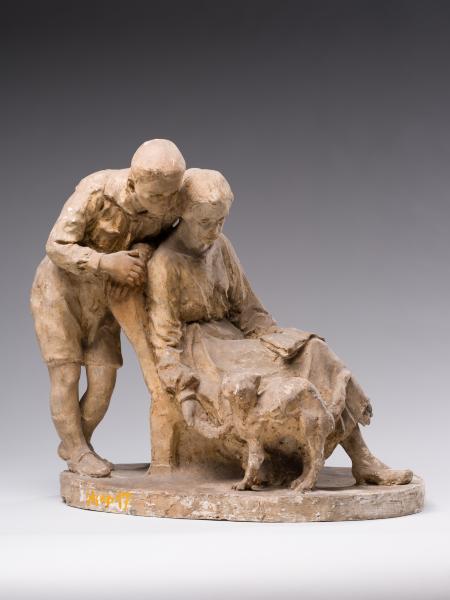
The embodiment of the "realistic-genre" intention in J. Smolkowna's creative work is the narrative scenes, which received favourable reviews from art critics. For example, V. Zhyla wrote in the "Lvivska Gazeta" that "Smolkowna's small figures are very mobile as if they were constantly wrapped in air, surrounded by trembling, vibrating energy". The "perfection of plasticity and movement" of the action groups created by J. Smolkowna was noted by J. Tomicka in her review of the VI Exhibition of the Association of Polish Women Artists in Lviv. Free impressionistic modelling of forms with the play of light on the protrusions and recesses is inherent in the genre scene "Woman and Boy" (1925), which is based on the poetry of everyday life and "reads moments of harmony" in it. Thus, the figures of a woman sitting with a book on her lap, a boy leaning towards her, probably her son, and a cat stroked by the woman's hand are filled with peace. The plastic unity of the group is achieved by the soft melody of the lines, the subtly differentiated rhythm, the "openness" of the forms due to the active impressionistic modelling, the synchronisation of the movements and the focus on the pet of the woman and child. The picture is made even more idyllic by the woman's delicate and graceful head, which recalls classical sculpture. The resemblance of the child's features to the "Portrait of a Boy" (1926) in the Borys Voznytskyi Lviv National Art Gallery collection is striking.
Inscriptions
Signed and dated on the base: "Julia Smolkówna 1925".
Legal regulation
Borys Voznytskyi Lviv National Art Gallery