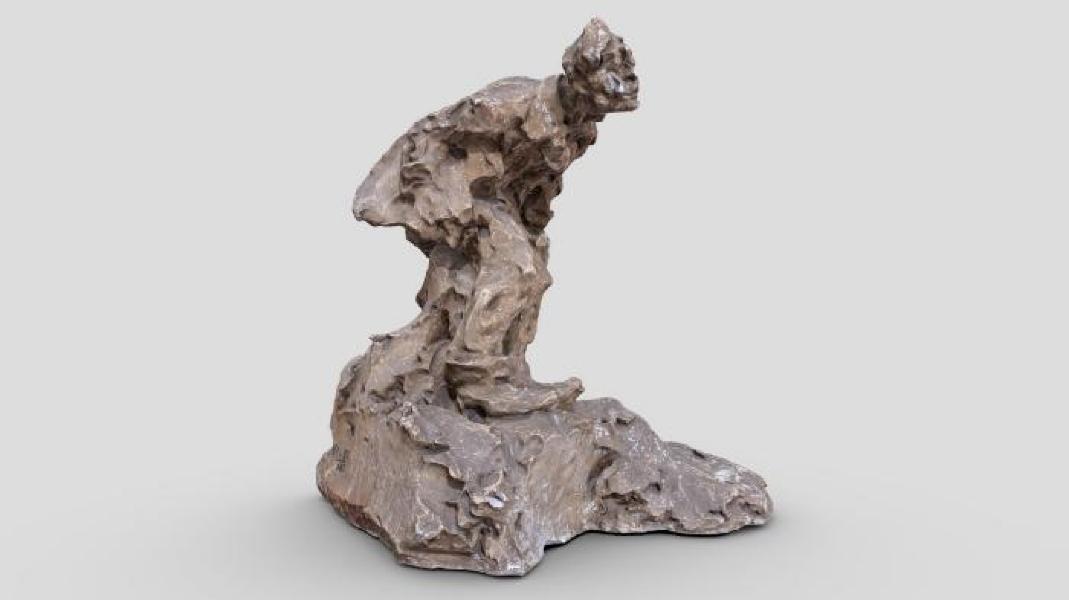
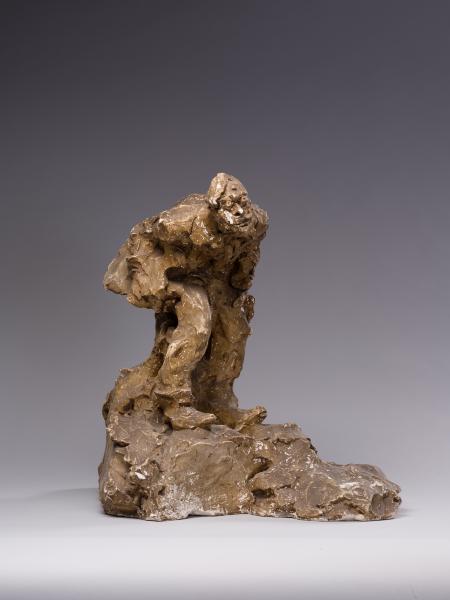
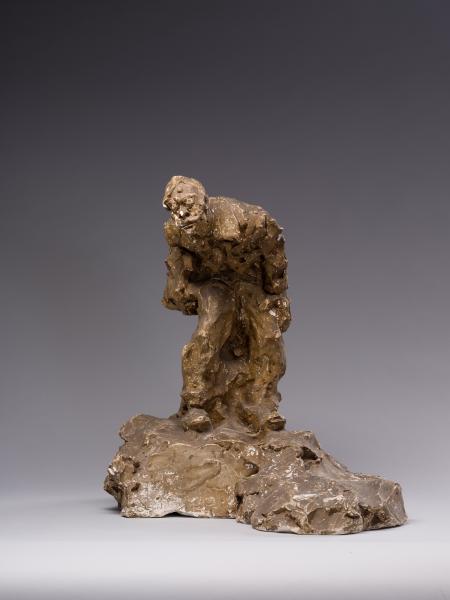
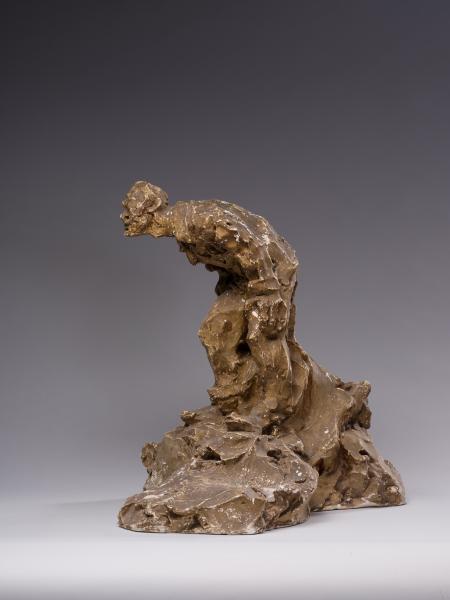
Painter (Male Figure)
Zygmunt Kurczynski


Basic information
- ID
- С-I-1012
- Author
- Zygmunt Kurczynski
- Name
- Painter (Male Figure)
- Date of creation
- 1909
- Country
- Austro-Hungarian Empire
- Culture
- Contemporary times
- Technique
- moulding polychrome
- Material
- plaster
- Dimensions (height x width x depth, cm)
- 44 x 41 x 38
Additionally
- Type
- sculpture 3D
- Provenance
- Courtesy of Borys Voznytskyi
Information about author
Object description
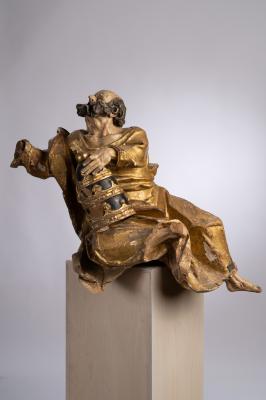
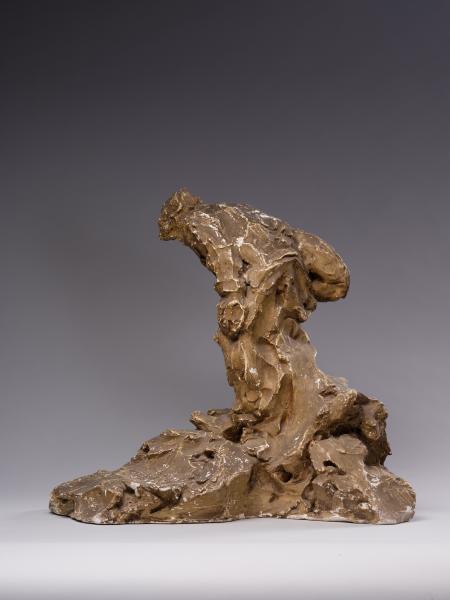
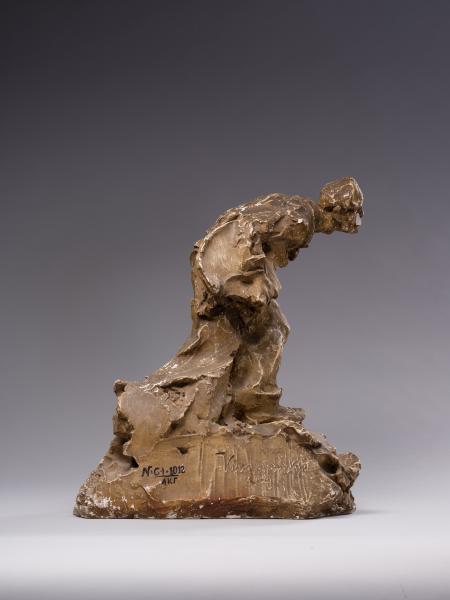
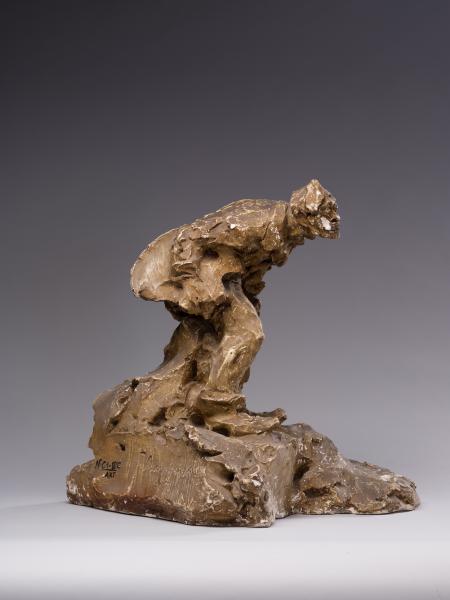
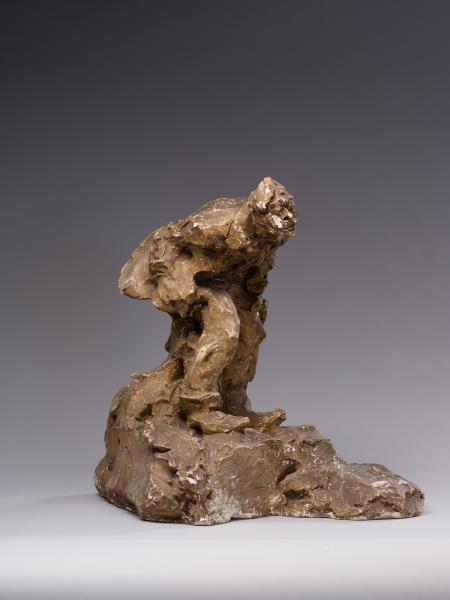
The sculpture "Painter" (1909) was created after Z. Kurczynski's return to Lviv in 1908, during the most prominent period of the artist's activity. Marked by professional maturity, it was full of shaping experiments and testing the possibilities of various artistic systems, including Expressionist plastics and imagery. Small in size, with a dynamic, almost churned-up surface tinted with brownish-brown paint, the work demonstrates the possibilities of "sculpturalism", a synthesis of different art forms. Resembling a shapeless mass from which emerges the clumsy, bent figure of a man with a palette, barely walking on an uneven surface, it is perceived as a caricature, an artistic experiment, an ironic paraphrase of sublime Symbolist imagery. The peculiarity of the figure is its knotted expressive texture, which seems to preserve the impulsive touches of the artist's fingers. According to M. Olszewski's remarks on other early Expressionist works by Z. Kurczynski, exhibited at the " Exhibition of Three" in 1911, the sculptor "pulled" clay and plaster "in a jerky, staccato manner". A similar shaping combined with geometric volumes is inherent in the sculpture "Musician" from 1910. The dematerialisation of the sculptural mass and the emotional expression through the texture of the sculpture's surface resonate with A. Rodin's late work. The use of a "disturbed" texture can be seen in the master's monumental and decorative compositions, particularly in the statues on the pediment of the building of the Trieste Insurance Company at 3 Kopernyka Street. "Painter" is one of nine easel paintings by the sculptor preserved in Lviv today, eight of which are in museum collections and one in a private collection.
Inscriptions
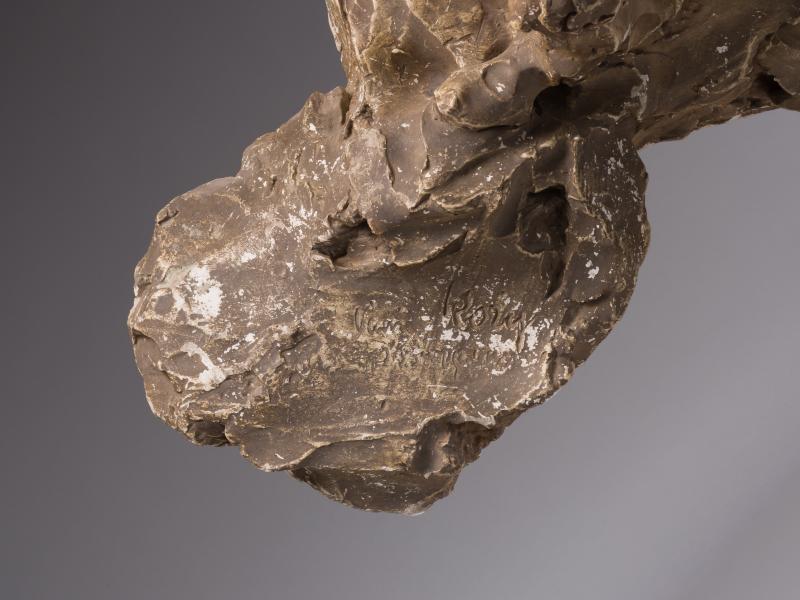
Signed and dated on the back: "Kurczyński / 909".
Legal regulation
Borys Voznytskyi Lviv National Art Gallery