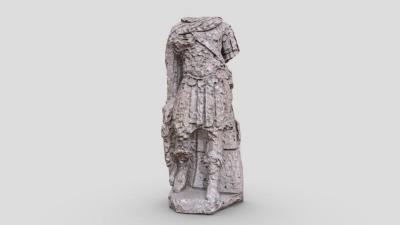
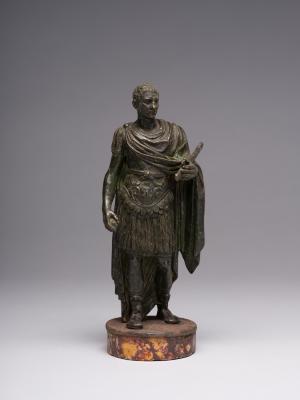
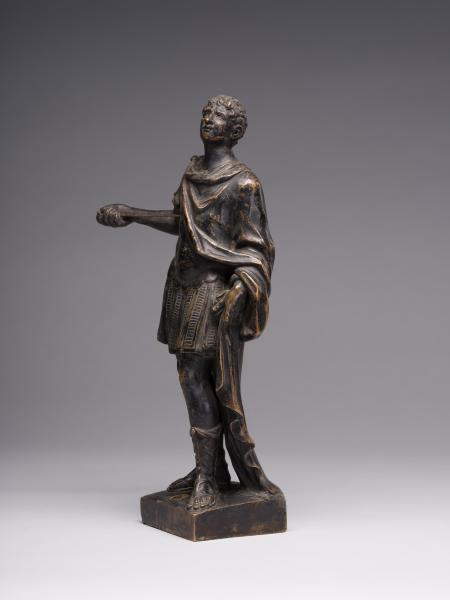
Suicide of a Roman General (Marcus Antonius (?))
unknown


Basic information
Additionally
- Type
- sculpture
- Genre
- portraiture
- Plot
- Portrait
- Provenance
- Collection of Wladyslaw Lozinski in Lviv Collection of Lviv City Gallery
Information about author
Object description
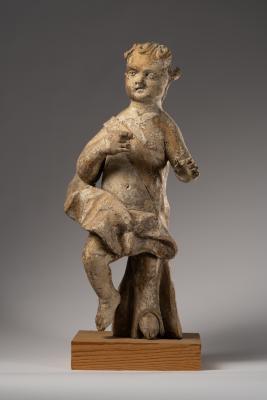
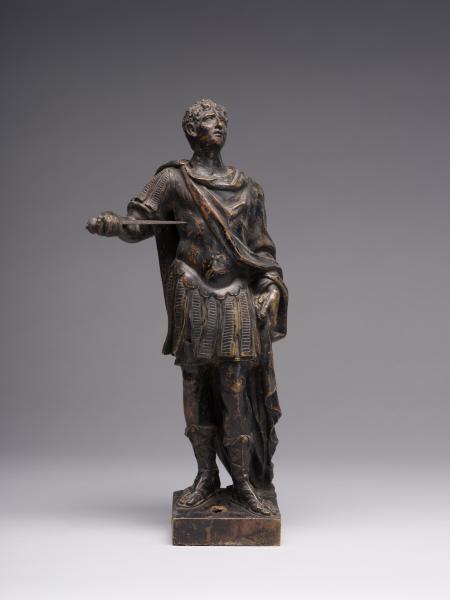
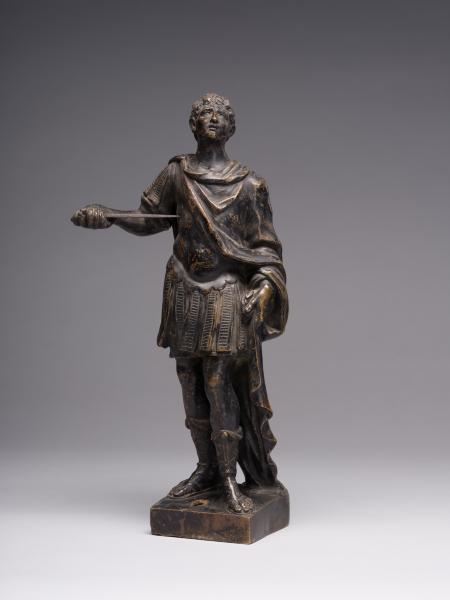
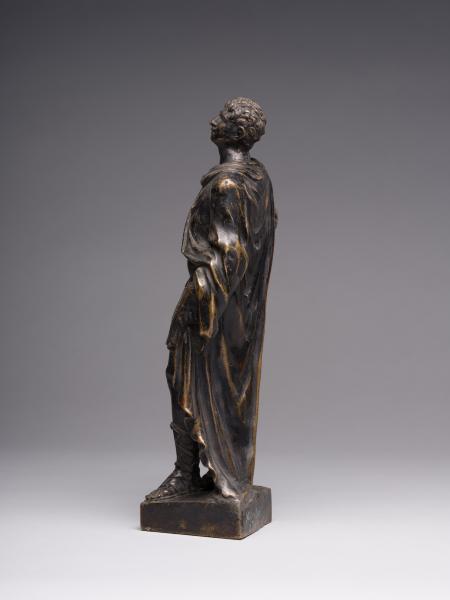
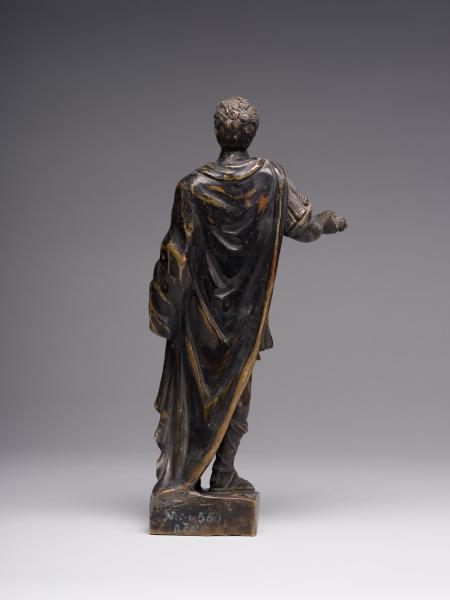
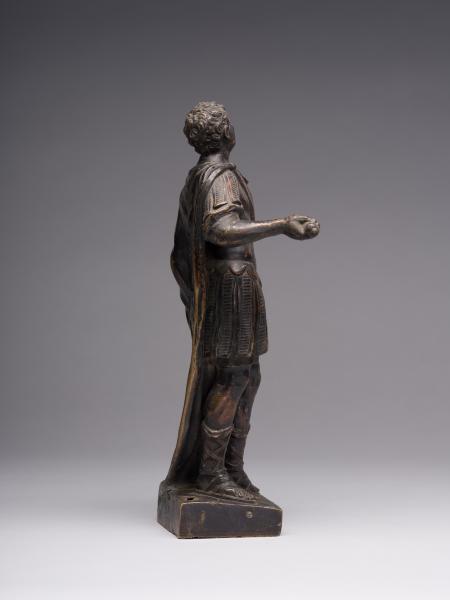
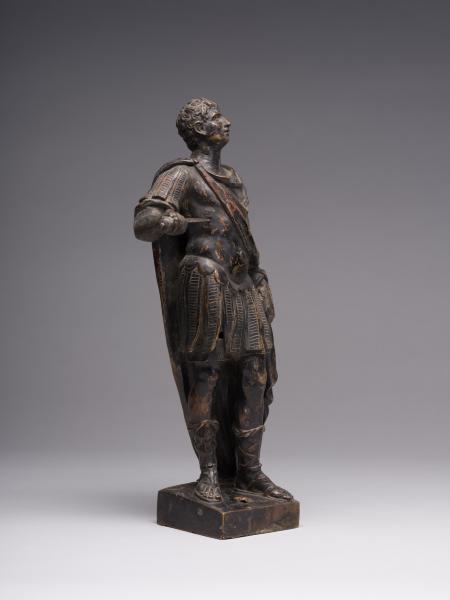
Among the ancient Roman warriors who ended their lives with a sword (Brutus, Cassius, Cato, and others), the most popular figure in the Renaissance was Marcus Antonius (82 BC – 30 BC), an outstanding politician and military leader. After several defeats in war and receiving false news of the suicide of his beloved, Queen Cleopatra, he attempted to kill himself with a sword (unsuccessfully). According to the ancient historian Plutarch, the commander lived for several more hours after this attempt and died in the arms of the queen. A full-length figure of a Roman military leader, possibly Marcus Antonius, is depicted as a young man in frontal view, dressed in a paludamentum (a military cloak) with a lorica (pteruges) around his thighs. The drapery of the cloak, falling down from the back, is held by the warrior on his thigh with his left hand. In his right hand, he holds a sword, which he is trying to plunge into his chest. The figure is supported on his right leg, with his left knee slightly bent. He wears sandals with straps on his feet. The cloak on the right shoulder of the portrait is fastened with a fibula. On his head, raised upward, is short, wavy hair. His expression is full of regret and sadness. The figure is fixed on a square plinth, where a small spot is cast between the warrior's legs, imitating a drop of blood.
Inscriptions
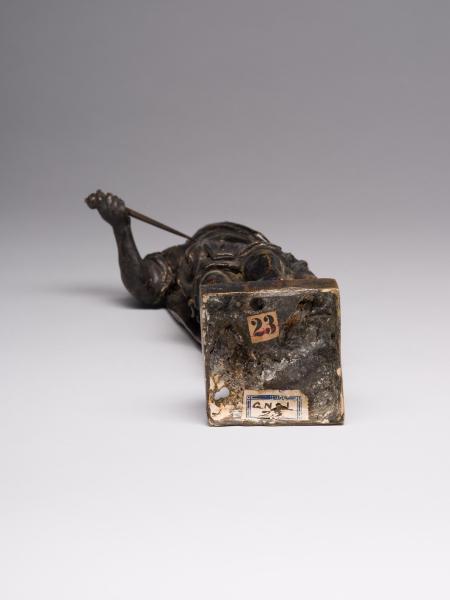
On the back of the plinth, there is an inscription in white: “№ С-І-560/ Л.ОКГ”. On the bottom of the plinth, there is a sticker with the number ‘23’ (crossed out in red); a stamp with the inscription in black: “GN(M)L/23”.
Legal regulation
Borys Voznytskyi Lviv National Art Gallery