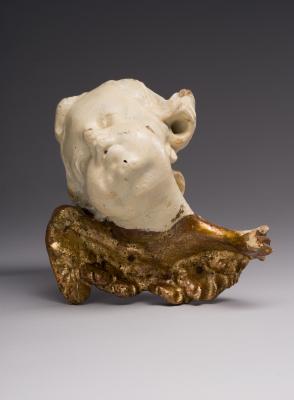
Saint Sebastian
unknown (Austrian School)


Basic information
- ID
- С-I-575
- Author
- unknown (Austrian School)
- Name
- Saint Sebastian
- Date of creation
- 18th c.
- Country
- Austria
- Culture
- Modern times
- Technique
- carving
- Material
- alabaster
- Dimensions (height x width x depth, cm)
- 32 x 13.5 x 6
Additionally
- Type
- sculpture
- Genre
- religious
- Plot
- Saint Sebastian
Information about author
Object description
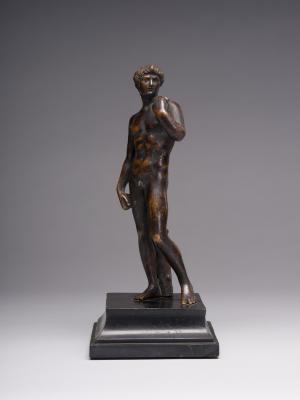
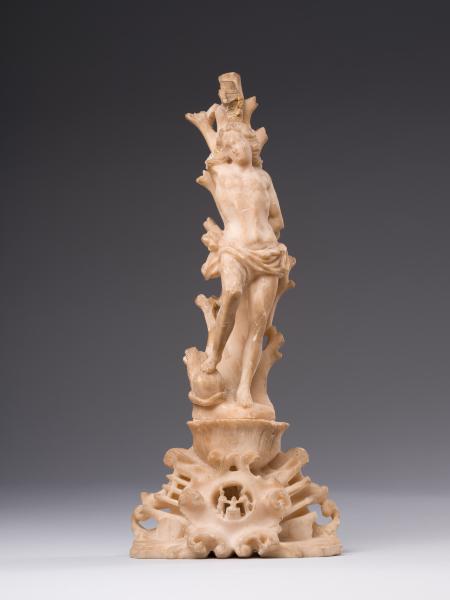
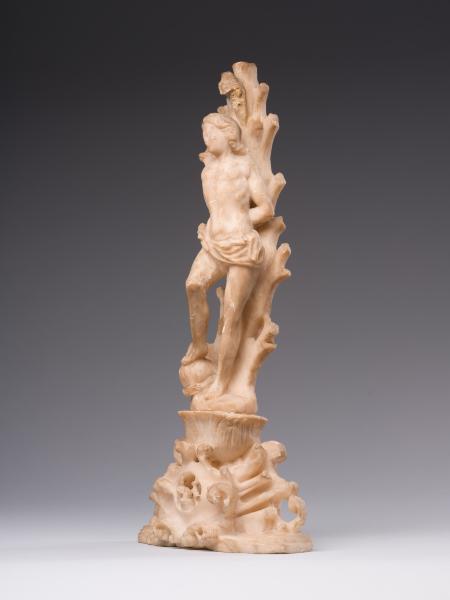
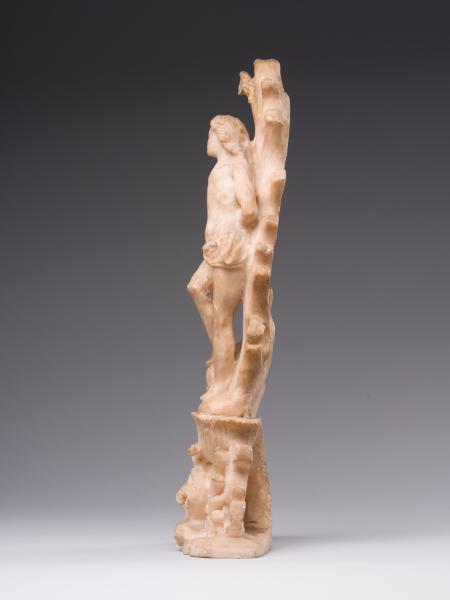
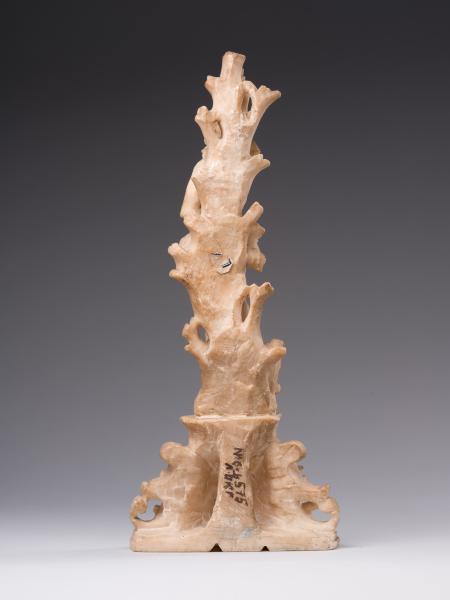
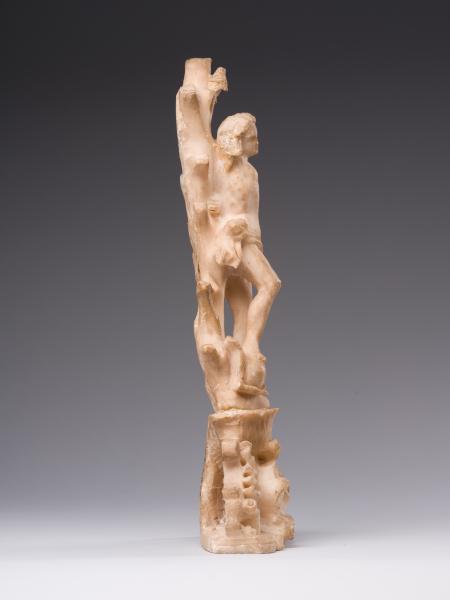
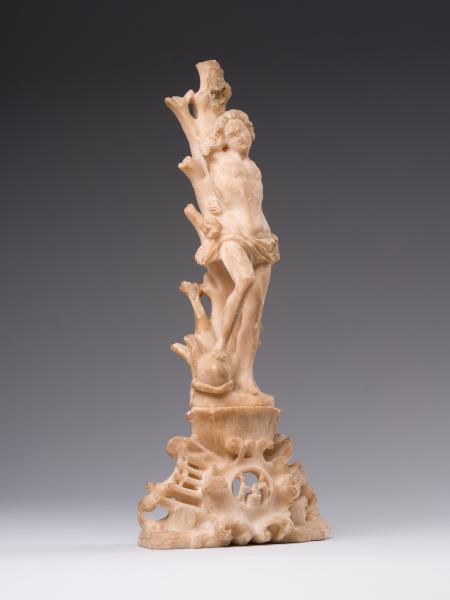
Sebastian of Narbonne, also known as Sebastian of Mediolanus, was a Roman Christian saint and martyr. Born in Narbonne (Gaul), he was educated and lived in Mediolanus (Milan). Under the co-emperors Diocletian and Maximian (284–305), he held the position of head of the court guard. He was a secret Christian and helped his fellow believers. Sebastian's commitment to Christianity became known during the execution of two of his friends, Mark and Marcellian, whom he publicly persuaded to remain faithful. Sebastian was personally interrogated by Emperor Diocletian, who ordered the martyr to be taken outside the city, tied to a tree and shot with arrows. The wife of the official Castulus, Irene, came at night to bury the saint but found him alive and took him home. Sebastian was healed of his wounds. The Christians begged him to leave Rome, but he refused. While near a pagan temple, the saint saw the emperors going there and publicly accused them of dishonour. Diocletian ordered Sebastian to be taken to the Hippodrome, where he was killed and his body thrown into the Cloaca Maxima, a sewer leading into the Tiber. The holy martyr appeared in a dream to a Christian woman, Lucina, and told her to take the body and bury it in the catacombs. The Basilica of St. Sebastian was built over the saint's tomb. In a work from the collection of Borys Voznytskyi Lviv National Art Gallery, the saint is shown tied to a tree before being executed by arrows from bows. The whimsicality of the contours, the ornamental decoration of the pedestal and the saint's pose show Rococo influences.
Portrayed person
- The name of the person portrayed
- Sebastian of Narbonne, also Sebastian of Mediolanus
- Lifetime of the person portrayed
- c. 256–288
Legal regulation
Borys Voznytskyi Lviv National Art Gallery