Two Drawings
Yulian Zaiats


Basic information
- ID
- Ф-З-Арх-ЛГМ-8/10
- Author
- Yulian Zaiats
- Name
- Two Drawings
- Date of creation
- 14.12.1962–15.12.1962
- Country
- the Ukrainian SSR
- Technique
- drawing
- Material
- paper pencil
- Dimensions (height x width, cm)
- 20.3 x 28.6
Additionally
- Type
- graphic art
- Genre
- portraiture
- Plot
- Portrait
- Provenance
- Received from Nina Zaiats
Information about author
Object description
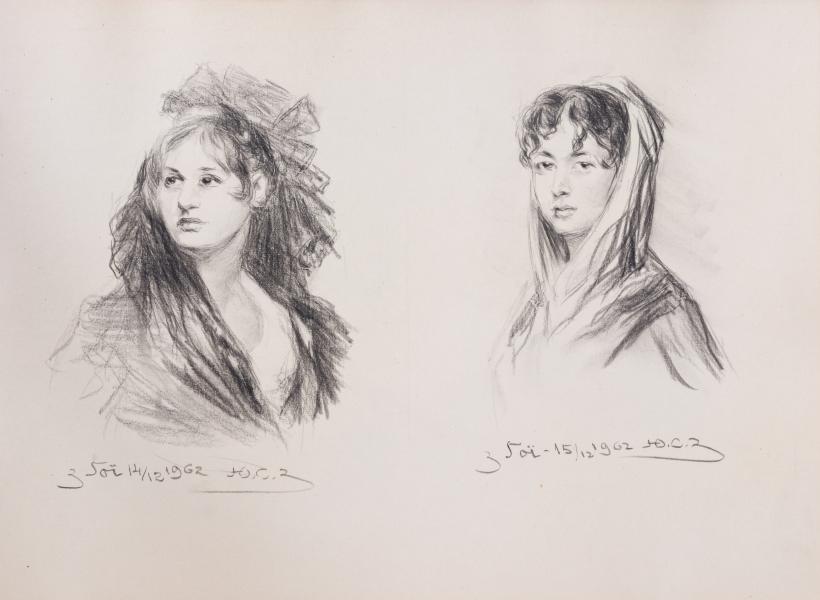
Two drawings by Yulian Zaiats based on portraits by Francisco Goya, namely Doña Isabel Lobo Velasco de Porcel (1804–1805) and Señora Sabasa García (1806–1811), demonstrate the artist's careful study of the Spanish master's individual style and his ability to convey not only the external resemblance but also the inner character of the figures depicted. Both portraits are presented in a three-quarter bust-length format, but each has its own emotional tone and compositional rhythm. In the portrait of Doña Isabel Lobo Velasco de Porcel, Goya captured the image of a young socialite with aristocratic features and a confident, even slightly haughty gaze directed past the viewer. The headdress and dark dress with a light transparent cape emphasise the elegance and restrained luxury of the figure. In Y. Zaiats' drawing copy, there is a noticeable desire to preserve the gracefulness of the facial lines, soft light and shadow transitions, and the texture of the fabrics, which create the impression of volume and depth characteristic of the original. In contrast, the portrait of Señora Sabasa García has a more intimate and introspective character. The woman is depicted turning to the left, but her gaze confidently meets the viewer's, and attentiveness dominates here. The light headdress (cape?) and restrained attire reinforce the sense of seriousness and dignity. Y. Zaiats' copy preserves the clarity of the silhouette, the contrast of light and shadow, and the expressiveness of the facial expressions, thanks to which the figure retains the psychological richness characteristic of Francisco Goya's original.
Inscriptions
In the centre, beneath the images: "From Goya"; "14/12 1962"; Yulian Zaiats' signature; "From Goya"; "14/12 1962" Yulian Zaiats' signature.
Portrayed person
- The name of the person portrayed
- Dona Isabel de Porcel, Sabasa García (?)
Legal regulation
Borys Voznytskyi Lviv National Art Gallery