Pregnant Woman
Ksawery Dunikowski


Basic information
- ID
- С-I-640
- Author
- Ksawery Dunikowski
- Name
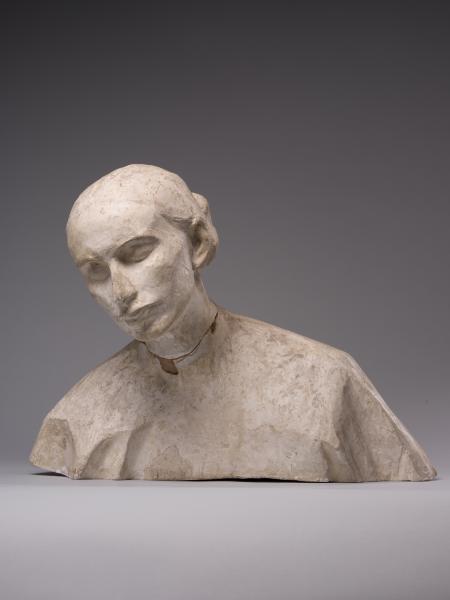
- Pregnant Woman
- Date of creation
- 1906
- Country
- Austro-Hungarian Empire
- Culture
- Contemporary times
- Technique
- moulding
- Material
- plaster
- Dimensions (height x width x depth, cm)
- 43 x 56 x 38
Additionally
- Type
- sculpture
- Genre
- portraiture
- Plot
- Portrait bust
- Provenance
- National Gallery of Lviv (until 1940)
Information about author
Object description
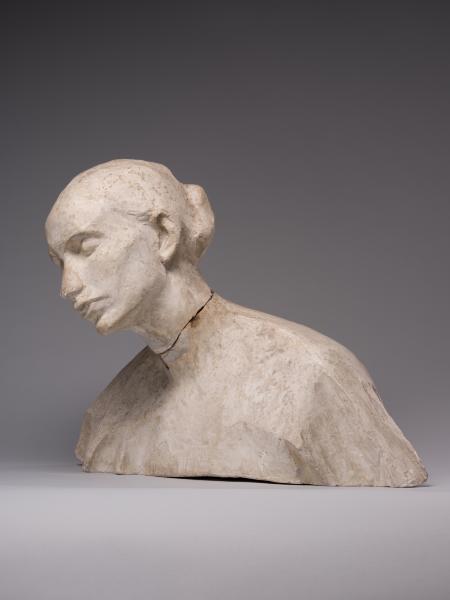
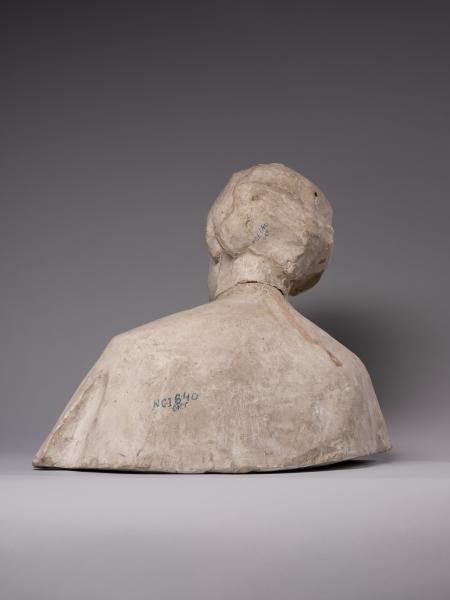
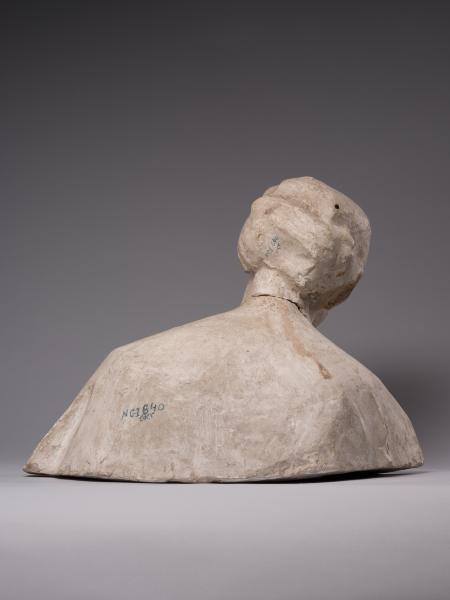
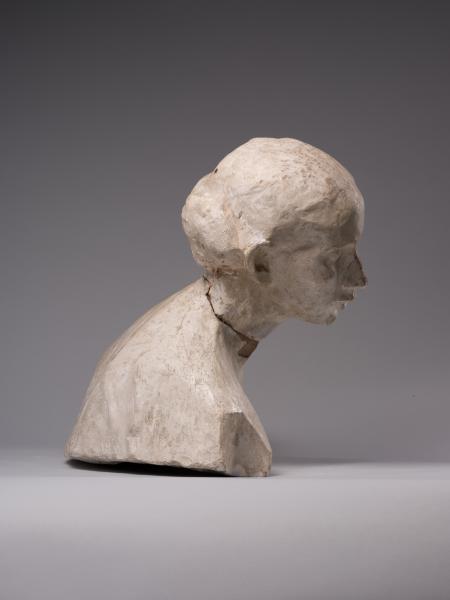
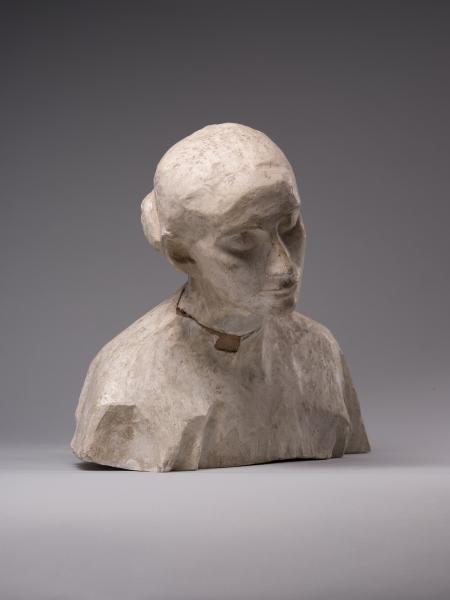
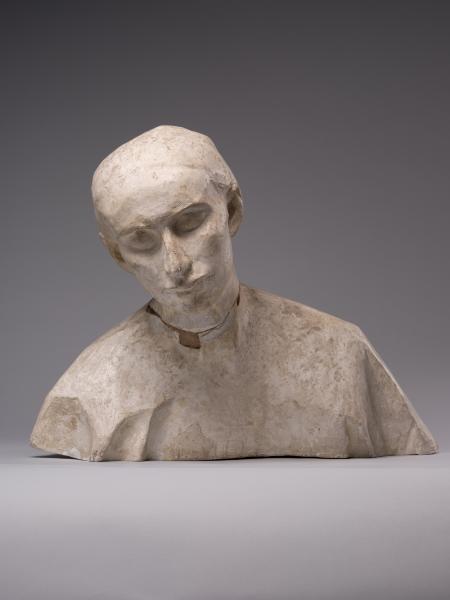
The "Pregnant Woman" bust (1906) belongs to the mature period of Ksawery Dunikowski's oeuvre – when the sculptor was recognised. At the General Exhibition of Polish Art in Lviv in 1910, the work made a great impression on the visitors and received favourable reviews in artistic and critical publications. In particular, K. Sichulski emphasised Dunikowski's desire to express deep ideas and emotions, and M. Treter published a study of the artist's creative work. The peculiarity of the sculpture lies in the ambivalence of the image, which is based on the ideas of pregnancy in traditional Slavic culture. Many people perceived it as the embodiment of fertility, apotropaic magical power and at the same time as a liminal state, close to the brink of life and death, dangerous for the woman, others, and the order of life. This belief is reflected in the semantic proximity of its definitions to the words "burden", "heaviness", "weight", "bearer" (Bulgarian: "bremenna", Polish: "brzemienna", Bulgarian, Macedonian: "teshka", Ukrainian dialectical: "tiahitna", "vazhka"). The derivations of the word from "belly" and "abdomen" (East Slavic: "cherevata") and from the root "trud" (Bulgarian: "trudna", Croatian: "trudnica") are indicative. The contradictory attitudes towards pregnant women are evidenced by the prohibition of their participation in wedding and funeral rites and everyday household activities. There was a widespread belief in the defencelessness of pregnant women against the influence of evil demonic forces. In Dunikowski's expressive work, full of tension, the difficult condition of the pregnant woman is reflected in the bending of the figure under the burden of carrying, the exhaustion of the face, the soreness of the lips and the closed, sunken eyes. Asymmetry, sharp contrasts of light and shadow, geometricisation and generalisation of forms express the artistic idea. Stylistically, the sculpture is reminiscent of the works of Ernst Barlach, which combine expressiveness with the principles of Cubist form.
Legal regulation
Borys Voznytskyi Lviv National Art Gallery