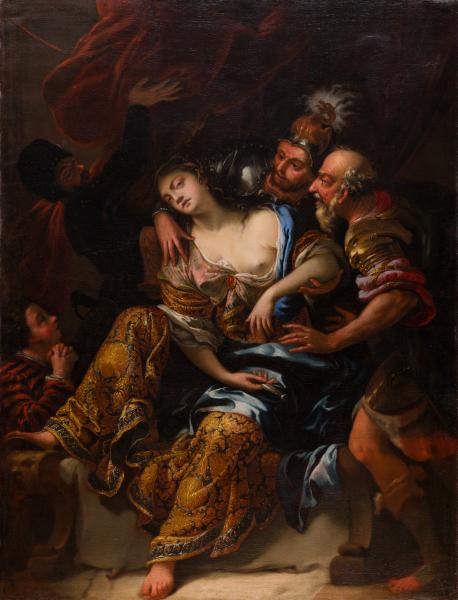
Death of Lucretia
Johann von Spillenberger


Basic information
- ID
- Ж-1830
- Author
- Johann von Spillenberger
- Name
- Death of Lucretia
- Technique
- oil painting
- Material
- canvas oil
- Dimensions (height x width, cm)
- 127 x 96
Additionally
- Type
- painting
- Genre
- mythological painting
- Plot
- Death of Lucretia
- Provenance
- the Lubomirski collection
- Exposition
- Potocki Palace
Information about author
Object description
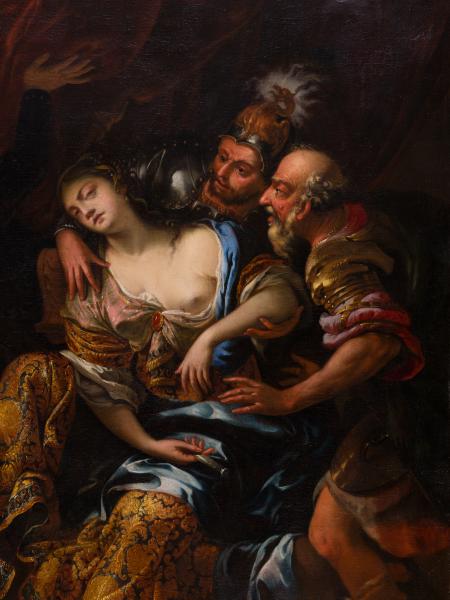
The painting depicts a nude woman with a knife in her hand, being restrained by two men. The composition is detailed and theatrical in the spirit of late Baroque. The contrasting lighting and expressiveness of the characters add drama to the narrative. According to Ovid, Lucretia is the wife of Tarquinius Collatinus, a relative of the last Etruscan king of Rome, Tarquin the Proud (505–507 BC). Legend holds that the king's son, Sextus Tarquinius, took advantage of Lucretia's husband's absence and dishonoured her by threatening her with death. The next day, Lucretia confessed everything to her father and husband and, unable to bear the weight of disgrace, took her own life. It is believed that her death sparked a rebellion against the Tarquins and led to the collapse of Etruscan rule in Rome. Gaining popularity during the Renaissance, this story became one of the most beloved subjects in European painting over the centuries.
Legal regulation
Borys Voznytskyi Lviv National Art Gallery