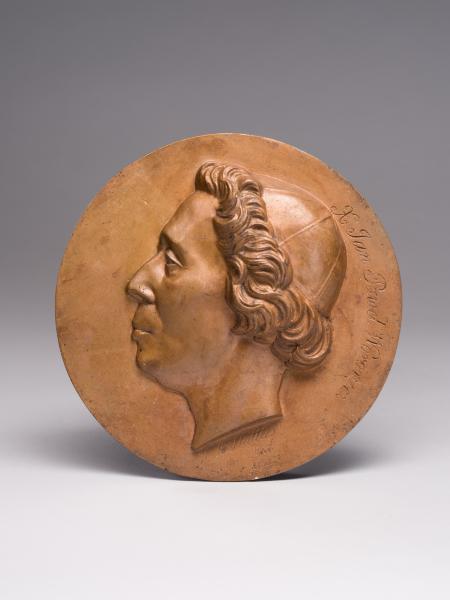
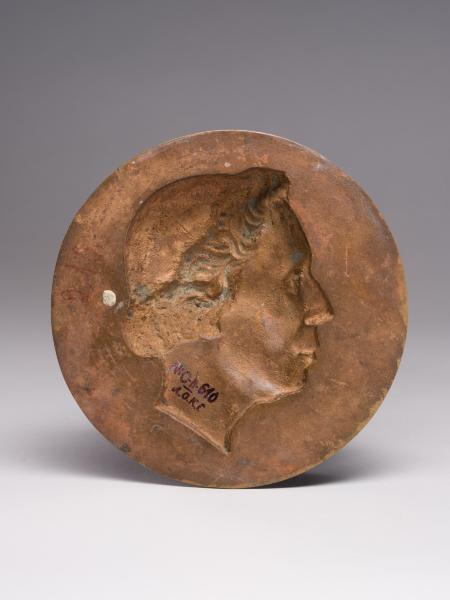
Medal "Jan Pawel Woronicz"
Henryk Stattler


Basic information
- ID
- С-II-610
- Author
- Henryk Stattler
- Name
- Medal "Jan Pawel Woronicz"
- Date of creation
- 1852
- Country
- Kingdom of Poland
- Culture
- Modern times
- Technique
- moulding
- Material
- bronze
- Dimensions (diameter, cm)
- 18
Additionally
- Type
- sculpture (relief)
- Genre
- portraiture
- Plot
- Portrait
- Provenance
- the Dzieduszycki collection
Information about author
Object description
Jan Paweł Woronicz (28 June 1757 – 6/7 December 1829) was a Polish poet and writer. He was Bishop of Krakow, Archbishop of Warsaw, and Primate of the Kingdom of Poland. He was born in Volhynia into the noble family of Woronicz of the Herburt (Pawęza) coat of arms. He studied with the Jesuits in Ostroh. During this time, he discovered his poetic talents. In 1770, he joined the Jesuit order. Soon after, the artist began studying at the Vilnius Academy. In 1777, he worked as a teacher at the former Jesuit school in Ostroh. In 1783–1784, he studied theology at the Holy Cross Seminary of the Missionary Fathers in Warsaw. From 1794, he was a canon of the Chełmno Diocese. During the T. Kosciuszko uprising, he was the commissioner for the regulation of affairs in Mazovia. On 12 March 1795, he became a canon in Warsaw, and from November 1797, a canon in Wroclaw. From 1803 to 1815, Jan Paweł Woronicz served as a priest near Warsaw in the Church of St. Elizabeth. He participated in the work of the Society of Friends of Science. After the establishment of the Duchy of Warsaw in 1806, he was appointed a member of the Military-Administrative Chamber, and in 1808, a member of the State Council. In 1810, he became a member of the Department of Internal Affairs and Religious Rites. In 1812, the artist joined the General Confederation of the Kingdom of Poland. In 1815, he was appointed Bishop of Krakow and Senator of the Kingdom of Poland. In 1818, his best poem, dedicated to Princess Izabela Czartoryska (1745–1835), was published in Lviv. In 1827, he became Archbishop of Warsaw and Primate of the Kingdom of Poland. In 1828, he was a member of the Sejm court, which was to judge persons accused of treason. Jan Paweł Woronicz died in Vienna on 7 December 1829. He was buried at Wawel.
Inscriptions
"Х Jan Paweł Woronicz".
Portrayed person
- The name of the person portrayed
- Jan Pawel Woronicz
- Lifetime of the person portrayed
- 28.06.1757–06/07.12.1829
Legal regulation
Borys Voznytskyi Lviv National Art Gallery