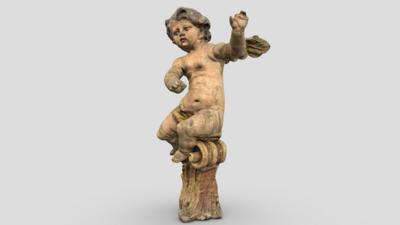
Figure of an Angel
unknown folk sculptor

Basic information
- ID
- С-I-1246
- Author
- unknown folk sculptor
- Name
- Figure of an Angel
- Date of creation
- late 18th – early 19th c.
- Country
- Ukraine
- Technique
- carving polychrome
- Material
- wood
- Dimensions (height x width x depth, cm)
- 56 x 44 x 46
Additionally
- Type
- sculpture 3D
- Genre
- religious
- Plot
- Angel
- Provenance
- Vysloboky village, Kamianka-Buzka district, Lviv region
Information about author
Object description
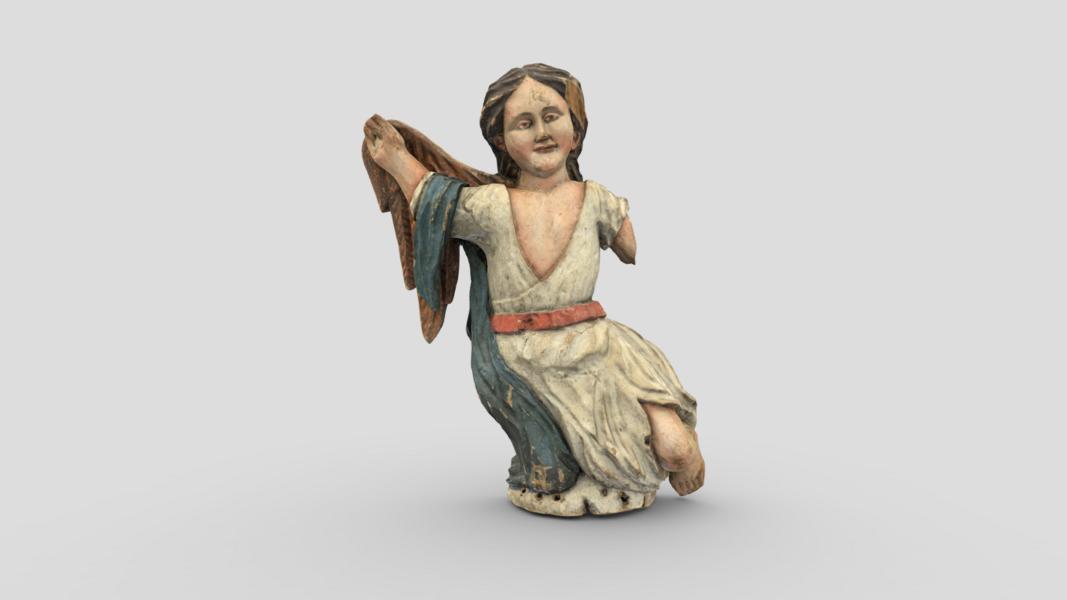
In the temple's interior, carved flat and three-dimensional figures of angels were placed. They were not always a part of the iconographic design of the iconostasis, altar or sculptural compositions; however, despite the main emphasis of the design, they enriched the household environment of the sacred room. One of these sculptures is angels, not always carved for a particular church but often got there from other destroyed temples. They were located in the hall, on the sections of the side altars and specially made shelves. The individual work from the village of Vysloboky depicts an angel in the image of a kneeling young man. The front-facing figure is dressed in a long white tunic with a deep triangular neckline on the chest and a red waistband. The authorship of the folk master is evidenced by an attempt to convey the anatomical proportionality of the figure and the forming of clothes draperies with small cuts. The elongated face oval is wrapped with strands of hair modelled by small incised lines. The pretty expression of an angel, with a look directed at the viewer and a mysterious smile on his lips, is reproduced in a mystical thoughtfulness.
Legal regulation
Borys Voznytskyi Lviv National Art Gallery