Lviv Beggar (Newspaper Man)
Julia Smolkowna


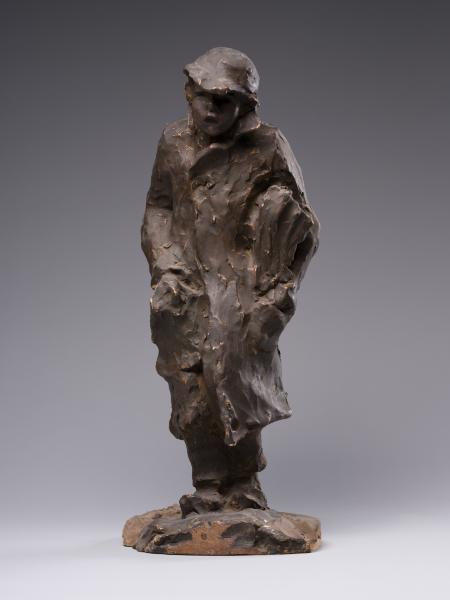
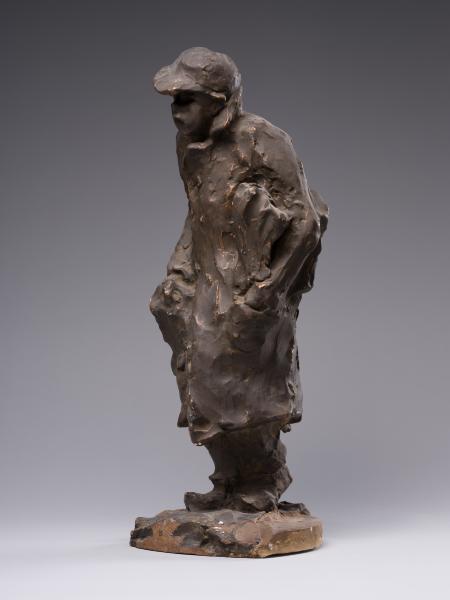
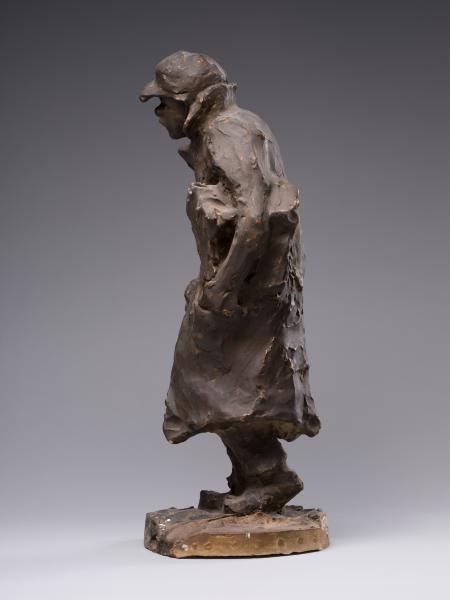
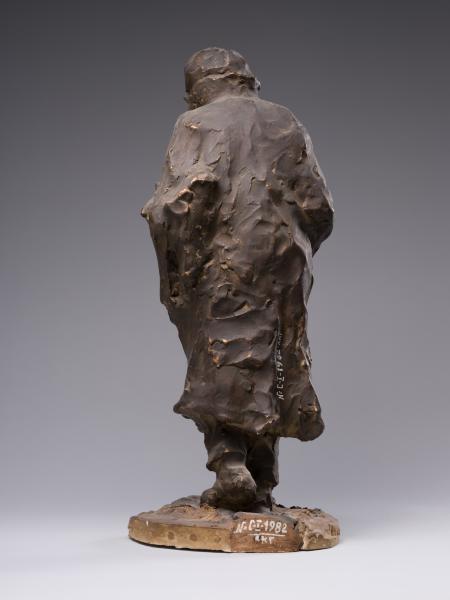
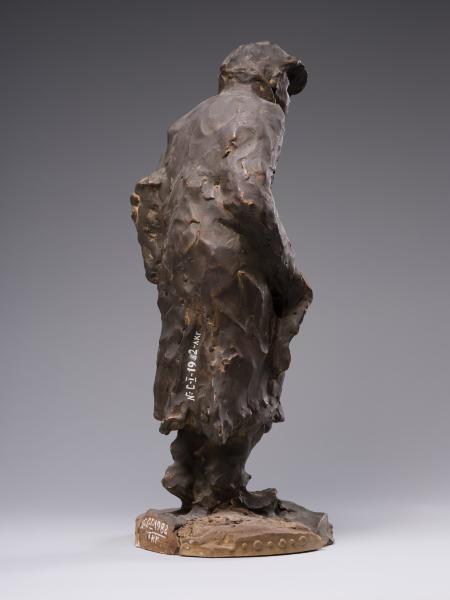
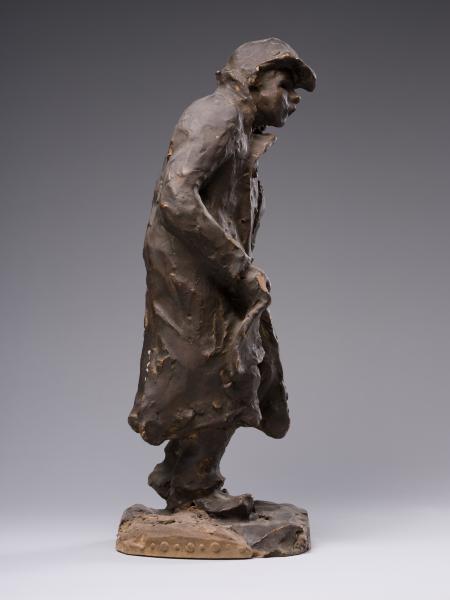
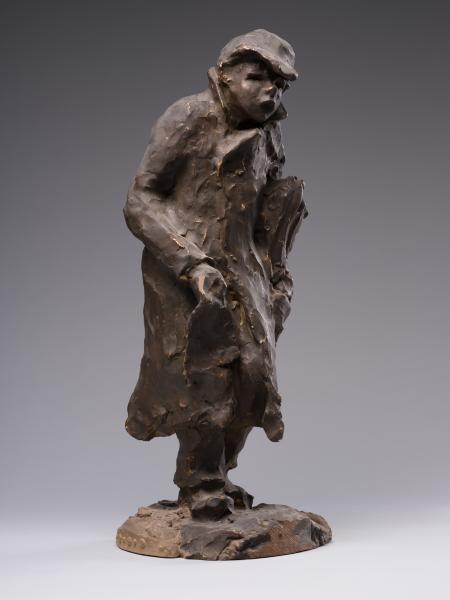
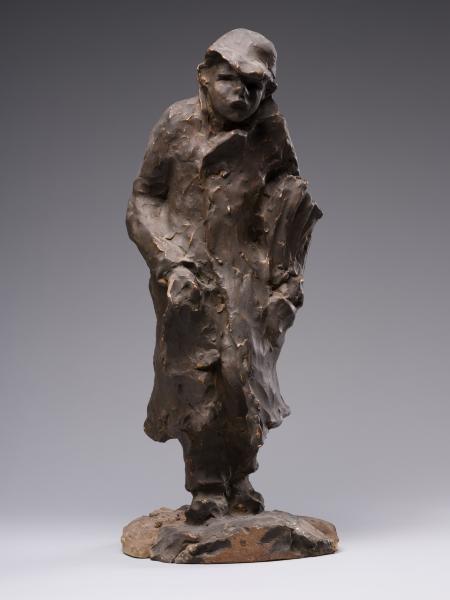
Basic information
- ID
- С-I-1982
- Author
- Julia Smolkowna
- Name
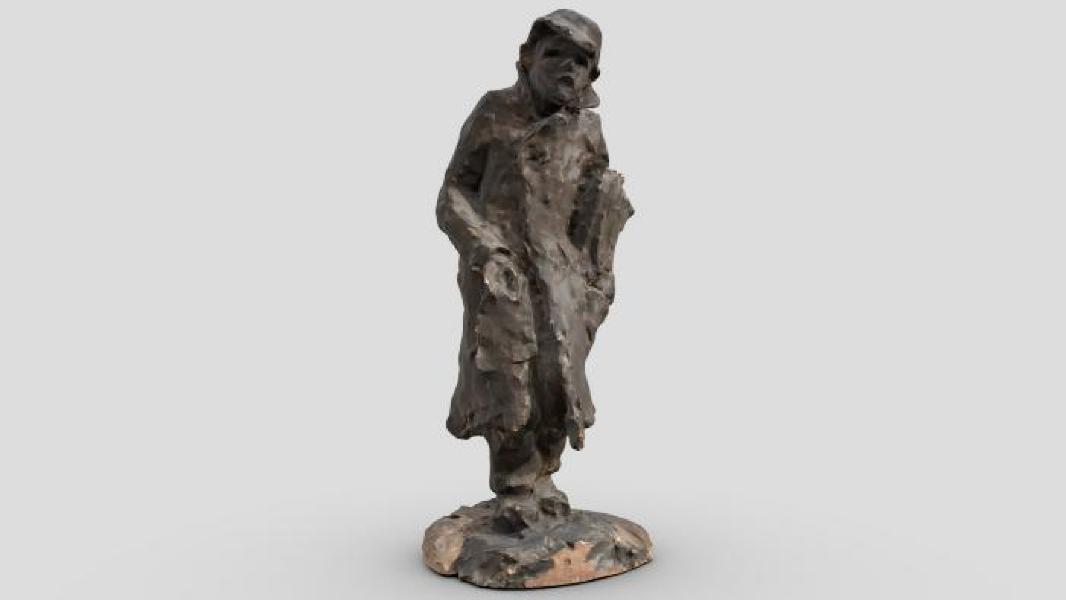
- Lviv Beggar (Newspaper Man)
- Date of creation
- 1915–1917
- Country
- Austro-Hungarian Empire
- Technique
- moulding polychrome
- Material
- plaster
- Dimensions (height x width x depth, cm)
- 50.5 x 19 x 19
Information about author
Object description
A significant body of J. Smolkowna's creative work is formed by genre scenes that received favourable reviews in contemporary publications. For example, V. Zhyla argued, "Smolkowna's small figures are very mobile as if they were constantly enveloped in air, surrounded by trembling, vibrating energy". S. Makhnievych, in his review of the IV Exhibition of Lviv Artists in 1921, said: "Smolkowna is rooted in modern French sculpture (Rodin), has a lot of courage, scope, and a sense of volume". The "perfection of plasticity and movement" of the sculptor's plot groups was noted by J. Tomicka in her review of the VI Exhibition of the Association of Polish Women Artists in Lviv. The embodiment of the traditional street scene in European fine art – from Annibale Carracci's "professions of Bologna" to Bartolomeo Pinelli – in the system of Impressionism is "Lviv Beggar (Newspaper Man)" (1915–1917). Characteristic features of the work are the plastic generalisation, the emphasis on the present, and the fluidity of the forms of a weak body in which life is still struggling. The image is made more expressive by the reproduction of human interaction with the urban space on a vibrating, shimmering surface: indifferent, luxurious and miserable, rainy, crowded, with the noise of the crowd, the glitter of lanterns, the clatter of stagecoaches, and the grinding of the first trams. The fluid plastic solution of the figure is reminiscent of the late works by Alexander Rodin: "The Burghers of Calais" (1884–1888) and "Monument to Balzac" (1891–1898). With its expressiveness and picturesqueness, the sculpture resonates with many compositions by Z. Kurczynski, who returned to Lviv in 1908, exhibited more than 100 easel works at exhibitions in 1909–1918, and received orders and recognition.
Inscriptions
The signature on the base reads: "J. Smo…".
Legal regulation
Borys Voznytskyi Lviv National Art Gallery