Back

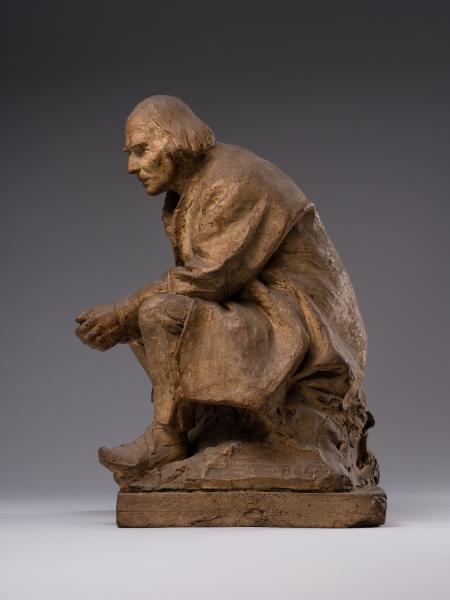
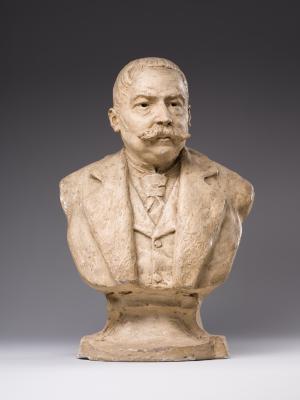
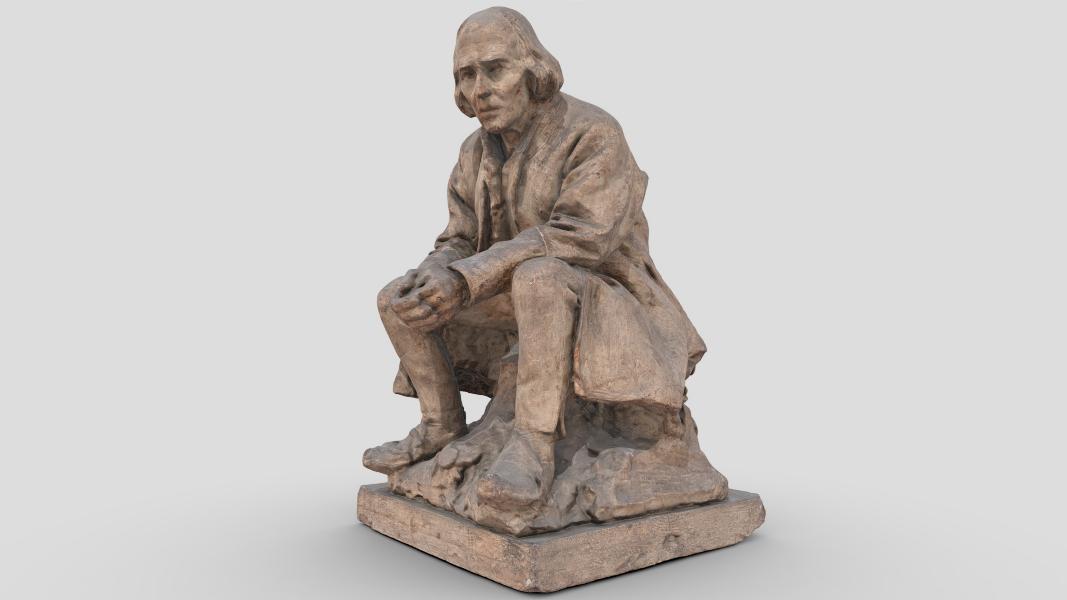
Highlander (Gazda)

Wojciech Brzega
Basic information
ID
С-I-336
Author
Wojciech Brzega
Name
Highlander (Gazda)
Date of creation
1901
Country
Austro-Hungarian Empire
Culture
Contemporary times
Technique
moulding
Material
plaster
Dimensions (height x width x depth, cm)
44 x 26 x 26
Additionally
Information about author
Author
Wojciech Brzega
Artist's lifetime
1872–1941
Country
Austro-Hungarian Empire, Poland
Biography
Wojciech Brzega (1872–1941) was a Polish sculptor, furniture maker, promoter of the Zakopane style, writer, teacher, and public figure. He was born into a locksmith's family in Zakopane. His father died shortly after his birth. The artist was brought up by his mother and later took her surname. Between 1885 and 1889, after graduating from the folk school, W. Brzega studied in the decorative sculpture class at the Woodworking School in Zakopane. After 1889, he worked as a master carver in Cieszyn and Bielsko-Biala workshops and sculpture workshops in Krakow and Lviv. From 1895 to 1898, he studied at the Academy of Fine Arts in Krakow under Alfred Daun. In 1898, he studied in Munich under Heinrich Knirr. From 1899 to 1901, he continued his studies in Paris at the National School of Fine Arts. From 1901, he worked in Zakopane. He married Stefania Czartoryska in 1912. He opened a studio in his apartment, where he organised exhibitions of decorative and applied arts by artists from the "Sztuka Podhalańska" Association. He devoted himself to decorative sculpture, furniture, and decorative and applied arts. From 1903, he created decorative and applied objects and furniture in the Zakopane style. He worked mainly in wood. In his portraits, he used bronze, terracotta, and plaster. He made his debut at the Zakopane Art Exhibition in 1902. Between 1909 and 1939, he participated in almost all the exhibitions organised by the Zakopane Art Society. He is the author of memoirs, plays, ethnographic and historical articles. His works were published in the regional magazines "Zakopane", "Góral", and "Młody Taternik". In 1913, the artist published the book "Possessions. Stories from the Podhale". Based on his memoirs donated to the Tatra Museum, he wrote the book "Life of an Honest Verkhovyna Resident" in 1969. Between 1922 and 1937, he taught sculpture at the Woodworking School in Zakopane. In 1926–1929, he was its director. The achievements of W. Brzega's public activity include co-founding the Verkhovyna Residents' Association (1904), co-founding the Podhale Art Society (1909), organising the first Podhale Residents' Congress in Zakopane (1911), membership in the Society for the Promotion of Fine Arts (1925–1939), co-founding the "Modła" Union, and membership in the National League.
Object description
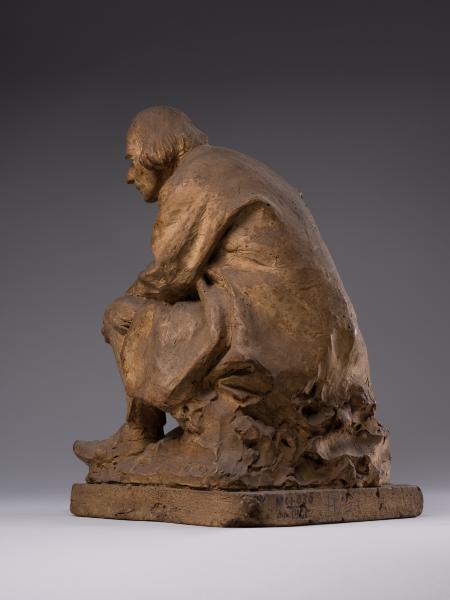
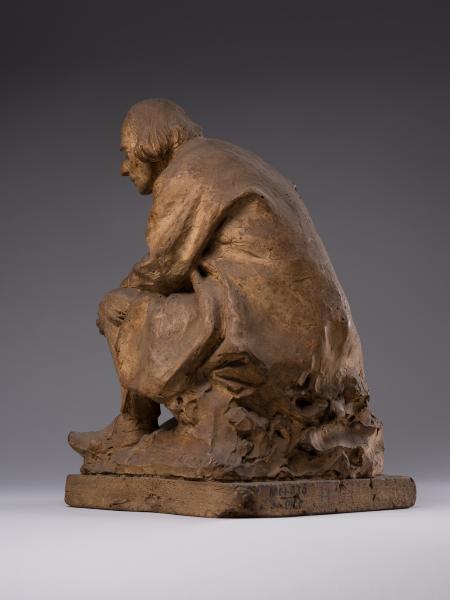
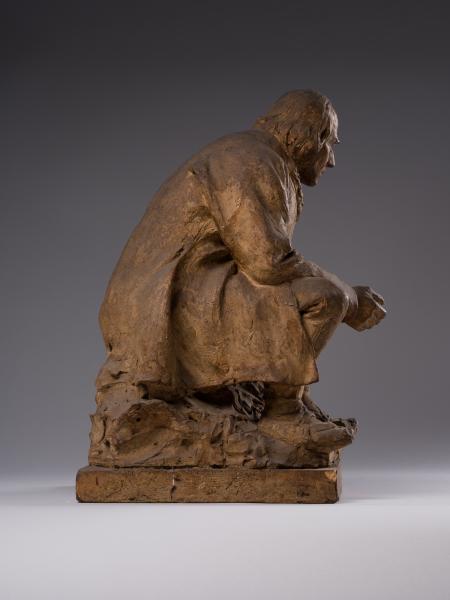
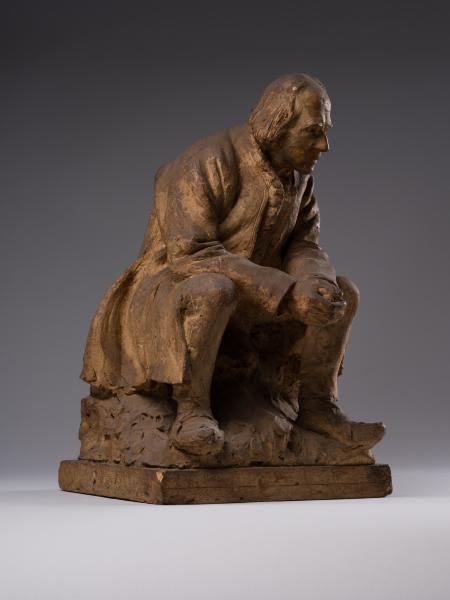
The "Highlander" or "Gazda" (1901) sculptural work by Wojciech Brzega reflects the cultural and ideological priorities and research interests of the author, who was one of the promoters of the Zakopane style, studied the life and customs of highlanders and reflected the results of his research in many historical and ethnographic articles. The colouring of the gypsum figure imitates wood, a traditional material of folk carving with "deep semantic resonances in the collective consciousness" (Z. Chehusova). Stylistically, the work is related to the realistic trends in the 1870s – early 1900s sculpture, evidenced by the narrative, reference to folk themes and detailed reproduction of folk costumes. The work's peculiarity lies in the image's typification, empathy with the portrayed, and affirmation of the value of folk culture and life.
Inscriptions
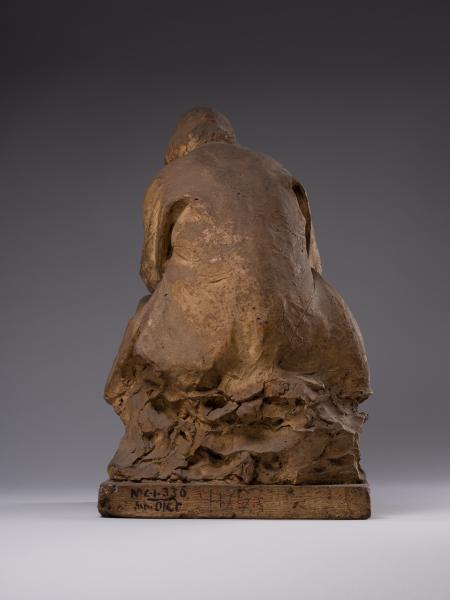
Signed and dated on the right: "Brzega, 1901"; on the back of the stand: "H / 73".
Legal regulation
Borys Voznytskyi Lviv National Art Gallery