Playing Cards
Gerard Hoet І


Basic information
- ID
- Ж-383
- Author
- Gerard Hoet І
- Name
- Playing Cards
- Country
- Holland
- Technique
- oil painting
- Material
- tinplate oil
- Dimensions (height x width, cm)
- 23 x 29.5
Additionally
- Type
- painting
- Genre
- genre art
- Provenance
- the Lubomirski collection
- Exposition
- Potocki Palace
Information about author
Object description
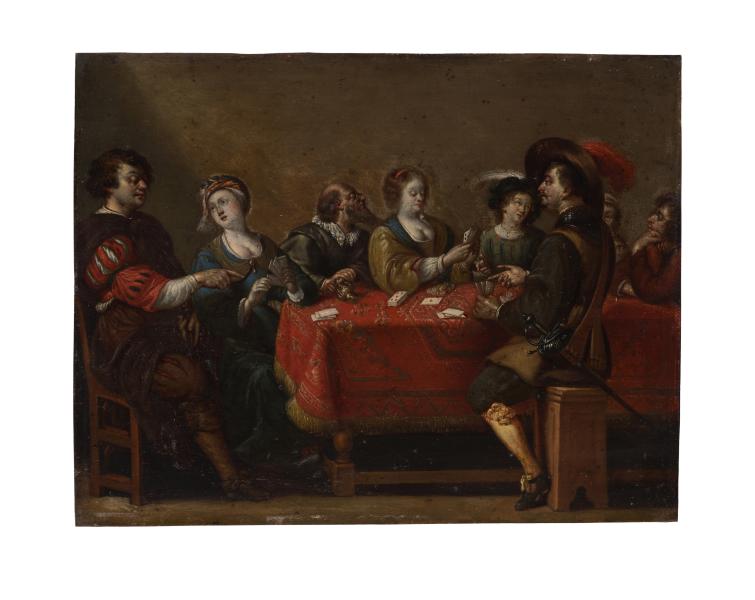
The painting nearly fills the space with a multi-figure composition depicting a card game. Eight people are seated around the table. Some are participating in the game, while others are observing. Alongside the men are women, highlighting the democratic nature of this pastime. The lavish clothing, quality footwear, hats, and weapons of the portrayed individuals indicate the wealth of the Dutch bourgeois. Playing cards are on the table, covered with a bright red cloth. The tense excitement of the players captures the decisive moment of the game. Card games made their way to Europe from China in the 14th century and became widely popular in the 16th century. Since then, they have become a popular subject in art. Small in size, diverse, realistic paintings that conveyed moral teachings and showcased beauty in everyday life, representing the country's inhabitants, were trendy in the 17th century. The palette of the works by the "little Dutch" painters is unrestrained. The capture of every moment of life, the surrounding world, nature, cities and villages, marine landscapes, floral bouquets, and the gifts of nature, along with the elevation of the everyday labour and leisure of the Dutch, are the main characteristics of the works by artists of this period.
Legal regulation
Borys Voznytskyi Lviv National Art Gallery