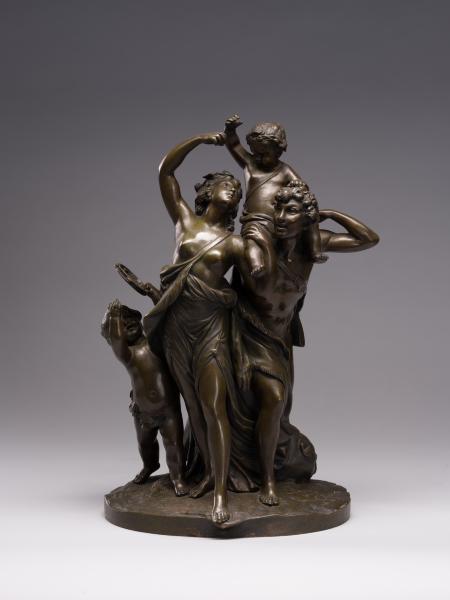
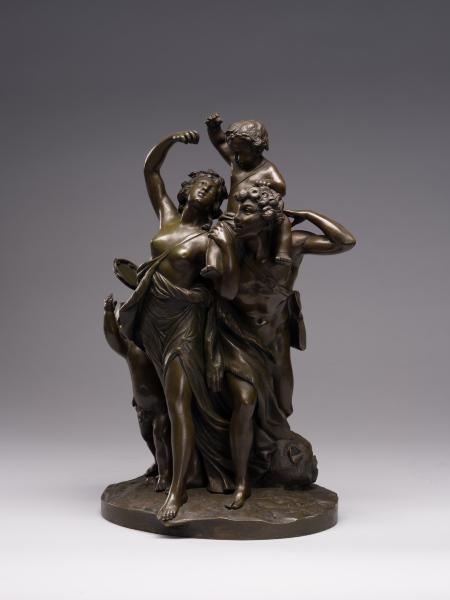
The Triumph of Bacchus (or The Childhood of Bacchus)
Claude Michel (Clodion)


Basic information
- ID
- С-I-610
- Author
- Claude Michel (Clodion)
- Name
- The Triumph of Bacchus (or The Childhood of Bacchus)
- Date of creation
- 2nd half of the 18th c.
- Country
- France
- Technique
- moulding
- Material
- bronze
- Dimensions (height x width x depth, cm)
- 39 x 24 x 20
Additionally
Information about author
Object description
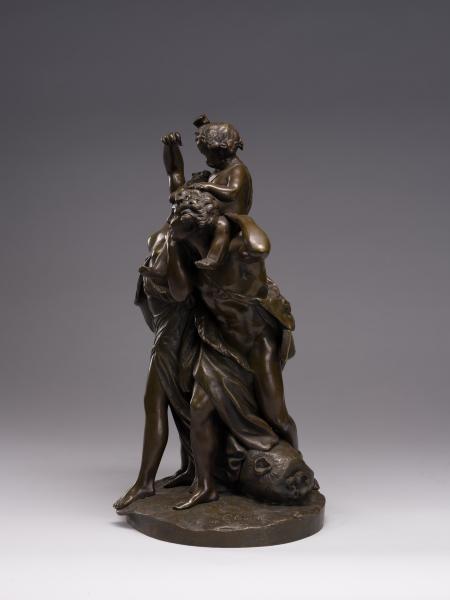
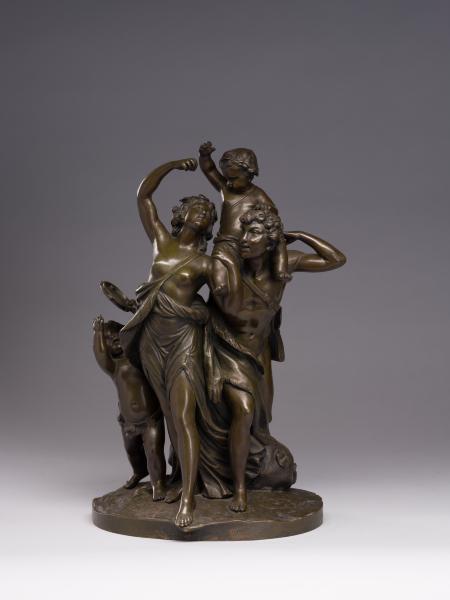
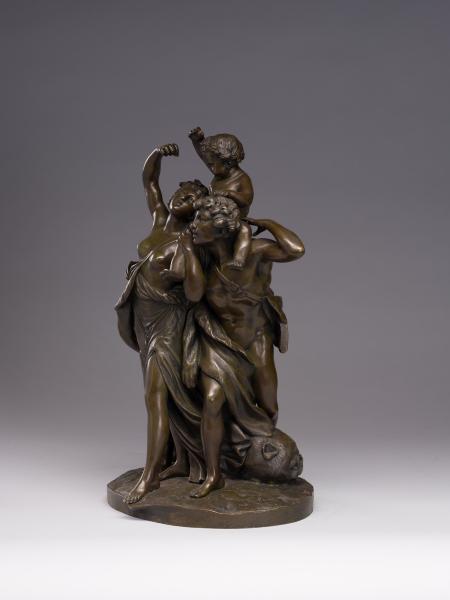
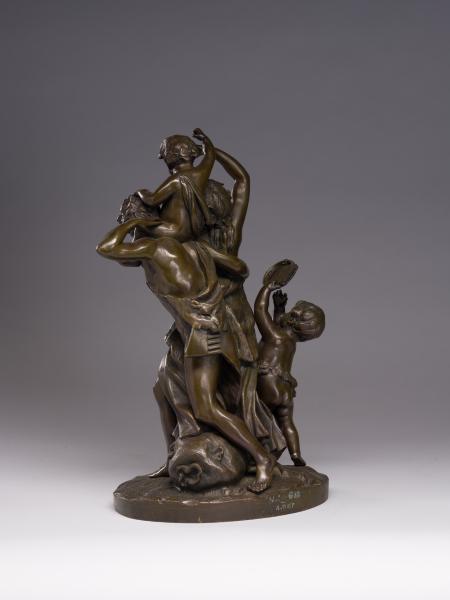
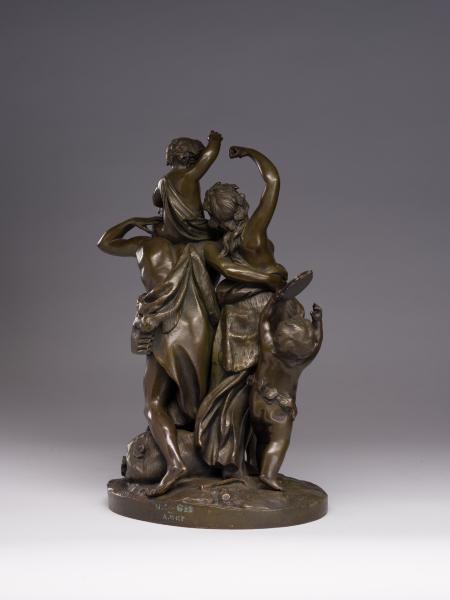
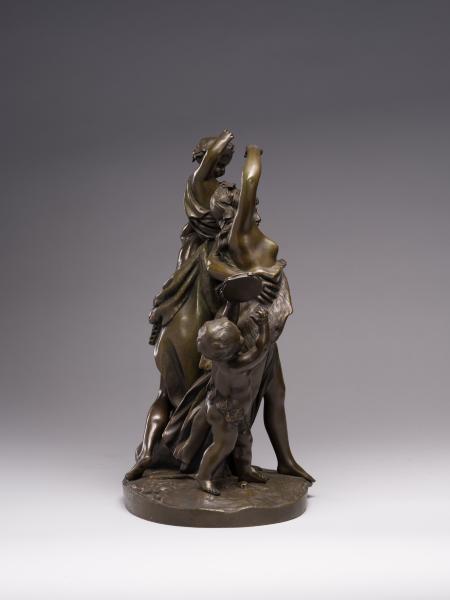
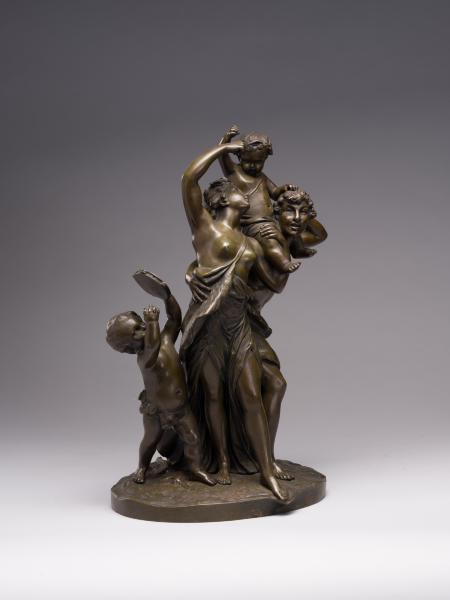
One of Claudion’s most popular works, known mainly from 19th-century copies. Variants are preserved in many museums and private collections. The work is based on Ovid’s "Tristia". According to mythology, the young Bacchus (Dionysus) was raised by Ino, the sister of his mother Semele, who was punished by Hera for her adultery with Zeus, and Ino’s husband, the Boeotian king Athamas. The dynamic sculptural scene depicts a man and a woman walking forward. On the right, a young man (Athamas) walks in a slightly bent position, because a small naked boy (Bacchus) sits on his back, triumphantly raising his right hand. Athamas holds the child with his left hand, turning his head to the left, where the figure of a young woman (Ino) is depicted with a bare bust. The woman, raising her right hand, leans back, directing her gaze at the triumphant Bacchus. A spacious tied bundle is modelled under the man’s feet. Behind Ino, another little boy (the son of Ino and Athamas, Learchus (?)) catches up with the group, raising his hands and playing a tambourine. On the reverse side of the sculptural composition, the draperies of the characters’ light cloaks are modelled in detail. The sculptural group is mounted on a low podium, to which it is attached with screws.
Inscriptions
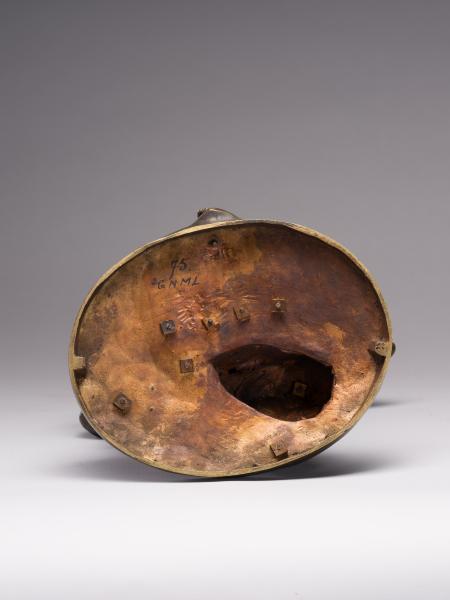
Engraving on the podium states: "Clodion". On the edge of the pedestal, there is an inscription in white: "С-І-610/ Л.ОКГ". On the reverse side, in a recess of the podium, there is an inscription in black: "75. GNML".
Legal regulation
Borys Voznytskyi Lviv National Art Gallery