Moses (replica of Michelangelo Buonarroti's work)
unknown


Basic information
- ID
- С-I-2160
- Author
- unknown
- Name
- Moses (replica of Michelangelo Buonarroti's work)
- Date of creation
- 19th/20th c.
- Country
- Central Europe
- Technique
- moulding
- Material
- bronze
- Dimensions (height, cm)
- 27
Additionally
- Type
- sculpture
- Genre
- religious portraiture
- Plot
- Moses
- Provenance
- From a private collection. Handed over by the Notary Office No. 4 in 1990
Information about author
Object description
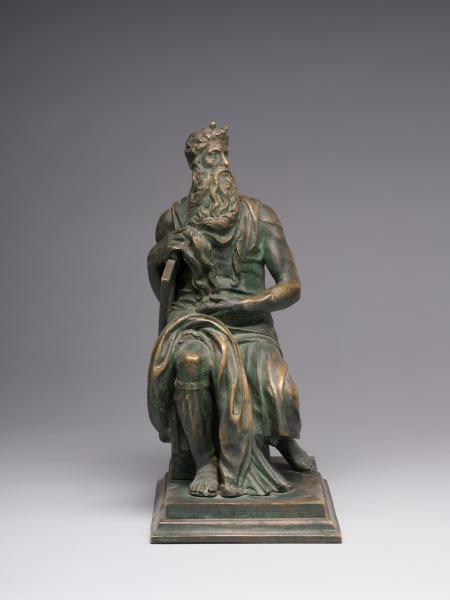
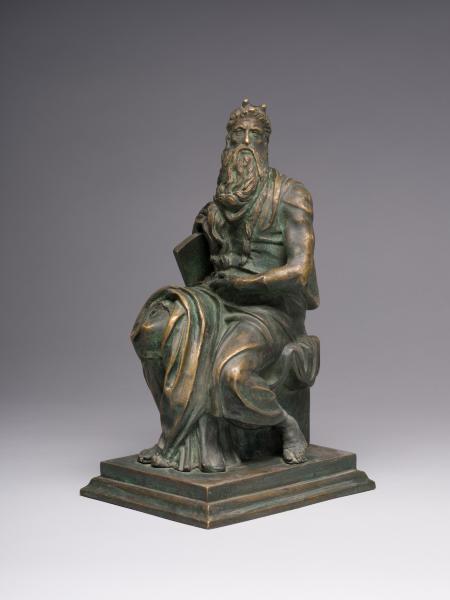
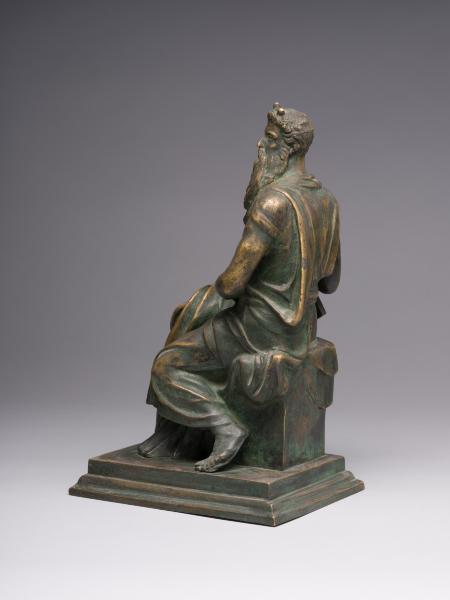
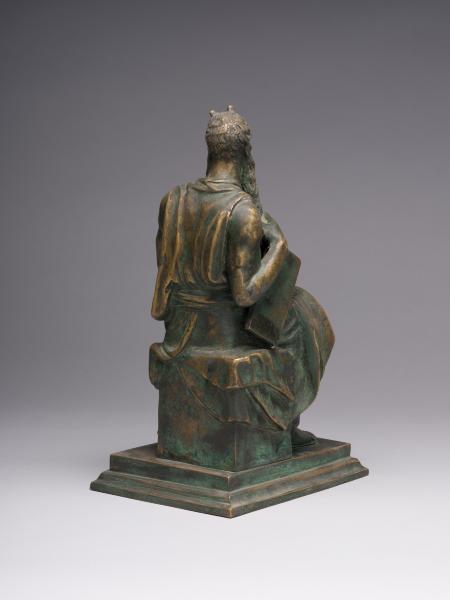
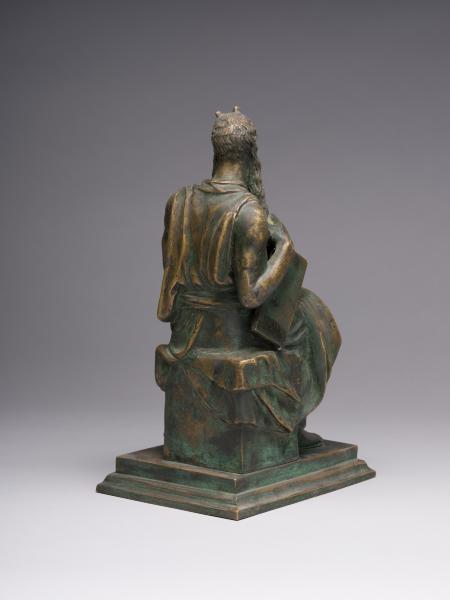
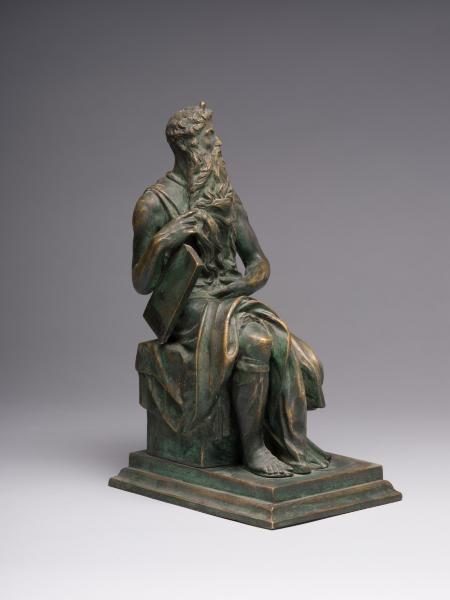
The work was created by an unknown company based on a piece by Michelangelo Buonarroti (1475, Caprese – 1564, Rome), an eminent Italian sculptor, painter, architect, and poet. The author created the sculpture of Moses (Italian: Mosè) in marble in 1513–1515 for the tomb of Pope Julius II. The sculpture is now kept in the Basilica of San Pietro in Vincoli, Rome. Over the centuries, various foundries have created reproductions of this figure. The figure of the prophet Moses is depicted sitting on a cubic pedestal. The man's head, with a long, wavy beard, a straight nose, and an intense gaze, is turned 1/2 to the right. Two horns are modelled on his head – a symbol of divine radiance. With his right hand, the prophet holds a rectangular slab (the tablets of the Covenant), while his left hand, bent at the elbow, rests on his knee. His right leg is extended forward, and his left leg is pushed back. He wears sandals on his feet. The drapery of his clothing falls from his knees downwards. The S-shaped line of the sculptural composition provides a frontal relief view of the figure. The author of the original managed to convey the inner energy of the depicted figure on the verge of its release outward. The figure with a pedestal is installed on a flat rectangular three-step podium.
Inscriptions
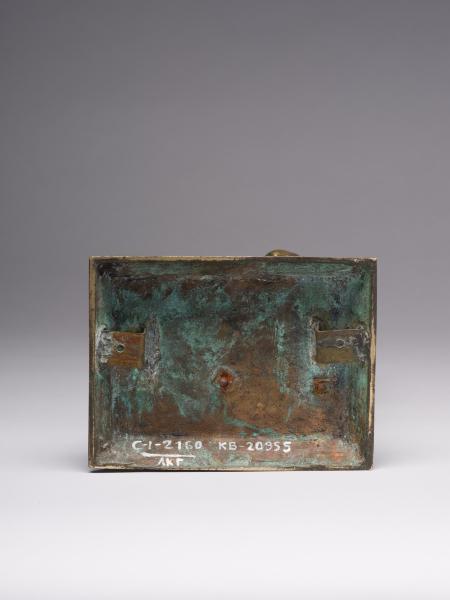
On the bottom of the stand, there are inscriptions in white paint: "С-І-2160/ ЛКГ"; "КВ-20955".
Legal regulation
Borys Voznytskyi Lviv National Art Gallery