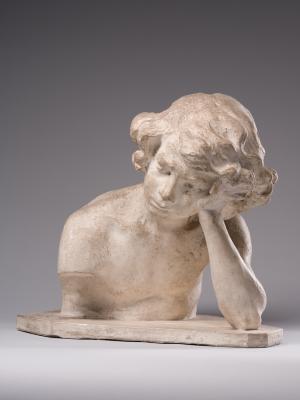
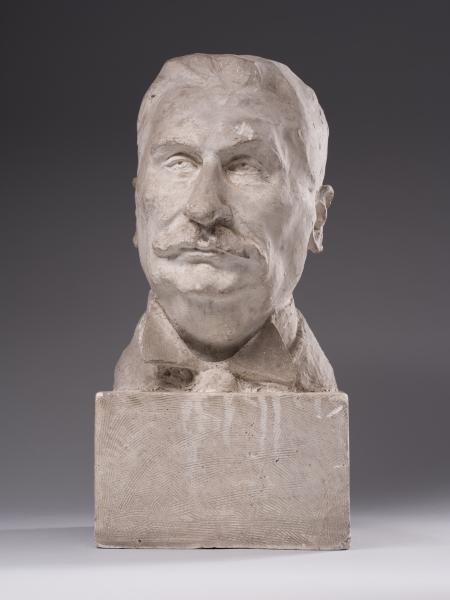
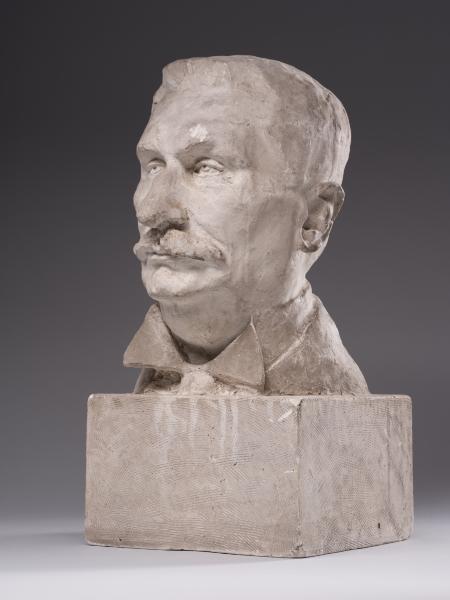
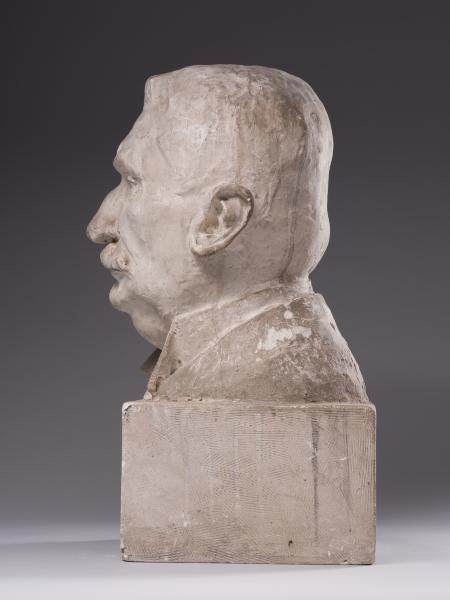
Head of Mr. L. (Zygmunt Lesniewicz /?/)
Kazimiera Malaczynska-Pajzderska


Basic information
- ID
- С-I-636
- Author
- Kazimiera Malaczynska-Pajzderska
- Name
- Head of Mr. L. (Zygmunt Lesniewicz /?/)
- Date of creation
- 1909 (?), according to other sources – c.1911
- Country
- Austro-Hungarian Empire
- Culture
- Contemporary times
- Technique
- moulding
- Material
- plaster
- Dimensions (height x width x depth, cm)
- 47 x 24 x 29
Additionally
- Type
- sculpture
- Genre
- portraiture
- Plot
- Portrait bust
- Provenance
- National Gallery of Lviv (until 1940)
Information about author
Object description
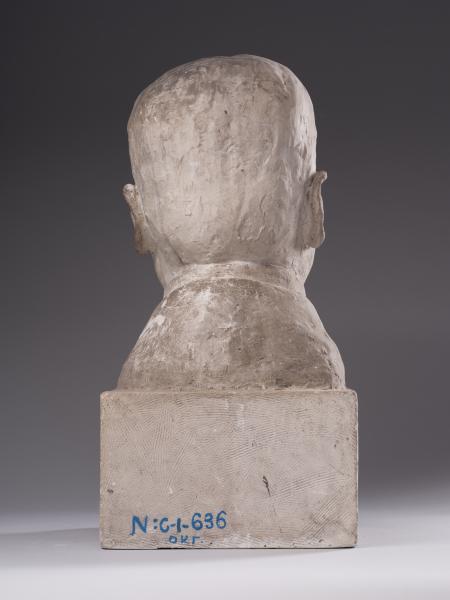
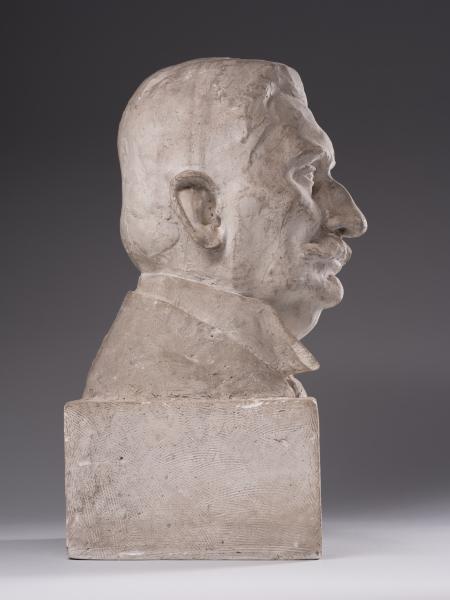
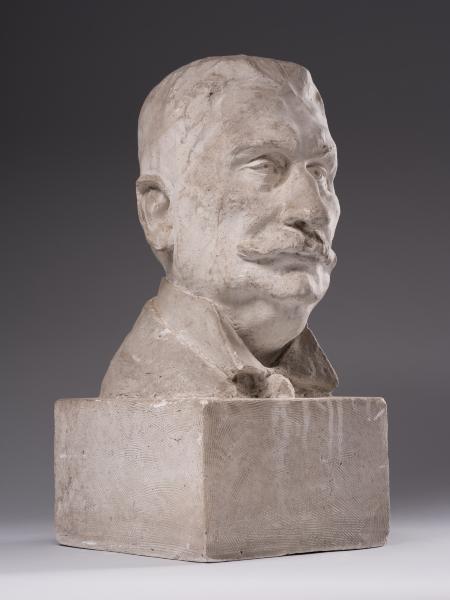
According to the attribution in Yurii Biriuliov's monograph "Lviv Sculpture from Early Classicism to Avant-Garde (Mid-Eighteenth to Mid-Twentieth Centuries)" (2015), "Portrait of Zygmunt Lesniewicz" was created in Lviv in 1909 and exhibited at the same time at the debut exhibitions of Kazimiera Malaczynska-Pajzderska, along with thirteen other vigorously modelled sculptures. According to Ihor Khomyn ("Polish and Polish-Related Sculpture of the Nineteenth and Twentieth Centuries in Borys Voznytskyi Lviv National Art Gallery. Catalogue of the Collection", 2020), the work dates from around 1911. According to the Biographical Encyclopaedia by Marek Jerzy Minakowski, compiled from obituaries in Polish newspapers, it is probably a portrait of Zygmunt Lesniewicz (1850–1913), a member of the noble family of the Polkozic coat of arms, a count, a marshal of the nobility, and the owner of Welyka Slobidka (Wielka Muksza). Figuratively, the portrait embodies family dignity, noble restraint, and the principle of noblesse oblige. The plastic characteristics of the work are a static and simplified form in the spirit of modernised classicism, which contrasts with the Impressionist and Secessionist tendencies in the artist's work between 1906 and 1911. The symmetry and closeness of the contours, the straight lines of the necktie and the proud, expressive profile, reminiscent of the minting of Roman coins, give the sculpture a classicist perfection. The clear modelling of the face and the play of light and shadow are the means of figurative expression.
Inscriptions
Signed on the back left: "K. Małaczyńska".
Portrayed person
- The name of the person portrayed
- Zygmunt Lesniewicz (?)
- Lifetime of the person portrayed
- 1850–1913 (?)
Legal regulation
Borys Voznytskyi Lviv National Art Gallery