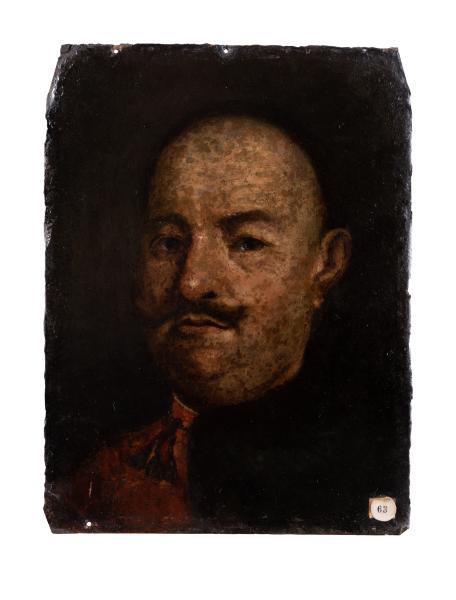
Coffin Portrait of Marcin Solski
unknown


Basic information
- ID
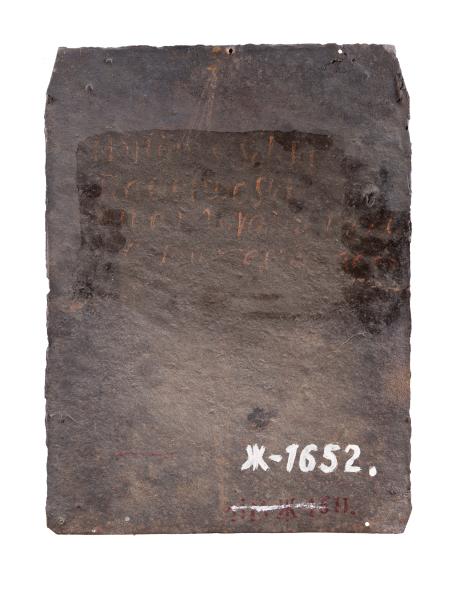
- Ж-6231
- Author
- unknown
- Name
- Coffin Portrait of Marcin Solski
- Date of creation
- 18th c.
- Technique
- oil painting
- Material
- tinplate oil
- Dimensions (height x width, cm)
- 40 x 29.9
Additionally
- Type
- painting
- Genre
- portraiture
- Provenance
- Lviv Historical Museum
Information about author
Object description
In the 17th century, the burial of a prominent noble was accompanied by a ceremony in which the portrait of the deceased played a defining role. The casket portraits were drawn "ad vivum" (as if alive) on a silver, copper or tin plate. They had a hexagonal shape due to their placement on the end of the coffin. In the seventeenth century, it was strictly hexagonal; in the 18th century, the basis remained the same hexagonal shape, which acquired a complicated baroque profile. The first requirement for such portraits was to be as similar as possible to the face portrayed. The painter was not allowed to idealise; his task was to capture the individual facial features in detail. The portrait shows Marcin Solski on a dark background. The portrayed face and a part of his shirt peeping out from under the dark overcoat make a bright spot. The facial features are detailed: high forehead, small arched eyebrows, small eyes, handlebar moustache, and double chin. The absence of any inscriptions, coats of arms or detailing of clothing deepens the image of the man.
Portrayed person
- The name of the person portrayed
- Marcin Solski
Legal regulation
Borys Voznytskyi Lviv National Art Gallery