Girl's Head
Janina Reichert-Toth


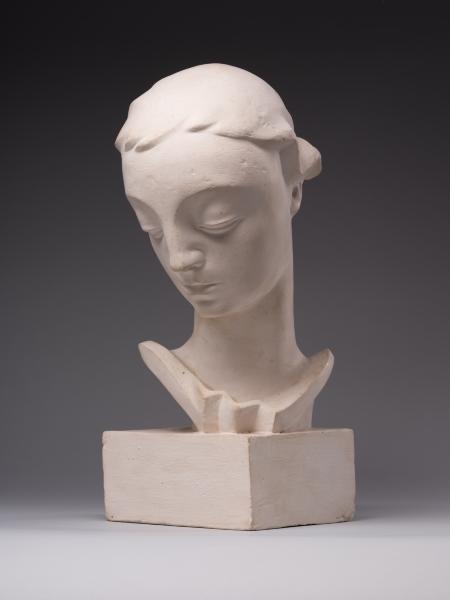
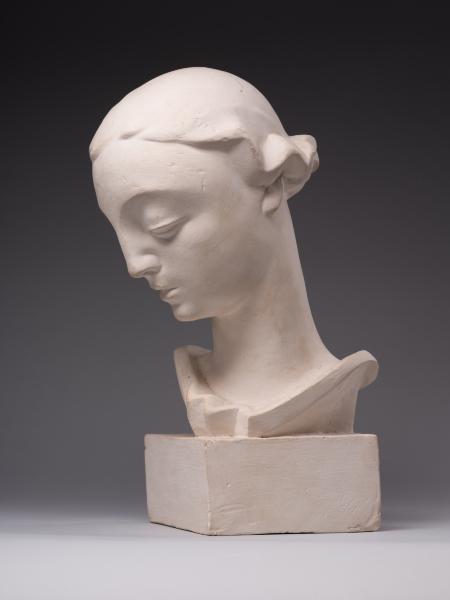
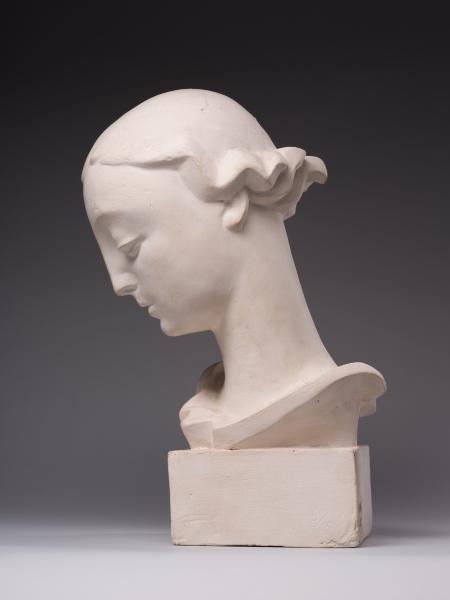
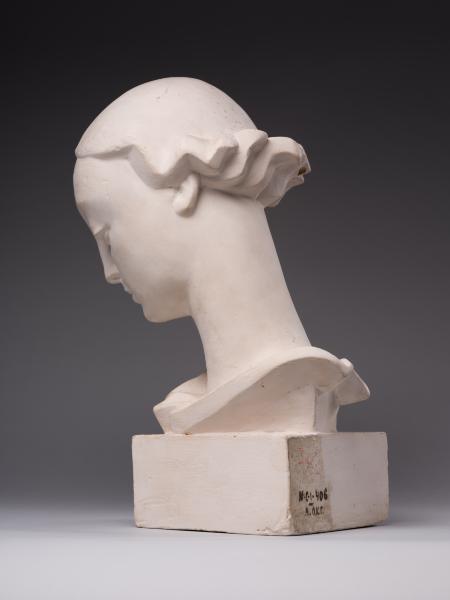
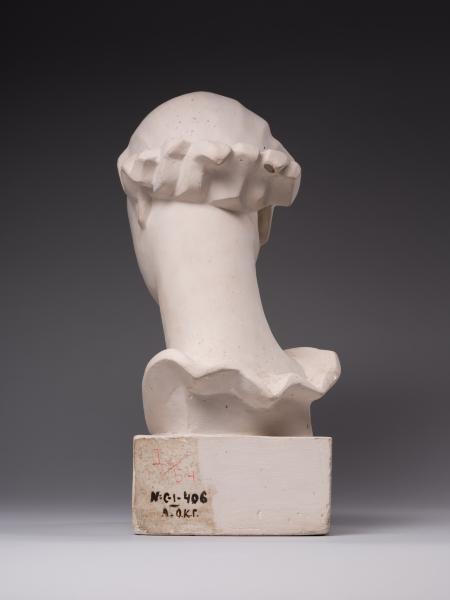
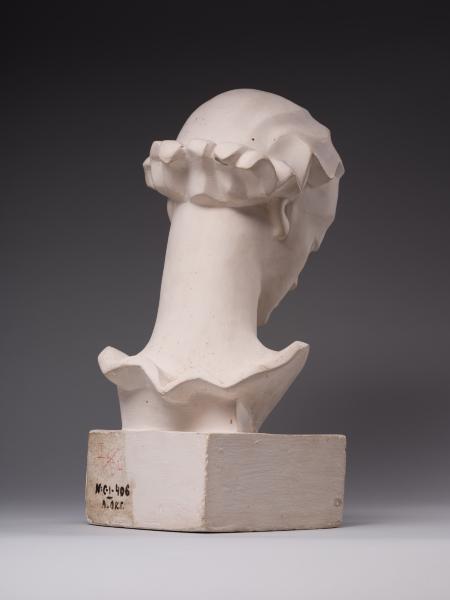
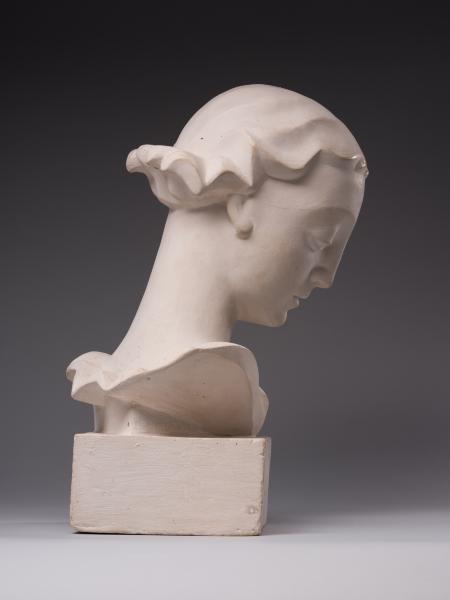
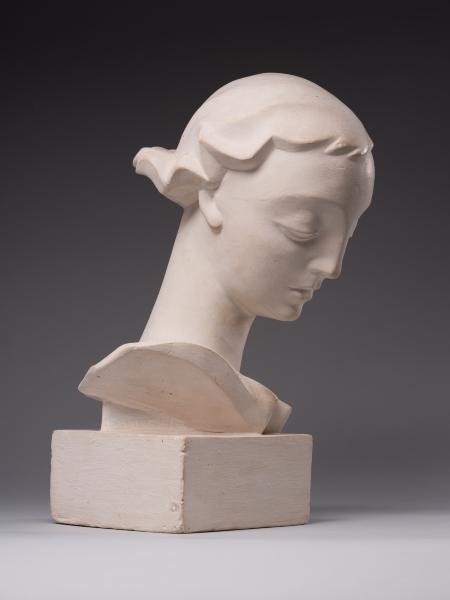
Basic information
- ID
- С-I-406
- Author
- Janina Reichert-Toth
- Name
- Girl's Head
- Date of creation
- 1925
- Country
- Poland
- Culture
- Contemporary times
- Technique
- moulding
- Material
- plaster
- Dimensions (height x width x depth, cm)
- 40 x 18 x 20
Additionally
- Type
- sculpture 3D
- Genre
- portraiture
- Plot
- Portrait bust
Information about author
Object description
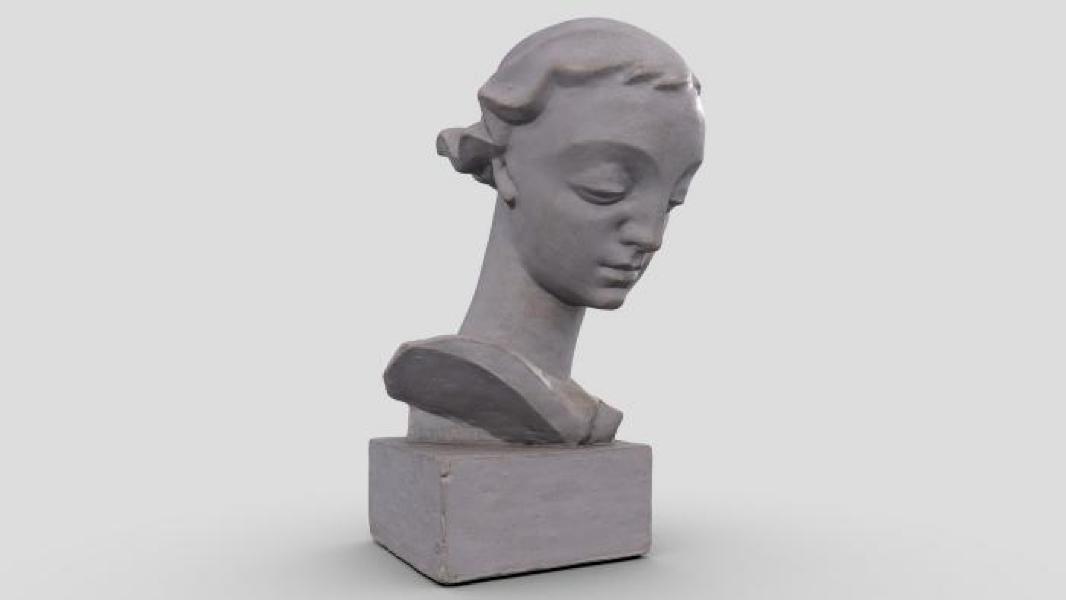
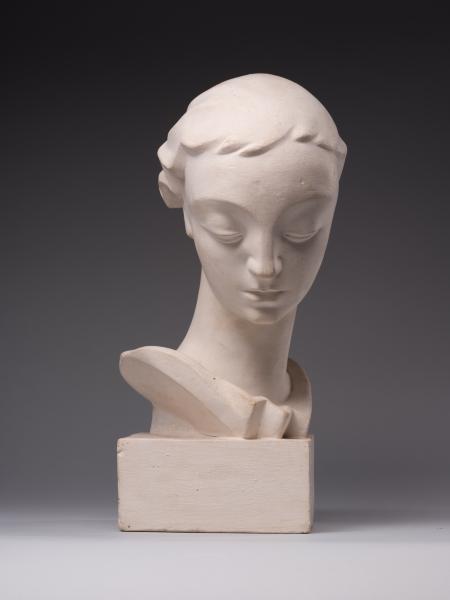
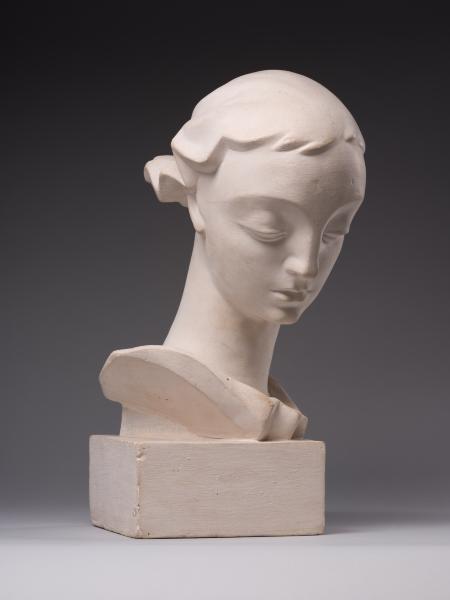
"Girl's Head" (1925) is an example of the artist's inspiration by the Art Deco movement, a trend in the fine and decorative arts based on the synthesis of modernism and Neoclassicism, which became widespread after the International Exhibition of Decorative Arts and Crafts in Paris in 1925. Thus, the plastic solution of the work is characterised by the geometry of the volumes, the exquisitely clear rhythm, the purity of the lines, and a combination of laconicism, decorativeness and representativeness. Attention is drawn to the idealised and sublime image, which refers to the numerous sacred sculptures in the artist's oeuvre. The white tone of the plaster gives the image tenderness, elegance, and lyricism. The peculiarity of the work lies in the possibility of its organic integration into the sculptural decoration of facades or interiors, where Art Deco dominated in Lviv between 1925 and 1932.
Inscriptions
The inscription on the right side of the fold reads "JANINA REICHERT".
Legal regulation
Borys Voznytskyi Lviv National Art Gallery